Xanalogical Structure, Needed Now More than Ever

TL;DR
- ✓ The modern web suffers from link rot and information fragmentation due to static pages.
- ✓ Ted Nelson proposed a xanalogical structure to replace fragile links with permanent relationships.
- ✓ Transclusion allows content to be referenced live rather than copied and orphaned.
- ✓ Moving beyond the page metaphor creates an interconnected web of granular data.
The web is a graveyard of broken promises. Look at your browser’s history or a collection of old bookmarks; you’ll find a digital wasteland of 404 errors, "Page Not Found" screens, and dead-end pointers. What started as the dream of a universal library—a vast, interconnected tapestry of human intelligence—has devolved into a brittle, fragmented series of silos.
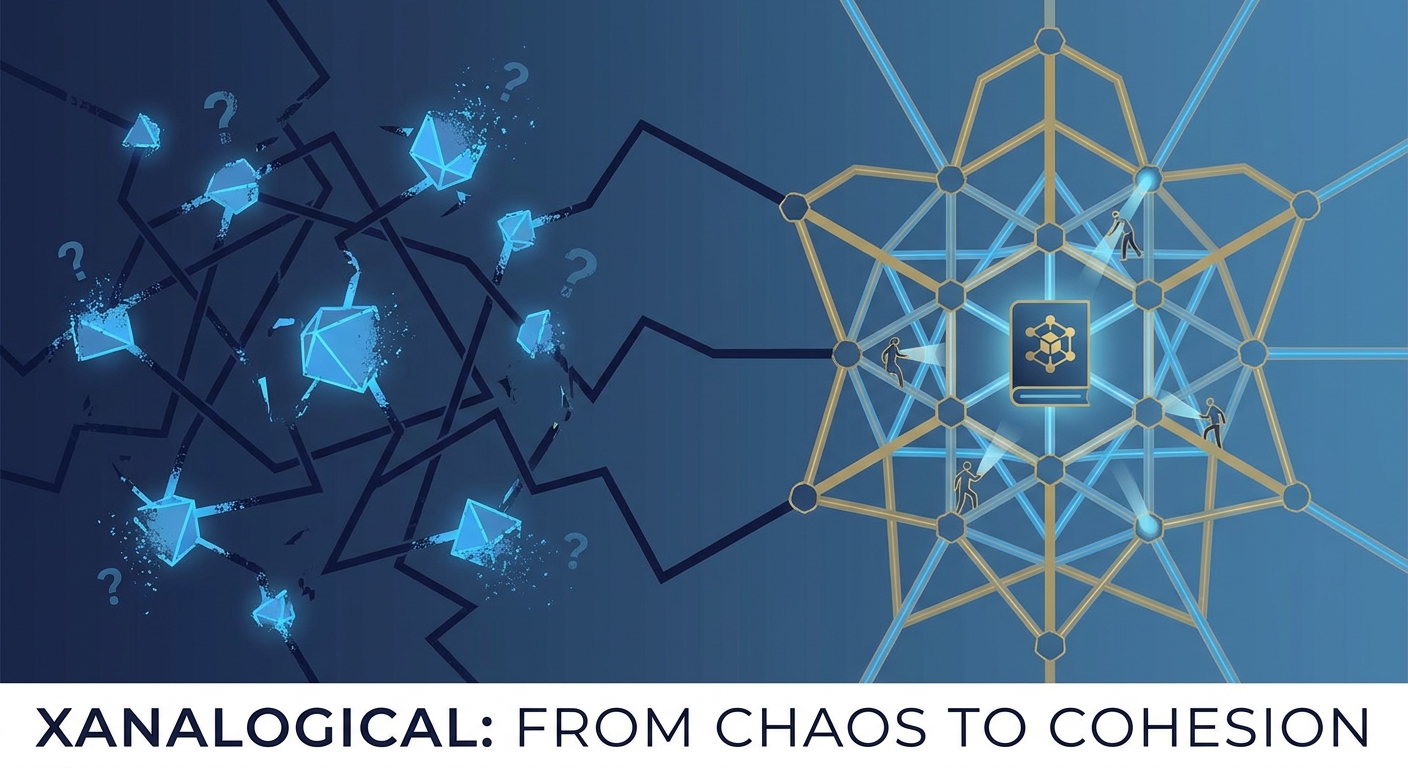
We’re suffering from a chronic case of temporal fragmentation. Information is trapped in walled gardens. Attribution is lost to the ether. The context of our digital discourse evaporates the moment a server goes dark. If we want a way out of this decay, we have to stop looking forward for a second and look back at the visionary, long-ignored work of Ted Nelson and his Project Xanadu. It’s time to embrace a "xanalogical" structure: a framework where content isn't just stored in buckets but is fluid, permanently linked, and always attributable.
Why Did We Miss the Boat?
To understand why the modern web is failing, we have to confront the metaphor that built it: the "Page."
HTML, the bedrock of our digital existence, was designed to mimic paper. It is a static, unidirectional medium. If you want to cite a source, you drop a hyperlink—a fragile string of text pointing to a specific coordinate. If that coordinate changes, moves, or disappears, your citation dies. This is the "Link Rot" crisis. It’s a symptom of an architecture that treats information like a destination instead of a relationship.
Ted Nelson saw this coming forty years ago. He argued that we shouldn't be building a web of pages, but a "Network" of granular, overlapping blocks of information. He called it transclusion.
Think of it this way: "Copy-paste" is a crime against data. When you copy something, you create a static duplicate that immediately begins to decay, losing its connection to the original. Transclusion is the opposite. You aren't creating a duplicate; you’re creating a window. The content lives in its original home, but it manifests in your document in real-time. If the author tweaks a word, your reference updates. It’s the difference between a photocopy that sits on your desk gathering dust and a live, synchronized feed of the master document.
We missed this in the 90s because the web needed to be fast and stupid to survive the dial-up era. We chose the "Page" because it was easy to serve. Now, we’re paying the bill: our digital history is dissolving, and provenance has become a luxury.
Why We Need Xanalogical Thinking Now
We are living through an era of extreme information instability. Our reliance on centralized platforms means that when a company pivots, shutters, or gets bought, years of research and discourse simply vanish. This Why Content Permanence Matters conversation isn't just for archivists anymore. It’s a survival skill for anyone trying to build a career on ideas.
And then there’s the elephant in the room: AI.
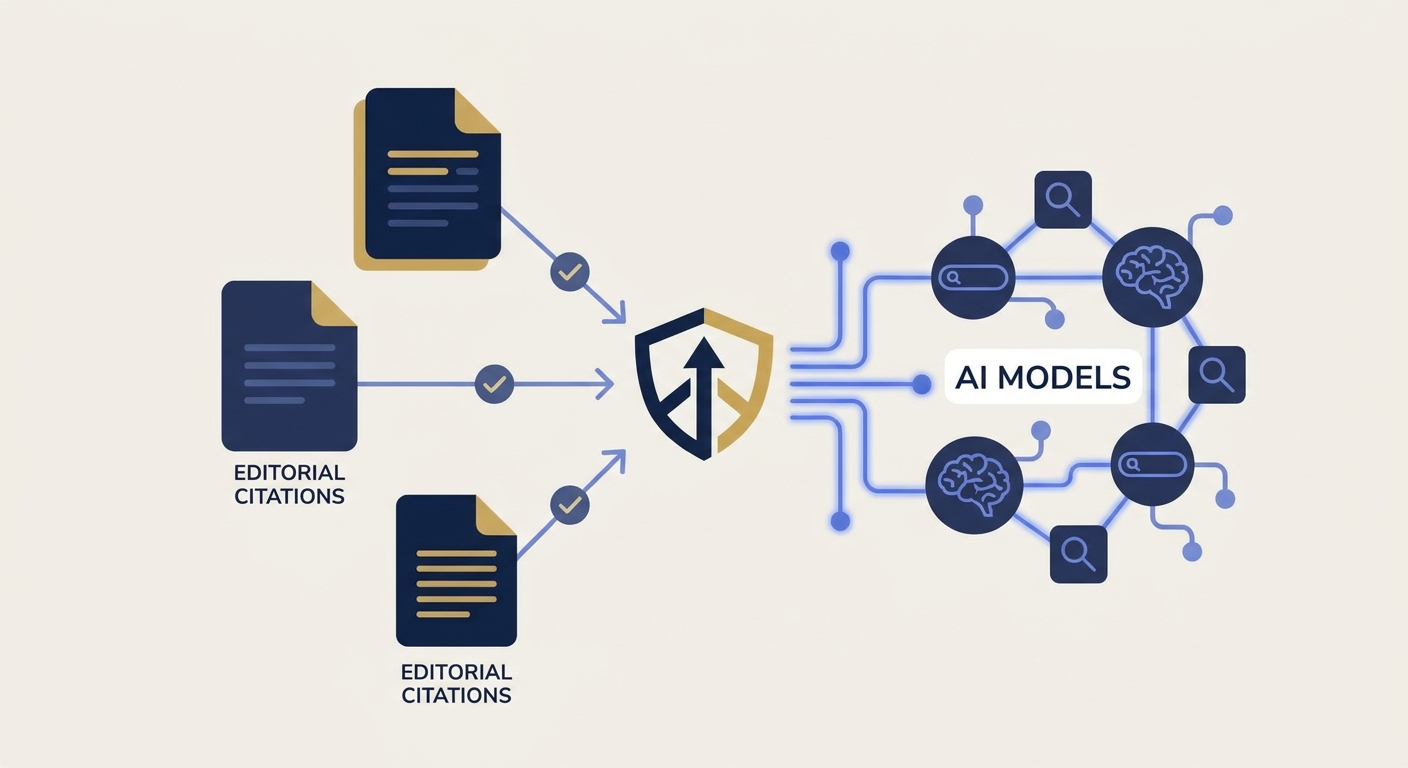
Generative models are currently ingesting the entire web, turning human knowledge into a black-box slurry. Because our current web lacks granular, xanalogical attribution, these models synthesize information without providing a verifiable audit trail. It’s a guessing game. If we adopted transclusion as a standard, every AI output could theoretically trace its lineage back to the precise, original blocks of text from which it was synthesized. It would turn a "black box" into a transparent chain of custody.
Beyond the technical, there is the cognitive. Our brains aren't wired for rigid, folder-based hierarchies. We think in associations—in "what reminds me of what." Forcing information into folders creates massive cognitive load because we have to decide where a piece of information "lives" rather than how it "relates." A xanalogical structure mirrors the fluid, non-linear nature of human thought.
The Evolution of the Citation
We need a new publishing standard. Imagine a web where every quote is a "Live Link." When a researcher cites a paper, they aren't just pointing to a URL; they are embedding a live transclusion that pulls the exact paragraph from the source. If the source is corrected or expanded, the citation in the secondary work reflects that change, ensuring the integrity of the knowledge graph.
Ted Nelson’s vision, laid out in his original paper, wasn't just about linking; it was about the legal and social framework of attribution. While we might not need the full Xanadu stack today, the core principle—that content should be cryptographically tied to its source—is the missing bridge between the "Wild West" web and a professional, reliable web of truth.
Are Modern "Tools for Thought" Actually Xanalogical?
We’ve seen a massive resurgence of interest in this field via tools like Obsidian, Notion, and Roam Research. They’re marketed as the next step in knowledge management, but we need to hold them to a higher standard.
Many offer "bidirectional linking," which lets you see who is linking to your note. It’s a huge improvement over the one-way web, sure. But it’s still the tip of the iceberg. Most of these tools rely on local file systems or centralized cloud databases. They don't allow for true, server-side transclusion where content exists in one place and is rendered in another. As noted in this analysis of The Web that Could have Been, we’re seeing "Xanadu-lite" features, but we’re missing the deep, protocol-level architecture that would allow these tools to talk to one another across the open web.
Building a More Resilient Architecture
For the individual creator, the shift to a xanalogical mindset is a shift from "file-based" thinking to "object-based" thinking. Stop writing long-form documents that get buried in a single folder. Break your work into atomic, reusable blocks. Use permanent, canonical URIs for your content. When you reference your own work, do it with granularity.
We have integrated these principles into Our Framework for Knowledge Management, which treats the "Atomic Note" as the foundational unit of all output. By treating every paragraph as a potential node in a larger network, you effectively future-proof your work. Developers, meanwhile, should look toward protocols that support content addressing (like IPFS) rather than location addressing (like HTTP). When we build for permanence, we build for the long-term utility of our ideas.
The Future: A Web of Deeply Linked Truth
We are moving away from a web of "pointers"—which are inherently fragile—toward a web of "layers." The future of the internet won't be defined by the size of the silos we build, but by the density and resilience of the links between them.
By adopting xanalogical principles today, you aren't just organizing your notes; you are participating in the construction of a more durable, verifiable, and intelligent digital landscape. The "Page" served us well for the infancy of the web, but the "Network" is the only way forward. Stop saving files. Start building connections.
Frequently Asked Questions
What exactly defines a "xanalogical" structure?
A xanalogical structure is a framework for information that treats content as a fluid, interconnected network rather than a series of static, isolated pages. It prioritizes non-linear navigation, permanent attribution, and the ability to reference or "transclude" content across different documents without creating duplicate, orphaned files.
How does transclusion differ from a standard hyperlink?
A standard hyperlink is a "dead pointer"—a static URL that leads to a location which may have changed or vanished. Transclusion is a "live reference." It pulls the actual content from the source into your current view, maintaining a dynamic, real-time link to the original. If the original content is updated, the transcluded version updates as well, preserving the integrity of the data.
Why didn't we build the web this way from the start?
The web was developed during an era that prioritized speed, simplicity, and ease of implementation. HTML and HTTP were lightweight and could be deployed across low-bandwidth connections using existing hardware. Xanadu’s vision, while more robust, required a level of technical complexity, server-side overhead, and data-management infrastructure that simply wasn't scalable with 1990s technology.
Are modern PKM tools, like Obsidian or Notion, truly xanalogical?
They are "Xanadu-lite." They successfully implement some xanalogical features, such as bidirectional linking and block-level referencing, which significantly improve knowledge management. However, they generally lack true, cross-platform server-side transclusion and independent, immutable provenance, meaning that while they are better than the traditional web, they don't yet achieve the full depth of Nelson’s vision.
How can I make my current content more "xanalogical"?
Start by breaking your work into smaller, atomic blocks. Avoid copy-pasting text between documents; instead, use references or "live links" whenever possible. Use permanent URIs for your published content, and whenever you cite a source, provide the most granular reference possible to ensure that a reader—or an AI—can verify the provenance of your claims.