Mastering Digital PR Services: A Modern Approach to Brand Authority Building

TL;DR
- ✓ Digital PR now focuses on editorial citations rather than transactional link building tactics.
- ✓ AI search models prioritize trusted entity mentions over raw backlink volume or quantity.
- ✓ High-value data-backed stories are essential for earning top-tier publication features today.
- ✓ Digital PR functions as the bridge between human reputation and algorithmic search visibility.
Digital PR isn't just about grabbing a few backlinks anymore. It’s the engine room for your brand’s authority. We’re living in an era where AI-driven search models—like ChatGPT and Perplexity—decide who gets a seat at the table and who gets left in the digital dark.
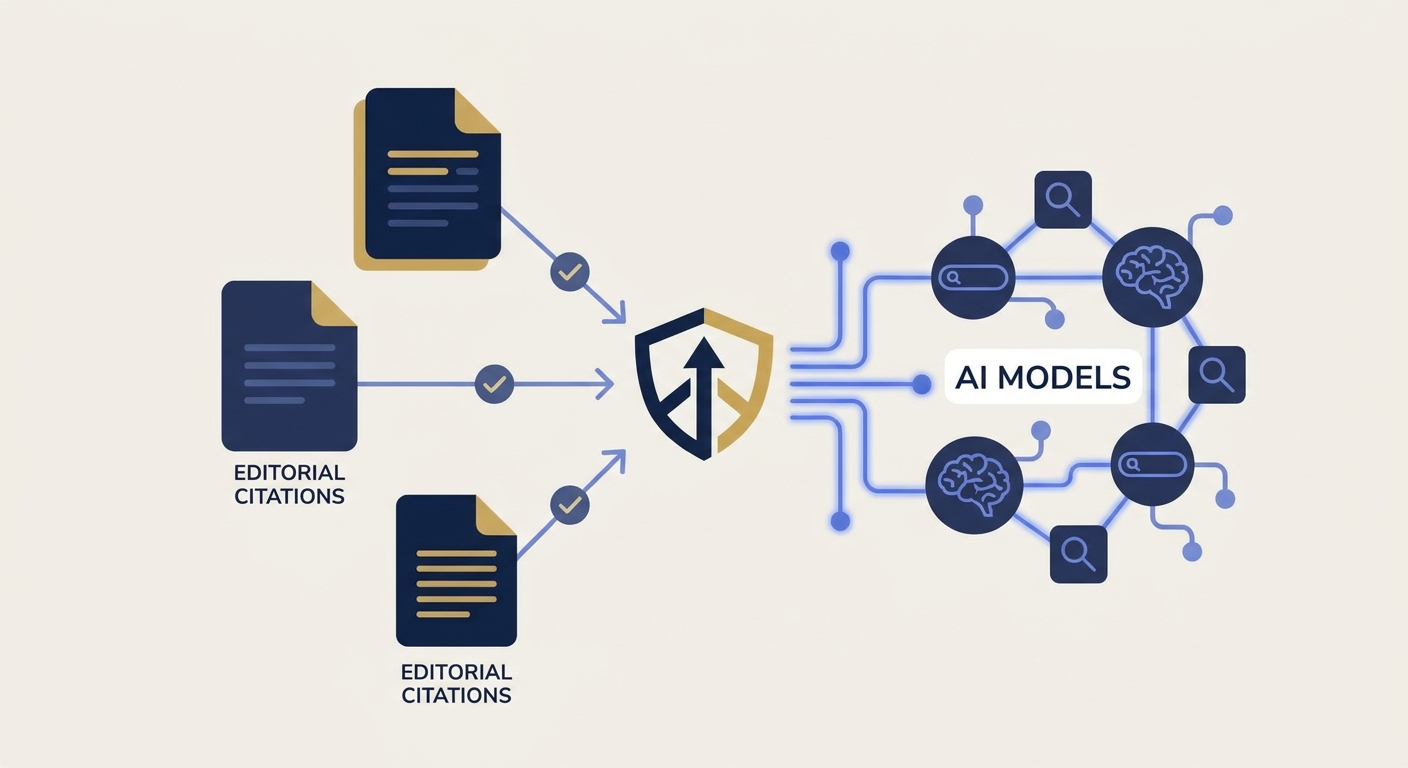
Forget trying to trick a ranking algorithm with transactional link swaps. That’s yesterday’s game. Today, the goal is to land the editorial citations that feed the knowledge graphs AI models rely on. Stop chasing link volume. Start chasing high-value, data-backed stories. When you do that, you stop being a website and start being a trusted entity that search engines—and, more importantly, real humans—actually want to recommend.
The Death of Transactional Link Building
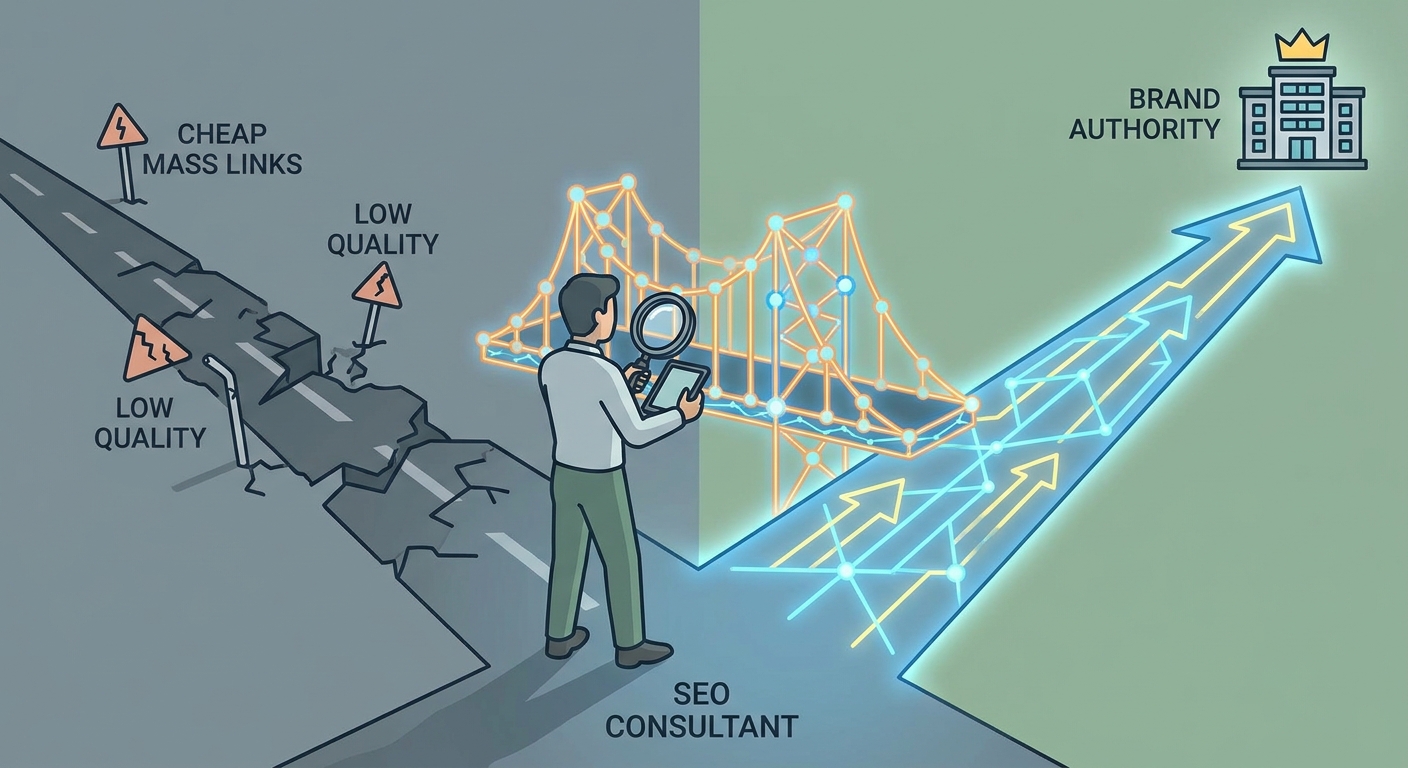
For the last decade, "link building" felt like a race to the bottom. It was all guest post farms, directory spam, and an obsession with Domain Authority (DA) scores that rarely had anything to do with actual revenue.
That era is dead.
We’re moving into a "zero-click" world. Search engines are answering questions directly on the results page. If a user gets their answer without ever clicking a link, the value of a raw backlink drops to near zero.
So, what’s left? Brand sentiment and entity authority.
When a user asks an AI which software they should use, the model isn't looking for the site with the most backlinks. It’s looking for trusted, authoritative mentions in reputable publications. If your brand isn’t part of the editorial conversations in your industry, you don't exist to the AI. Digital PR is the bridge between human reputation and the algorithmic validation you need to survive. As discussed in The Future of AI Search, the brands that win are those providing the high-quality signals that AI models use to verify expertise.
Defining Digital PR in the Age of AI Search
Modern Digital PR is the art of earning high-authority coverage through proprietary research, sharp expert commentary, and genuine value. It is not about blasting press releases to two thousand journalists who couldn't care less. It’s about being the specific source—the one with the data or the unique angle—that a journalist needs to finish their story.
When you land a feature in a top-tier publication, you aren't just getting a link. You’re building an "Entity Signal." Search engines treat these placements as third-party verification of your brand's expertise.
Understand this: your brand is an "entity" in the eyes of Google. Your strategy needs to be consistent, authoritative, and laser-focused on the problems your customers are actually trying to solve.
How Digital PR Directly Impacts E-E-A-T
Google’s E-E-A-T Guidelines are the North Star. But here’s the catch: many marketers treat E-E-A-T like it’s just on-page SEO. It isn't. The "Authoritativeness" and "Trustworthiness" parts of that acronym? Those are built off-page.
Search engines look for third-party validation. If you claim to be an expert in SaaS infrastructure but no reputable tech publication ever cites your work, your expertise remains unverified. Digital PR fixes this. When you get coverage in a niche-specific, high-authority outlet, you are borrowing their trust. That’s the difference between a random link from a low-quality blog and a featured citation in an industry journal. That citation is your digital seal of approval. It’s the "T" in E-E-A-T, telling the algorithm your content is worth surfacing.
The Data-Led Storytelling Framework
Stop pitching "promotional" content. It’s boring. Journalists don't care about your latest product launch; they care about the unique data you have that helps them explain a complex trend.
Our Content Marketing Strategy focuses on this exact transition. By turning internal company data into original research, you provide something that no one else has.
- Research & Ideation: Find a question your customers keep asking. Run a survey or analyze your own platform data to find the answer.
- Data Visualization: Numbers are dry. Turn them into clean, shareable charts or infographics that make the story click instantly.
- Strategic Pitching: Ditch the bulk email. Craft a personal note to a journalist who covers that specific beat. Explain why your data makes their job easier.
- Publication: Once the piece is live, ensure the citation is clear. This is the foundation of your long-term authority.
Why Domain Authority (DA) is a Vanishing Metric
If you’re still measuring PR success by DA, you’re playing a game from 2018. DA is a proprietary score from a third-party tool; Google doesn't use it to rank sites. Relying on it leads to "vanity metrics" that look good in a slide deck but do nothing for your search visibility.
As highlighted in Digital PR Statistics 2026, the true ROI of a modern campaign is found in referral traffic, brand sentiment, and inclusion in the AI knowledge graph. When a high-intent user clicks a link in an article written by a subject matter expert, they arrive on your site already pre-qualified and ready to trust you. That is worth more than a thousand "link juice" backlinks from irrelevant, obscure sites.
What a High-Performance Campaign Looks Like
Take a fintech client of ours. They needed credibility in a crowded market. Instead of chasing generic press, they conducted a proprietary survey on the state of digital payments for SMBs. By aggregating this data, they provided a narrative nobody else had.
They landed 15 Tier-1 backlinks in 30 days. How? By providing a resource journalists wanted to cite. This "Bridge" strategy—connecting the Digital PR output directly to our SaaS Growth Marketing Services—allowed the brand to capture long-term traffic while signaling to Google that they were the primary source for that industry data. The result was a sustained jump in visibility that didn't fade when the news cycle ended.
Budgeting for Digital PR in 2026
Digital PR is not a quick fix. You need a 3–6 month runway to build the relationships and content assets required for consistent results.
- Agency vs. In-house: If you don't have a team with deep journalist relationships, an agency is usually the most efficient path to high-authority placements.
- The "Pay-for-Placement" Trap: Avoid anyone who guarantees "links for dollars." This is a violation of search guidelines and can actually hurt your brand. If a link is for sale, it’s an ad, not an endorsement. Google’s algorithms are getting very good at spotting—and devaluing—these paid placements.
- Realistic Expectations: Digital PR is an investment in your brand’s footprint. You are paying for the time it takes to create solid research and the expertise required to pitch it well.
Tactical Pitching Templates
The "Data-First" Approach
"Hi [Journalist Name], I saw your recent piece on [Topic]. We recently conducted a study of 5,000 [Industry] professionals regarding [Specific Problem]. We found that [Surprising Data Point], which seems to challenge the current consensus you touched on. I’ve attached the full report and the raw data if you think this would be useful for a follow-up story or a future feature."
The "Expert Commentary" Approach
"Hi [Journalist Name], I’ve been following your coverage of [Current Event]. Given [My Brand's] experience in [Niche], we have a unique perspective on the potential impact of [Event] on [Specific Audience]. If you’re looking for a quote or a technical breakdown for an upcoming piece, I’m happy to weigh in."
The "Brand Story" Approach
"Hi [Journalist Name], I know you cover [Topic]. I’m reaching out because we’ve recently helped [Type of Customer] solve [Pain Point] using a novel approach to [Process]. We have the data to back up the results and would love to share this story if you're looking for case studies on how the industry is evolving."
Frequently Asked Questions
How is Digital PR different from traditional link building?
Traditional link building is often transactional, focusing on acquiring links through directories, exchanges, or low-quality guest posts. Digital PR is relationship-driven and editorial; it focuses on creating high-value content that journalists want to cite, earning links as a natural byproduct of brand authority.
How does Digital PR impact my AI search rankings?
AI models (like Perplexity or Google’s AI Overviews) rely on authoritative citations to determine which brands to recommend. By securing mentions in high-authority, niche-specific publications, you build the "Entity Authority" that AI models use to verify your brand’s credibility and relevance.
How long does it take to see results from a Digital PR campaign?
Digital PR is a long-term strategy. While individual placements can happen quickly, building the brand authority required to see significant shifts in organic search rankings and AI visibility typically takes 3–6 months of consistent, high-quality outreach.
What is the most important metric for Digital PR in 2026?
Stop prioritizing Domain Authority (DA). The most important metrics are referral traffic (which indicates audience relevance), brand sentiment (how you are perceived), and the volume of mentions in high-authority, industry-specific publications.
Should I prioritize volume of links or quality of placements?
Always prioritize quality. One link from a niche-leading publication provides more value for your E-E-A-T and AI visibility than fifty links from low-quality, irrelevant websites. Focus on being where your audience and your industry experts are reading.