What is Project Xanadu?

TL;DR
- ✓ Project Xanadu was Ted Nelson's visionary 1960s concept for a global hypertext system.
- ✓ Nelson proposed a Docuverse where information is permanently linked rather than stored as files.
- ✓ The modern web replaced Xanadu's structural integrity with a simpler but brittle design.
- ✓ Understanding Xanadu offers a masterclass in improving modern personal knowledge management systems.
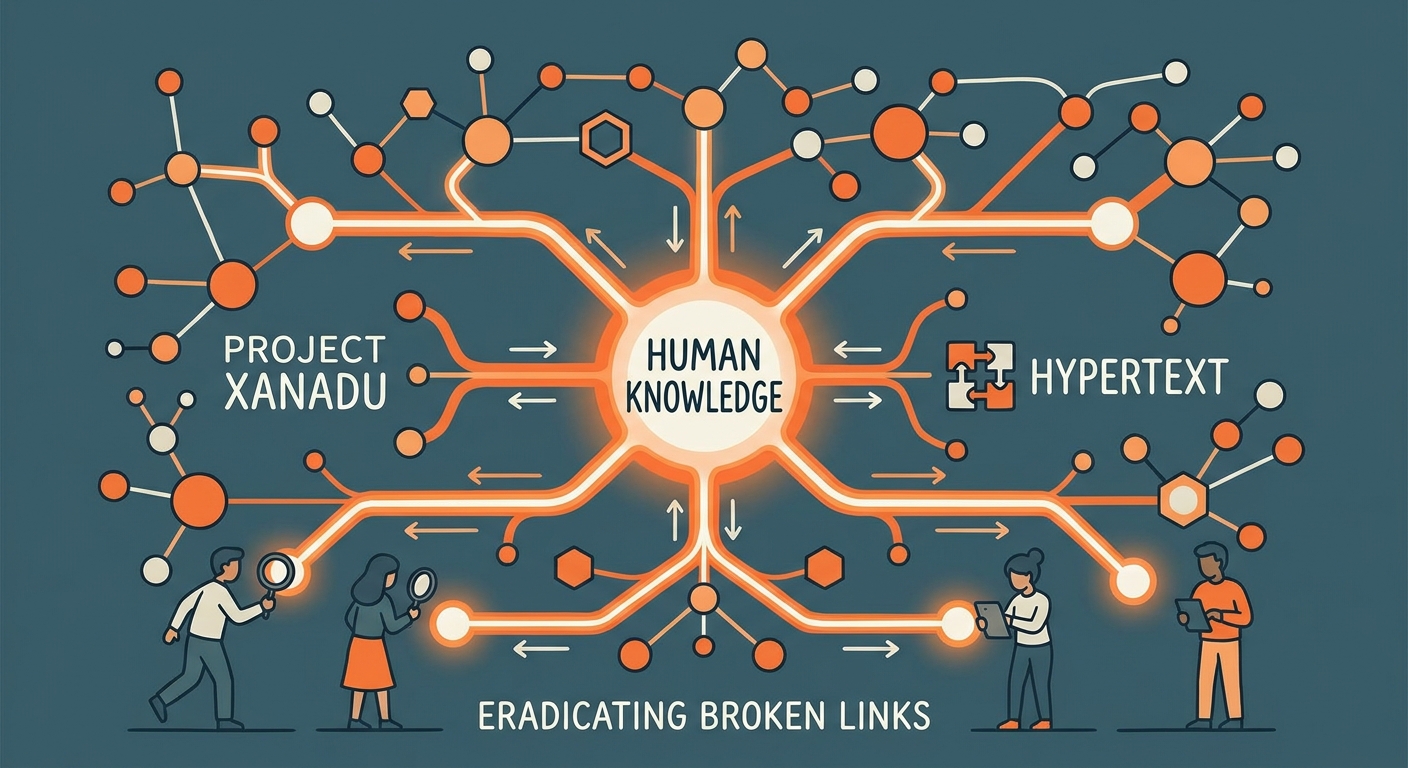
Project Xanadu wasn't just a tech project; it was an obsession. Conceived in 1960 by the visionary provocateur Ted Nelson, it’s the original hypertext dream. Nelson didn't want to build a better way to store files. He wanted to build a global, interconnected repository of human knowledge that would render the dreaded "404 Not Found" error a relic of a primitive past.
Think of the modern web as a series of paper scraps taped to a wall. If you pull one down, the tape leaves a mark. If you move it, the connection vanishes. Nelson saw this coming decades before the rest of the world. He wanted a "Docuverse"—a system where every single thought, quote, and scrap of data was permanently linked and tracked. In Xanadu, information isn't a static file sitting on a server; it’s a living, breathing mesh. It’s the blueprint for everything we now call Personal Knowledge Management (PKM).
The Internet That Could Have Been
We’ve all felt that specific brand of digital rage. You’re deep into a fascinating article, you click a citation, and—poof. A blank page. A dead link. A digital ghost town.
We’ve been conditioned to think this is just how the internet works. It’s not. It’s a design flaw. Our current web treats documents like physical paper—isolated, self-contained units that can be moved, shredded, or lost. When Ted Nelson started sketching out his vision in 1960, he wasn't interested in digitizing paper. He was interested in digitizing human thought.
He understood what the creators of the modern web initially overlooked: the value of information isn't in the document itself. It’s in the connections. The World Wide Web won the popularity contest because it was simple and fast. Xanadu lost because it demanded something harder: intellectual honesty and structural integrity. Revisiting Nelson’s Docuverse isn't just a history lesson; it’s a masterclass in how we might finally escape the brittle, siloed web we’re trapped in today.
Who is Ted Nelson and Why Did He Build Xanadu?
To "get" Xanadu, you have to get Ted Nelson. He’s a philosopher, a contrarian, and an information pioneer who has spent sixty years screaming into the void that our computer interfaces are fundamentally broken. He thinks the "file-folder" metaphor we use on our desktops is a tragic, limiting mistake. You can dive into the rabbit hole of his philosophy at Ted Nelson’s Official Site.
Nelson’s 1960s premise sounds radical even now: everything should be available to everyone, and every piece of content should be part of a larger, global tapestry. He rejected the idea that a document should exist in isolation. He envisioned a system where a user could look at a piece of text and see—in real-time—where it came from, who wrote it, and how it relates to everything else. He wasn't building a browser. He was building a universal library where the "original" and the "reference" were one and the same.
The Docuverse vs. The Web
The "Docuverse" is the beating heart of the Xanadu vision. Right now, we live in silos. Website A links to Website B. But Website B is totally oblivious to that link. If Website B changes its URL or deletes the page, the link breaks. This is the "Walled Garden" problem in a nutshell.
The shift here is subtle but earth-shattering: move from files to connections. In the Docuverse, you don't "upload a file" to a server. You "publish a contribution" to the network. Every document gets a permanent, unique ID. The network guards the integrity of those connections forever. It’s an architecture built for the longevity of human knowledge, not the convenience of server-side hosting.
The Anatomy of Xanadu: Decoding Transclusion and Two-Way Linking
Xanadu rests on two pillars: "transclusion" and "two-way linking." These are the secret ingredients that modern note-taking apps are currently scrambling to copy.
Transclusion is the cure for our "copy-paste" disease. When you quote someone today, you copy their text and paste it into your own work. The connection to the source is severed. If the original author updates their work, your copy stays stagnant and outdated. Transclusion changes the game. It allows you to pull content from a source into your own document without duplicating the data. You aren't copying; you’re creating a "live window" into the original source.
Two-way linking is the logical partner to transclusion. It ensures that if Document A links to Document B, Document B knows about it. It’s a reflexive, two-way street. If you’re reading a paper, you can click a citation to see the source, and then see every other document that cites that same source. It effectively kills the "link rot" epidemic by making references structural, not just decorative.
Why Did the World Wide Web Win?
If Xanadu was so brilliant, why are we stuck with the web? It comes down to a classic trade-off: simplicity versus perfection.
Tim Berners-Lee’s HTML model was beautifully simple. It didn't need a complex backend. You just needed a server, a browser, and a few simple tags. It was "good enough" for the early web to explode.
Xanadu was a beast of a different color. It required a total redesign of how computers store and retrieve data. As noted in The Xanadu Dream (Coding Horror), the ambition was the project's undoing. It became the poster child for "vaporware"—a design so grand it couldn't survive the reality of 1990s hardware. While the web grew like a weed, messy and decentralized, Xanadu remained trapped in an ivory tower of architectural purity.
Is Xanadu the Missing Link in Modern Knowledge Management?
We’re currently seeing a massive resurgence of interest in Nelson’s principles, fueled by the rise of Digital Knowledge Management tools. Apps like Obsidian, Notion, and Roam Research are basically running a "lite" version of the Docuverse. The obsession with "backlinks" and "graph views" proves one thing: users are starving for the interconnectedness Nelson championed sixty years ago.
Developers are finally realizing that the "file-based" way of organizing notes is failing us. We want our thoughts to be linked, not filed. As explored in An Engineer’s Guide to the Docuverse, the technical nightmares Nelson faced—versioning, unique IDs, distributed content—are finally being solved by modern databases. In a real sense, we’re finally building the tools that Ted Nelson envisioned back when the Beatles were still a local band.
How Does Xanadu Solve the Modern "Link Rot" Crisis?
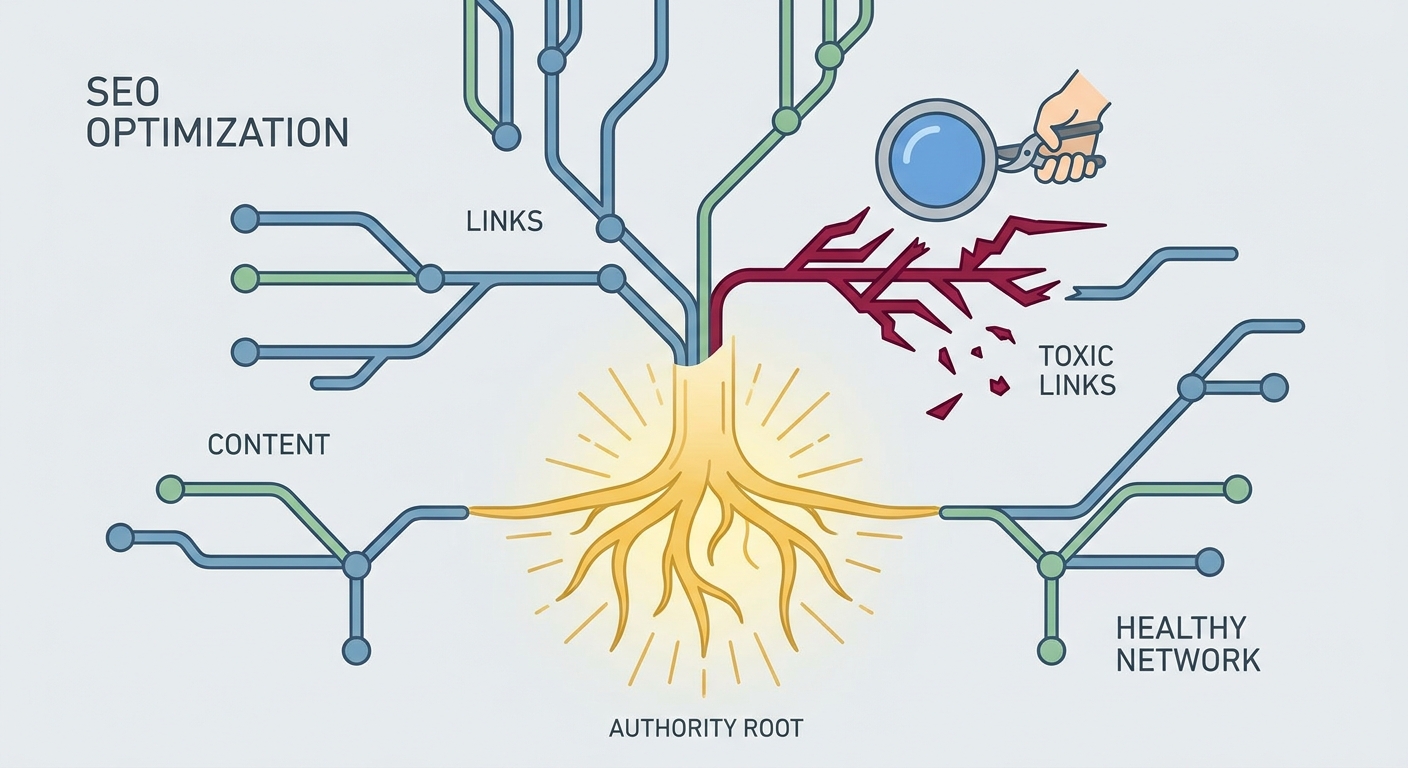
The current web is built on volatility. Links break because URLs change, companies fold, and servers go dark. It’s an absolute disaster for SEO and Link Building Strategies, forcing creators to play a never-ending game of link maintenance.
Xanadu fixes this by treating information as immutable. If a link points to a specific content ID instead of a fragile file path, it doesn't matter if the original server moves or dies. The content remains accessible through the network. By ditching centralized, ephemeral hosting, we could build an internet where citations are permanent. SEO would be based on the quality and interconnectedness of information, not the lifespan of a URL.
Conclusion: Is the Xanadu Dream Truly Dead?
To call Xanadu "dead" is to miss the point entirely. Xanadu isn't just a piece of software; it’s a set of ideals. It’s the north star for anyone who believes the internet should be a library of human knowledge, not a collection of advertising-driven silos.
We’re moving toward a future of decentralized, user-owned systems. We’re tired of the "walled gardens" of social media. We’re fed up with the fragility of the standard web. We’re finding our way back to the Docuverse. Ted Nelson’s vision was decades ahead of its time, but the world is finally catching up. The Xanadu dream isn't dead—it’s being built, one application at a time, by a new generation of developers who realize that everything should, indeed, be connected.
Frequently Asked Questions
What is the core difference between the World Wide Web and Project Xanadu?
The World Wide Web is based on a "file" architecture that uses one-way, fragile links. Project Xanadu is based on a "connection" architecture that uses two-way, immutable links and a global system of transclusion to ensure information is never lost or disconnected.
What is 'transclusion' and why does it matter for digital content?
Transclusion is the ability to include content from a source document into another document without copying it. It matters because it allows for perfect attribution and ensures that if the original content is updated, the reference is updated simultaneously, maintaining the integrity of the data.
Is Project Xanadu still in active development?
Project Xanadu has been in development for over sixty years, often cited as the longest-running "vaporware" in tech history. While it has not seen mass-market adoption as a software product, its architectural ideals continue to be refined and studied by researchers and developers today.
How has Ted Nelson’s vision directly influenced modern note-taking apps like Notion or Obsidian?
Many modern PKM tools have adopted the concept of "backlinks" and "graph views," which are essentially simplified implementations of the two-way linking that Nelson championed. These tools prioritize the connections between thoughts rather than the storage of individual files.
Why is Project Xanadu often cited as the longest-running "vaporware" in tech history?
It is labeled as "vaporware" because, despite being announced in the 1960s and having a clear, revolutionary vision, the project never reached a stable, publicly usable state that could compete with the rapid, simple adoption of the World Wide Web.