SEO for AI Search: Optimizing for Perplexity, Gemini, Grok, and Copilot


TL;DR
- ✓ Traditional SEO is dying as AI answer engines replace standard blue links.
- ✓ Master LLMO to ensure your brand becomes the trusted ground truth for AI models.
- ✓ Focus on E-E-A-T to provide the semantic rigor AI needs for confident citations.
- ✓ Shift your strategy from ranking for keywords to being cited in generative summaries.
Stop chasing blue links. That game is over.
If you’re still obsessing over meta tags and keyword density like it’s 2015, you’re already behind. Today, you aren’t competing for a spot on a list; you’re competing to be the "ground truth" in a machine-generated synthesis.
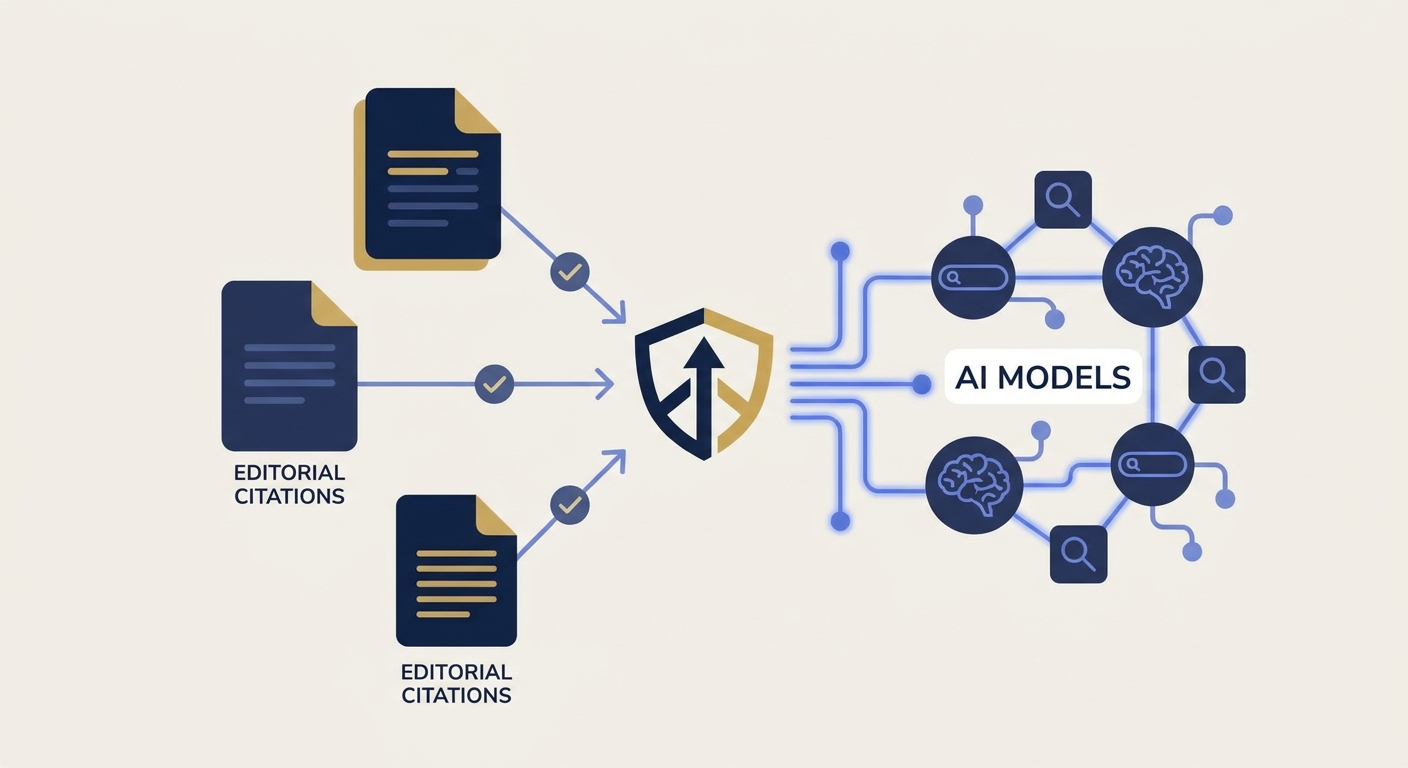
When a user asks a question, platforms like Perplexity, Gemini, Grok, and Copilot don’t run a popularity contest. They don't care how many backlinks you bought or how perfectly you stuffed your H2s. They execute a Retrieval-Augmented Generation (RAG) process. They scan the web, pull the best context, and synthesize an answer.
To win here, you need to pivot from traditional SEO to Large Language Model Optimization (LLMO). It’s not about ranking anymore. It’s about being the source the AI chooses to trust.
The Death of the Blue Link and the Rise of the Answer Engine
For two decades, SEO was a mechanical exercise. We gamed the system. We obsessed over backlink velocity and the "top-three" slot. That era is dead.
In 2026, the search experience is a generative summary. One cohesive response that collapses dozens of potential pages into a single block of text. The data doesn't lie: organic click-through rates for old-school listings are cratering—down 27%. Meanwhile, AI-driven discovery through platforms like Perplexity and Gemini has spiked 527%.
The shift is deeper than just clicks. It’s a shift in value. Users want the answer, not the homework. They want the synthesis. If your brand isn’t the entity being cited in that summary, you are invisible. You don’t exist. LLMO is the discipline of ensuring your brand is the "ground truth" these models rely on to stay accurate.
Why is Traditional SEO No Longer Enough?
Ranking is a vanity metric. Citation is a business metric.
In the old world, getting to page one meant you won. In the AI world, you can rank #1 and still be completely ignored by the model. Why? Because your content lacks the semantic rigor the AI needs to feel "confident."
AI models are terrified of hallucinations. When a model synthesizes an answer, it’s essentially guessing—high-stakes guessing. To mitigate risk, models default to domains that scream authority. If you haven't mastered Understanding E-E-A-T in 2026 as a baseline, no amount of technical tweaking will save you. E-E-A-T (Experience, Expertise, Authoritativeness, Trustworthiness) is your foundation. Without it, you’re just noise that the RAG process filters out.
How Do AI Search Engines Actually "Think"?
Don't think of AI search engines as indexers. Think of them as librarians. They aren't "reading" the web like Google’s old crawlers; they’re performing RAG.
Imagine a librarian given a massive stack of books. They need to write a summary for a patron. They aren't going to pick the most popular book. They’re going to pick the most accurate, relevant, and reliable books written by authors with a track record. That’s your goal. You have to be the book the librarian trusts.
Which AI Platforms Should You Prioritize?
While "being the authority" is the universal goal, every platform has a personality. You have to know who you’re talking to.
- Perplexity: The research-first engine. It’s an academic assistant. It wants data, facts, and primary research. If you aren't providing raw, verifiable insights, you’re invisible here.
- Gemini: The ecosystem integrator. It lives inside Google’s Knowledge Graph. If you aren't properly mapped as an entity in Google’s data structures, Gemini will bypass you for a "safer" source.
- Grok: The real-time conversationalist. Grok loves speed and cultural relevance. It pulls from social commentary and active news cycles. To win here, you need to be part of the current, live conversation.
- Copilot: The productivity partner. It’s built to solve problems. It favors structured, actionable content—checklists, how-to guides, and step-by-step instructions.
The LLMO Framework: A 3-Step Strategy for Visibility
1. Conduct an AI-Specific Baseline Audit
Stop staring at Google Search Console. It doesn't tell you if you're being cited in a Gemini response. You need to identify your "Share of Model." This is a metric that tracks how often your brand is mentioned when a user asks a question relevant to your industry. Use prompt-based testing. Act like the user. If the AI doesn't mention you, you have a problem. For a deeper look at this, check out iPullRank’s GEO Research, which outlines how brands can quantify their visibility in generative engines.
2. Structural Changes Win Citations
AI models are lazy—they want structure. If your content is buried in five paragraphs of flowery prose, the model will skip you. Pivot to FAQ-heavy content and robust schema markup. Use clear headings. Provide "Direct Answers" at the top of your pages. Make it easy for the AI to "snip" your content for its summary. This is a core pillar of Our Complete SEO Checklist, which emphasizes that content must be machine-readable to be human-discoverable.
3. Build an Unshakeable Knowledge Graph Footprint
The AI needs to know who you are. This is entity clarity. Your website should be a map for crawlers: this is the company, these are the founders, this is the product. If the AI has to guess, it will move on to a source that provides a clearer signal. Reviewing Google's AI Overview Guidelines is a vital step here. It gives you the "ground rules" for how search engines evaluate the content they synthesize.
The "Anti-Hallucination" Playbook: Providing Ground Truth
Brands love to complain when AI hallucinates about their products. But are you doing anything to fix it? You have to proactively feed the AI the "ground truth."
Keep a single, consistent source of truth on your domain. If your pricing, features, or company history are inconsistent across different pages, the AI will get confused and hallucinate. Furthermore, participating in programs like the Perplexity’s Publisher Program can help establish a formal relationship with the engine, ensuring that your data is handled with the appropriate level of accuracy.
Measuring Success: Beyond Rank Tracking
Traditional rank tracking is a relic. It tells you where you sit on a list, but it fails to tell you if you were the source of the answer in a generative summary. You need to move toward tracking "Share of Model." Run recurring, automated queries across different AI platforms. If your mention frequency is trending up, you’re winning. If it’s static, go back to your entity authority and structural clarity.
Conclusion: Future-Proofing Your Strategy
The convergence of search and AI isn't a trend; it's the end of information retrieval as we knew it. The brands that win in this new era are the ones that stop chasing keywords and start chasing authority.
Be the definitive, reliable, and well-structured "Source of Truth." If you do that, it doesn't matter which AI the user chooses—Perplexity, Gemini, Grok, or Copilot—you’ll be the primary citation. The future belongs to those who provide the best answers, not the loudest keywords.
Frequently Asked Questions
How does AI search differ from traditional SEO?
Traditional SEO focuses on ranking a page within a list of blue links, relying on keywords and backlinks to secure a position. AI search, or generative search, synthesizes information from multiple sources to provide a single, direct answer. The mechanical shift is from "ranking" to "being cited" as the authority the AI trusts to answer the user's specific query.
How can I track my brand’s visibility in AI search results?
Traditional rank trackers are largely obsolete for AI engines. Instead, you should adopt "Share of Model" tracking, which involves using prompt-testing scripts to monitor how frequently your brand appears as a cited source across a diverse range of industry-specific queries.
Do backlinks still matter for AI search?
Yes, but their role has shifted. They are no longer just a way to pass "link juice" for ranking; they serve as the primary trust signal for E-E-A-T. AI models use the quality and relevance of your backlink profile to verify that your site is a legitimate, high-authority source worth citing in their summaries.
Should I optimize for specific AI models, or is there a "one size fits all" strategy?
While every model has unique retrieval biases—such as Gemini’s reliance on Google’s Knowledge Graph or Grok’s focus on real-time news—the core of LLMO is universal. Semantic clarity, structured data, and high-authority entity signals are the fundamental requirements for any model to trust and cite your content.
How do I prevent AI models from hallucinating about my products?
You prevent hallucinations by providing "ground truth" on your own domain. This requires clean, consistent structured data (schema markup), clear and accurate "About Us" and product pages, and a unified brand voice that makes it easy for AI crawlers to "digest" and understand exactly who you are and what you offer.