SaaS SEO Strategy: The Complete 2025 Playbook

TL;DR
- ✓ Pivot from traditional search rankings to an Answer Engine Optimization framework for 2025.
- ✓ Optimize your content for AI models to ensure your brand is cited as a solution.
- ✓ Combine technical SEO hygiene with entity clarity to build trust with LLMs.
- ✓ Adapt your content strategy to the non-linear AI-mediated B2B buyer journey.
The days of obsessing over "ten blue links" are dead. If you’re still building your 2025 strategy around climbing the traditional Google ladder, you’re essentially rearranging deck chairs on the Titanic.
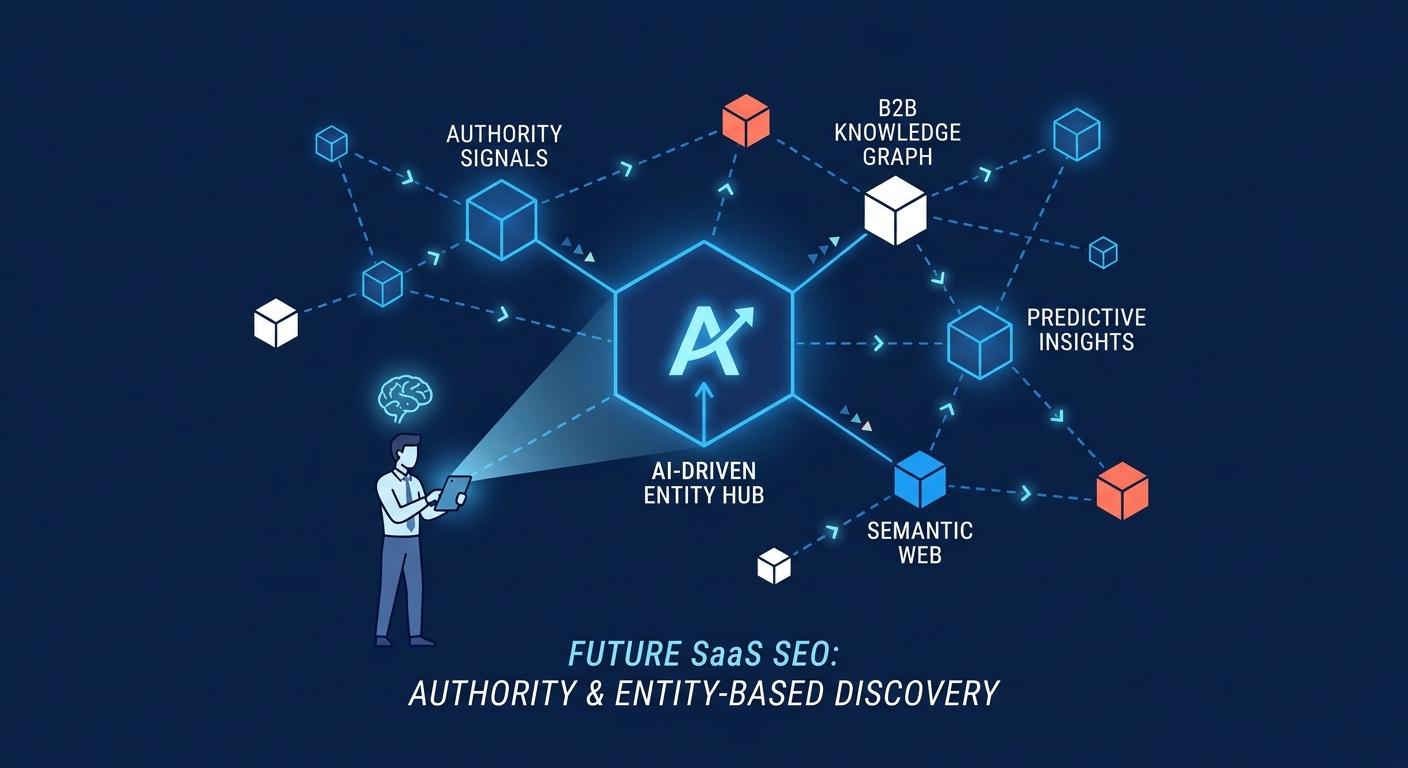
Today, search isn't just about indexing pages. It’s about becoming an entity that AI models trust, reference, and—most importantly—recommend. With 94% of B2B buying groups now use LLMs to navigate their purchase journey, the old-school funnel has shattered. Gartner predicts a 25% decline in traditional search volume by 2026. If you’re relying solely on keyword rankings, you’re staring down the barrel of a slow-motion suicide for your SaaS growth.
To survive, you have to pivot. You need to move from passive SEO to a unified "Answer Engine Optimization" (AEO) framework. You need to capture demand before, during, and after a user even touches the search bar.
The Death of the "Ten Blue Links": Why Your SEO Strategy Needs a Rewrite
For a decade, we played a game of cat-and-mouse with Google’s algorithm. We obsessed over volume. We chased domain authority. We stuffed keywords into meta tags like it was 2012.
The game has changed. When a CTO needs to solve a complex infrastructure headache, they aren't clicking through five different blog posts to aggregate an answer. They’re asking Perplexity, Claude, or Google’s AI Overviews to bridge the gap for them.
This is our new "Dual-Surface" reality. You aren't just optimizing for a search results page; you’re optimizing for a conversation. If your brand doesn't appear in that AI-generated response, you effectively don’t exist for that buyer. The search journey has compressed. Users are skipping the "discovery" phase entirely, moving straight to "evaluation" via AI summaries. If you’re still building your strategy around high-volume, low-intent keywords, you’re optimizing for a world that no longer exists.
What is the Unified SEO + AEO Framework?
Think of it this way: SEO is the library; AEO is the consultant.
SEO is the technical hygiene—site speed, crawlability, internal linking—that ensures the machines can read your site. AEO is the strategic layer that ensures those machines understand and recommend your specific solution.
In 2025, you can't manage these as separate silos. AEO requires the technical backbone of SEO to function, but it demands a total shift in content philosophy. Stop writing for "keyword density." Start writing for "entity clarity." You need to provide the data, the unique perspective, and the structured proof that allows an LLM to confidently state, "For this specific job, Company X is the leader."
How Does the Modern Buyer Journey Actually Look?
The path from "I have a problem" to "I am signing a contract" has become messy, non-linear, and entirely AI-mediated.
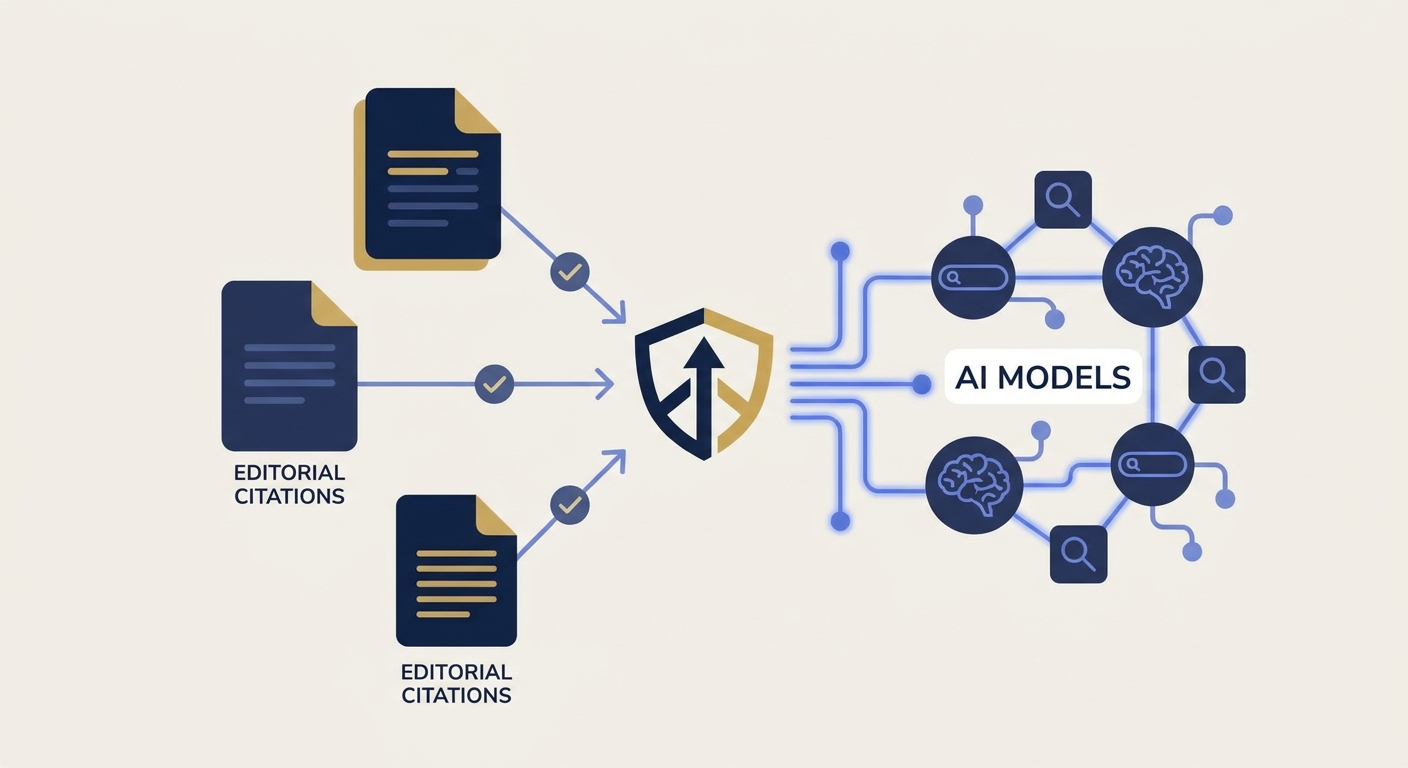
As the diagram shows, the AI acts as the ultimate filter. It sifts through the noise to present the user with a shortlist. If you haven't optimized your entities and your "proof" content, you’ll be filtered out before the buyer ever reaches your demo page.
Why Should You Stop Chasing Keyword Volume and Start Chasing "Jobs-to-be-Done"?
Keyword volume is a vanity metric that hides the truth of intent. A keyword with 5,000 monthly searches might just be a student looking for a definition. A keyword with 50 searches might be a Director of Engineering looking for a specific integration. We prioritize the latter.
We shift our focus to the "Job-to-be-Done" (JTBD). What is the specific business friction your software removes? When you map your content to the actual jobs your customers hire your product to do, you naturally capture the high-intent traffic that AI loves to cite. You can see how we apply this methodology in our proven SaaS results, where we prioritize pipeline impact over aggregate traffic growth.
What is "Entity Authority" and Why Do AI Models Care?
LLMs don’t "read" keywords; they map relationships between entities. An entity is a person, a place, a product, or a concept. If your website is a messy collection of disjointed blog posts, the AI cannot build a coherent map of your expertise.
To gain "Entity Authority," you need a consistent brand voice, rigorous Schema markup, and a clear "About" architecture that tells the search engine exactly who you are, what you solve, and who you solve it for. According to technical breakdowns of AI Overviews, models rely heavily on the structured data and the semantic consistency of a site to determine its "Factuality Score." If your site says you’re a "CRM" on one page and a "Marketing Automation Tool" on another, you’re confusing the model—and a confused model will never recommend you.
How to Optimize Content for Perplexity and Claude
If you want to be the "source" in a Perplexity response, you must provide data that isn't available anywhere else. Move away from "The 10 Best Tools for X" articles. AI models discard those as generic filler.
Instead, double down on proprietary research. Conduct original surveys, publish anonymized usage data from your platform, or create "human-in-the-loop" insights where your experts challenge industry norms. AI models prioritize content that is "extractable"—clear headings, bulleted lists of facts, concise definitions. If you need help shifting your content engine toward this high-authority, high-extractability model, we specialize in scaling thought leadership that actually moves the needle.
How to Measure What Matters: Pipeline-First Reporting
If your SEO reporting still stops at "Rankings" and "Traffic," you’re flying blind. In 2025, the only metric that matters is revenue. You need to transition to "Pipeline-First" reporting.
- Brand Recommendation Rate: Track how often your brand appears in AI-generated answers for your core category terms.
- Organic/AI Referral Attribution: Use UTM parameters and CRM integration to track which leads originated from organic search vs. those that were "referred" by LLM citations.
- Pipeline Velocity: Does content from your organic channel accelerate the sales cycle? If your content is effectively answering the "Why Us" questions of the BoFu (Bottom-of-Funnel) phase, your velocity should increase.
The Entity Audit: A Step-by-Step Checklist
Before you write another word, ensure your technical foundation is bulletproof.
- Audit Schema Markup: Ensure your
Organization,Product, andFAQschema are not just present, but accurate and linked to your social profiles. - Unify Brand Voice: Create a "Brand Bible" that ensures every piece of content—from a tweet to a white paper—uses consistent terminology to describe your core entities.
- Validate External Citations: Are your mentions on G2, Capterra, and industry news sites consistent with your website’s messaging?
- Update Knowledge Graph: Use Google Business Profile and other entity-linking platforms to solidify your brand’s "Knowledge Graph" presence.
The "Anti-AI" Edge: Why Your Brand Needs Deep Expertise
AI is excellent at providing answers. It is terrible at providing proof.
This is your competitive advantage. While AI can synthesize a list of "best SaaS features," it cannot provide a deep-dive case study of how your platform saved a specific client 20 hours a week. Bottom-of-funnel content—case studies, technical documentation, and complex implementation guides—is your ultimate defense against AI disruption. This is the content that forces a prospect to leave the AI chat and come to your site to verify the claim. If your funnel is full of "fluff," you’re giving the AI no reason to send the user to you. Give them the evidence, and they will follow.
Frequently Asked Questions
Does AI search mean the end of traditional SEO?
No. It means SEO is evolving into a broader discovery and authority strategy. Traditional SEO is still vital for technical crawlability, but it is now just one component of a larger "Answer Engine Optimization" effort aimed at being the authoritative source for your category.
How do I track if my brand is being recommended by AI?
You must combine manual "query testing" (regularly asking LLMs for recommendations in your space) with sentiment analysis and monitoring your referral traffic patterns in your CRM. Look for "direct" or "organic" spikes that correlate with high-intent discovery phases in your sales cycle.
Should I still prioritize high-volume keywords in 2026?
Only if they map to the buyer journey. High-volume keywords are often "research-heavy" but "intent-light." Prioritize keywords that align with the specific problems your SaaS solves; these are often lower volume but significantly higher conversion.
What is the most important technical factor for AEO?
Content structure and entity clarity. LLMs need to be able to "parse" your content easily. Use clear H-tags, structured data, and concise, objective writing that allows the model to extract your value proposition without having to "guess" what you do.