Review: Project Xanadu – The Internet That Might Have Been

TL;DR
- ✓ Project Xanadu was a visionary 1960s attempt to create a perfect, permanent internet.
- ✓ Ted Nelson designed Xanadu to feature bidirectional linking and avoid broken web links.
- ✓ The modern web prioritizes speed and simplicity over the long-term integrity of information.
- ✓ Xanadu remains a vital case study for understanding how digital connectivity could function.
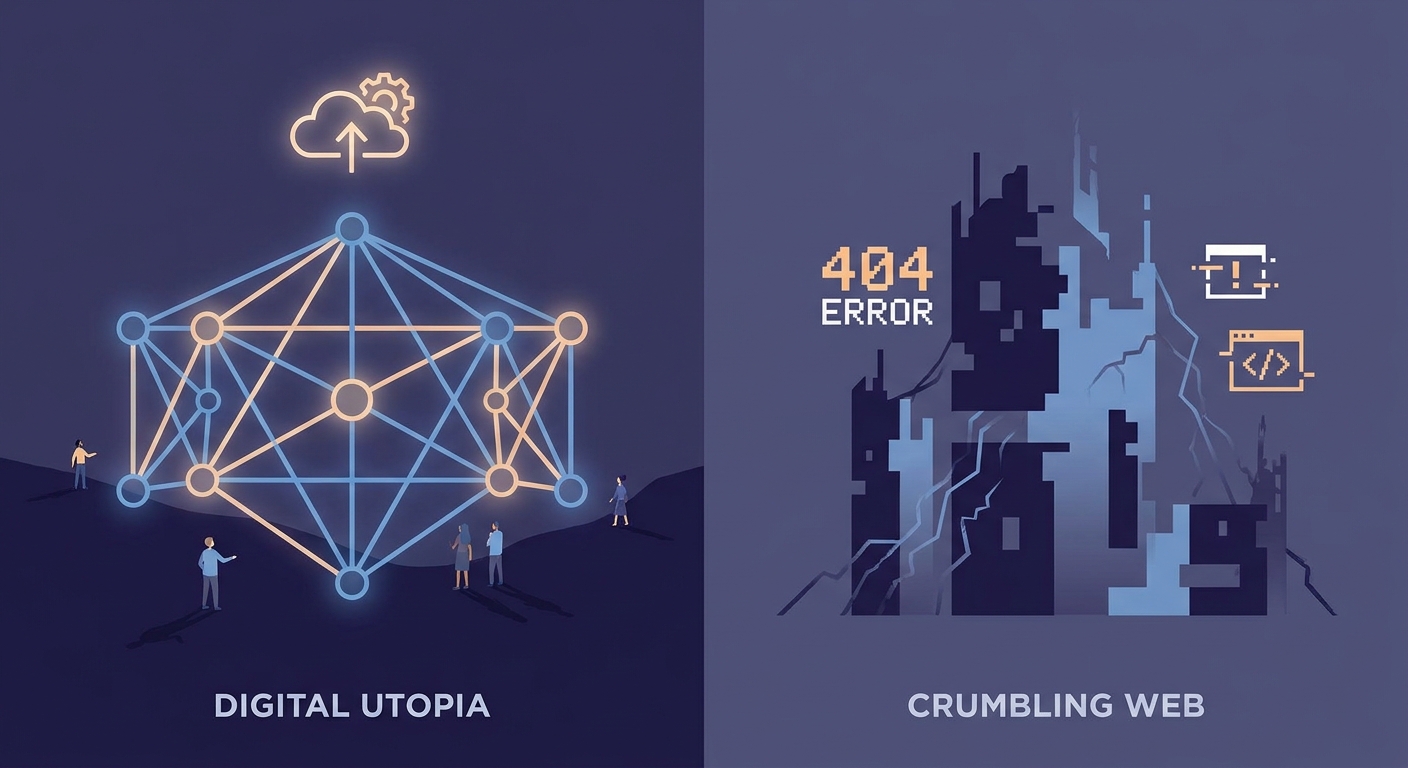
The modern internet is a cathedral built on a foundation of sand. Every time you click a link and land on a 404 error page, you’re witnessing the structural failure of the World Wide Web—a system designed for speed and simplicity at the total expense of permanence.
But in the shadow of this chaotic, broken web lies the ghost of a different digital reality: Project Xanadu. Conceived by the visionary Ted Nelson in the 1960s, Xanadu wasn’t meant to be just another collection of pages. It was designed to be a universal, instantaneous, and unbreakable library of human knowledge. While the web we use today settled for "good enough," Xanadu remained a stubborn, impossible dream of "perfect."
Looking back at Xanadu, you realize we didn’t just miss out on a better interface. We missed out on a fundamental way of connecting human thought—a framework we are only now, decades later, desperately trying to patch back together.
The Ancestry of Association
To understand Xanadu, you have to look back to the post-war optimism of Vannevar Bush. In his seminal 1945 essay, As We May Think, Bush proposed the "Memex"—a desk-sized device that would mirror the human mind’s tendency to operate by association rather than by rigid, indexical filing. Bush saw that our current methods of storing information were fundamentally flawed, forcing us into linear hierarchies that just don't match how we actually think.
Ted Nelson took this baton and ran with it. He coined the term "hypertext" to describe a non-linear network of documents. He envisioned a world where information wasn't locked in silos but existed in a fluid, interconnected state. Where the web became a series of static files pointing to other files, Nelson demanded a system where the connections themselves were the primary data.
Why Xanadu Envisioned a Different Digital World
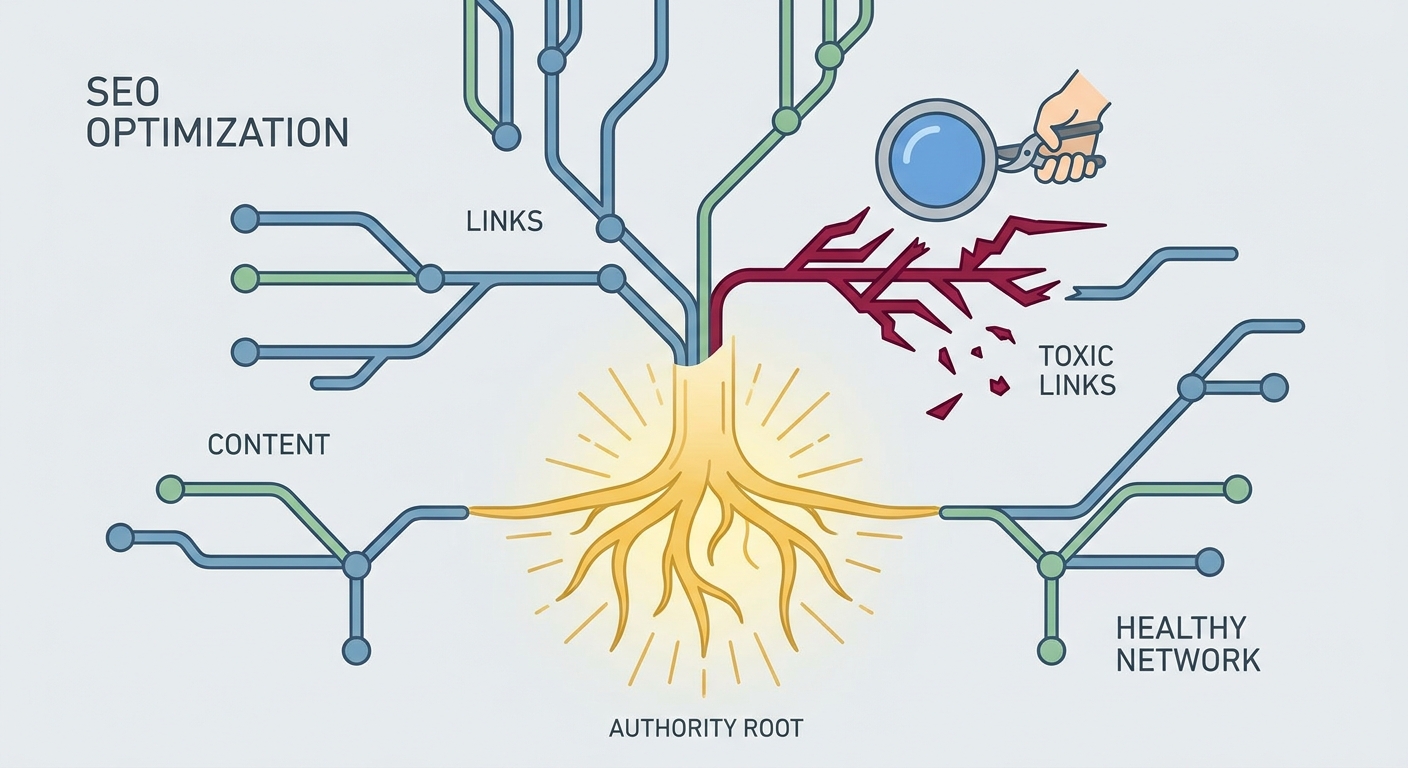
Nelson’s vision rested on three pillars that still sound revolutionary today: transclusion, bidirectional linking, and permanent addresses. In our current World Wide Web, a link is a fragile, one-way street. If the destination moves or disappears, the link rots. It’s digital decay in real-time.
Xanadu proposed a system where every piece of data was tracked and indexed. If you linked to something, that link would never, ever break.
By forcing links to be bidirectional, Xanadu allowed the author of a document to see exactly who was referencing their work. It turned the internet into a conversation rather than a broadcast. It made the web a living, breathing map of discourse.
The Holy Grail: Transclusion
If you want to understand why technologists still obsess over Project Xanadu, you need to wrap your head around "transclusion."
In our current world, when you want to quote a source, you copy and paste the text. You lose the original formatting. You break the connection to the source. You create a duplicate that exists in a vacuum. It’s clumsy. It’s messy.
Transclusion is the antithesis of the copy-paste culture. It allows you to include a piece of another document in your own work by reference, not by duplication. The content remains "owned" by the original source, yet it appears seamlessly in your document. If the original author updates their text, your document updates automatically. It’s a system that enforces attribution and integrity by design. It solves the nightmare of digital property rights by making sure that every "quote" is technically a window looking back at the original, immutable source.
The Great Divergence: Why the Web Won
If Xanadu was so brilliant, why are we stuck with the broken web? The answer lies in the harsh philosophy of "Worse is Better." As discussed in The Xanadu Dream, the World Wide Web succeeded because it was incredibly easy to build. You didn't need a centralized, perfect-integrity database to create a website; you just needed a text editor and an FTP client.
Xanadu, by contrast, was a monolith of complexity. It required a global, synchronized system to track every link and every fragment of transcluded text. It was a masterpiece of architectural purity, but it was impossible to deploy in a world that wanted to move fast and break things. The web’s low barrier to entry allowed it to explode into the global phenomenon we know, while Xanadu’s pursuit of perfection became its own prison. It was a Ferrari in a world that only had the budget—and the interest—for bicycles.
Is the Modern Web Finally Catching Up?
We are currently living through a strange, accidental renaissance of Xanadu-like ideas. Look at the rise of the "digital garden" movement. Tools like Obsidian and Notion are popular precisely because they have rediscovered the power of bidirectional linking. Users are tired of the silos of the traditional web and are building their own personal knowledge management systems that mimic the associative memory Ted Nelson dreamed of.
When you use "backlinks" to see what other notes reference your current thought, you are performing a manual version of what Xanadu would have automated globally. We are realizing, through the evolution of knowledge management, that the "flat" structure of the web is insufficient for deep thinking. Similarly, we are seeing the cost of why digital citations are broken as academic and journalistic integrity suffers in an era of ephemeral content. We are effectively building a "Xanadu-lite" inside our local apps, even if the global, decentralized network remains as elusive as ever.
A Visual Walkthrough of the Vision
To truly grasp the radical nature of Nelson’s design, one must watch Ted Nelson's Xanadu Demo. The interface is jarring to modern eyes, which have been trained by the linear, top-down scroll of the browser. Nelson’s vision involved side-by-side windows where content was highlighted in different colors to show where it was transcluded from. It wasn't about "browsing" pages; it was about "navigating" a vast, interconnected map of human knowledge. It looked like a cockpit for an intellectual, designed to give the user total visibility over the provenance of every word.
Clarification: The Vision vs. The Firm
It is important to provide a note to the reader: when you research Xanadu, you may stumble upon companies like Xanadu Quantum Technologies. This is a modern firm focused on quantum computing hardware and software, and it bears no relation to Ted Nelson’s hypertext project. The two share a name, but one is a legacy of 20th-century information theory, while the other is a frontier of 21st-century physics. If you are looking for the roots of the internet, ignore the quantum hardware; look for the man with the wild hair and the vision of a universal, connected library.
Conclusion: Can We Build a "Xanadu 2.0"?
Is it too late to fix the web? Perhaps. The infrastructure of the internet is now so deeply entrenched that shifting to a radical, transclusion-based architecture seems impossible. However, the movement toward decentralized protocols and local-first software suggests that the spirit of Xanadu is not dead; it has simply gone underground.
We are realizing that the web is a graveyard of broken links and lost context. As we move toward a future where we need to verify information and maintain the integrity of our own digital archives, the core tenets of Xanadu—attribution, persistence, and association—are becoming more relevant than ever. We may never see a "Global Xanadu," but we are certainly building a world where the dream of a perfectly connected, honest, and permanent record of human thought is once again the goal.
Frequently Asked Questions
Why did the World Wide Web succeed while Project Xanadu failed?
The World Wide Web succeeded because it favored "Worse is Better"—it was simple, decentralized, and easy for anyone to adopt. Xanadu, while conceptually superior in its data integrity, required a complex, centralized architecture that was too difficult to implement at scale during the early days of the internet.
What is 'transclusion' and why does it matter?
Transclusion is the act of including a document, or a portion of one, into another by reference rather than by copying. It matters because it eliminates the need for manual copy-pasting, ensures the original author receives credit, and allows the included content to update automatically if the original changes, maintaining perfect data integrity.
Does Project Xanadu still exist?
Project Xanadu still exists as a historical and conceptual project. While it never became the global infrastructure for the internet, it has gone through various iterations and remains a subject of intense study for those interested in hypertext theory and digital knowledge management.
Are modern tools like Obsidian or Notion 'Xanadu-lite'?
Yes, in many ways. While they don't implement the full global network vision Ted Nelson proposed, they have adopted key features like bidirectional linking and block-based editing. These tools represent a shift back toward the "associative" style of computing that Xanadu pioneered, allowing users to build interconnected webs of knowledge rather than simple, linear files.