Unlock SEO Success in 2025 with Organic Link Building ...

TL;DR
- ✓ Abandon mass backlink quotas for a focus on architectural trust and relevance.
- ✓ Prioritize seed site proximity to earn authority from industry-leading pillar websites.
- ✓ Replace vanity metrics like Domain Authority with high-quality contextual link acquisition.
- ✓ Align your link strategy with AI-driven search models by becoming an industry source.
If you’re still obsessed with hitting a daily quota of backlinks, stop. You’re lighting money on fire.
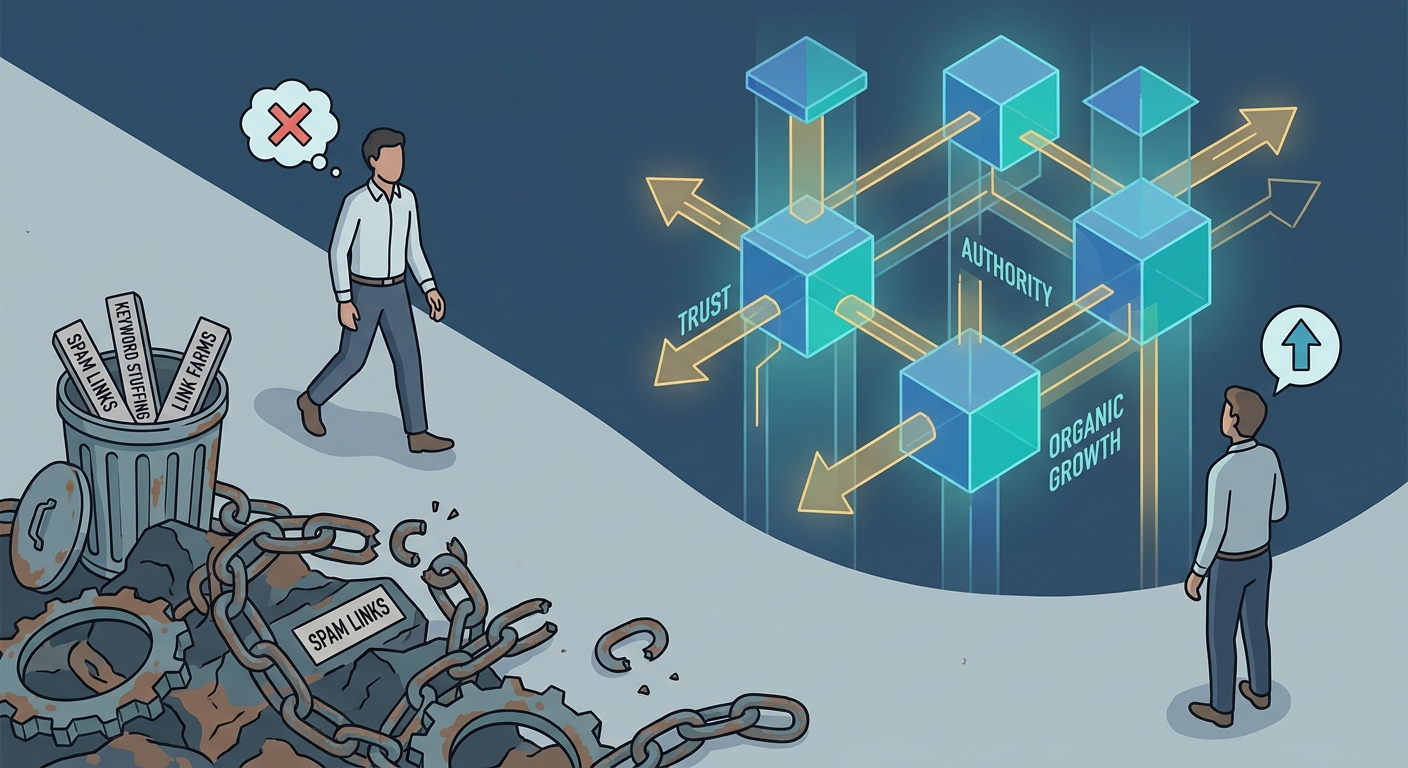
The game has changed. In 2026, SEO isn't about hoarding links like a digital packrat; it’s about architectural trust. The old-school tactics—directory spam, mass-email blasts, and buying cheap guest posts on sites that haven't seen a real human visitor in years—aren't just ineffective. They’re a death sentence for your rankings.
Search engines and AI models have evolved. They don’t count links anymore; they weigh them. A single, relevant, hard-earned link from an industry titan is worth more than a thousand junk directory submissions. If your SEO strategy isn't leaning into "seed site" proximity, you aren't building a competitive moat. You’re building a liability.
The Data-Driven Reality: Why Links Still Rule
Is link building dead? Please. That’s a convenient excuse for people who don't know how to do the work.
The data is clear: the sites at the top of the SERPs almost always have the best backlink profiles. Don't believe me? Check out Backlinko’s comprehensive link building study. The correlation between high-quality inbound links and visibility is one of the few constants in this chaotic industry.
Search engines aren't looking for a "popularity contest." They’re looking for peer-reviewed citations. Companies continue to dump massive budgets into this because it’s the only way to stay visible. According to buzzstream link building statistics, link acquisition remains the biggest line item for top-tier SEO teams. Why? Because in an era of AI Overviews and Perplexity, you need to be the source. You need to be the authority. If you aren't, the AI will just cite someone who is.
Navigating the "Seed Site" Proximity Model
Forget Domain Authority (DA). It’s a vanity metric, easily gamed and largely irrelevant. In 2026, we care about "Seed Site Proximity."
Think of a "seed site" as an industry pillar—a major publication, a respected research institute, or a news outlet that search engines trust implicitly. When you earn a link from a site that’s just one or two "hops" away from these pillars, you inherit a piece of that institutional trust. This is the new hierarchy. It’s not about how many links you have; it’s about how close you are to the source of truth.
The Three Pillars of a 2026 Organic Strategy
You can't use a cookie-cutter approach anymore. Your workflow needs to be sharp, surgical, and split into three distinct buckets.
1. Earned Media: The "Linkable Asset"
If you want links, stop asking for them. Start creating something people actually want to cite. This is where our content strategy services shift the focus from generic "blog posts" to data-backed assets. We’re talking proprietary research, interactive tools, and original surveys. When you provide a definitive answer to a complex industry problem, the links come to you.
2. Strategic Outreach: The "Value-Add"
If your outreach email sounds like it was spat out by an LLM, it’s going straight to the trash. The 2026 approach is pure "Value Exchange." You aren't begging for a favor. You’re offering a missing piece of data, a clarifying insight, or a unique perspective that makes their content better. Be a contributor, not a nuisance.
3. Technical Reclamation: The "Cleanup"
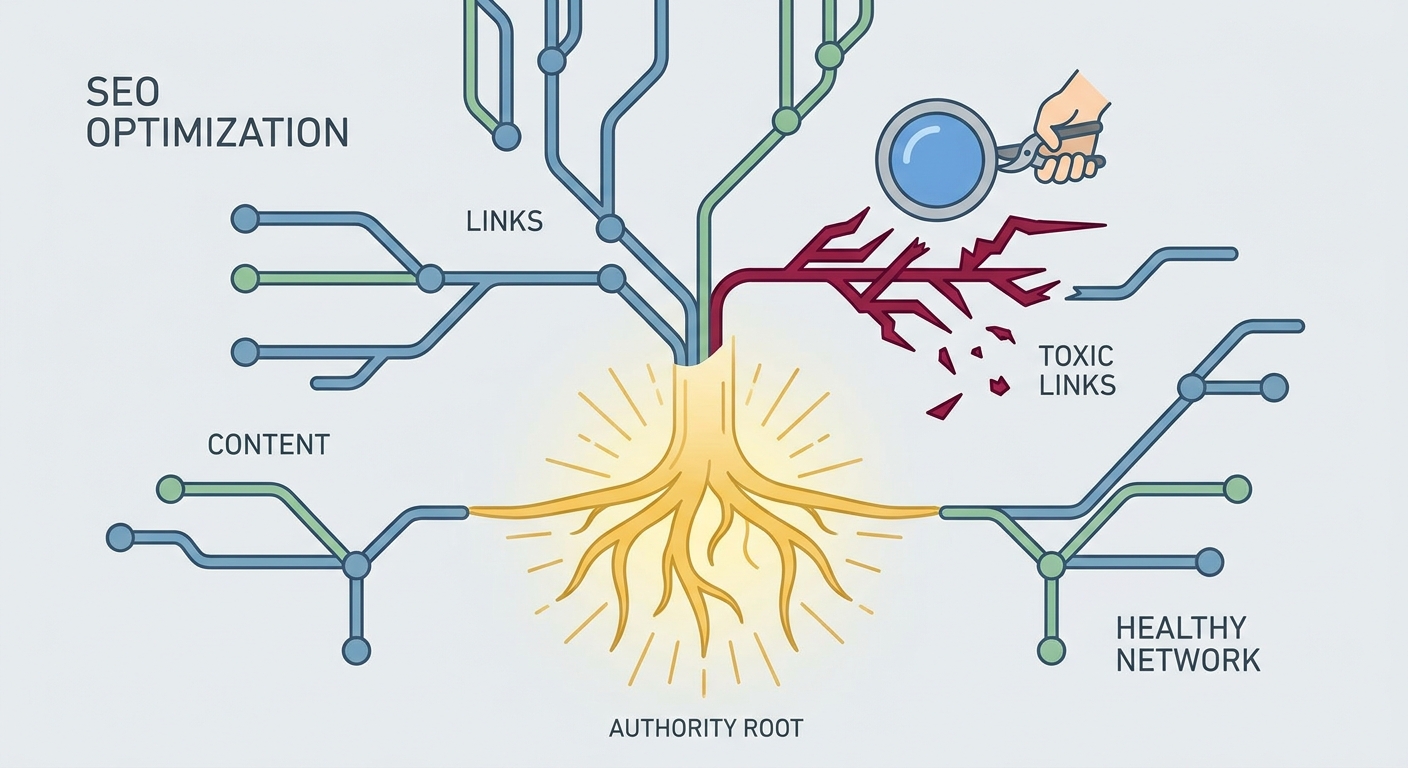
You’re likely losing authority right under your nose. Broken links and messy redirect chains are leaking equity every single day. Using the methods in our technical SEO audit guide, you can identify these leaks and plug them. It’s often the fastest way to get a rankings boost without writing a single new word.
Optimizing for AI Overviews via Backlinks
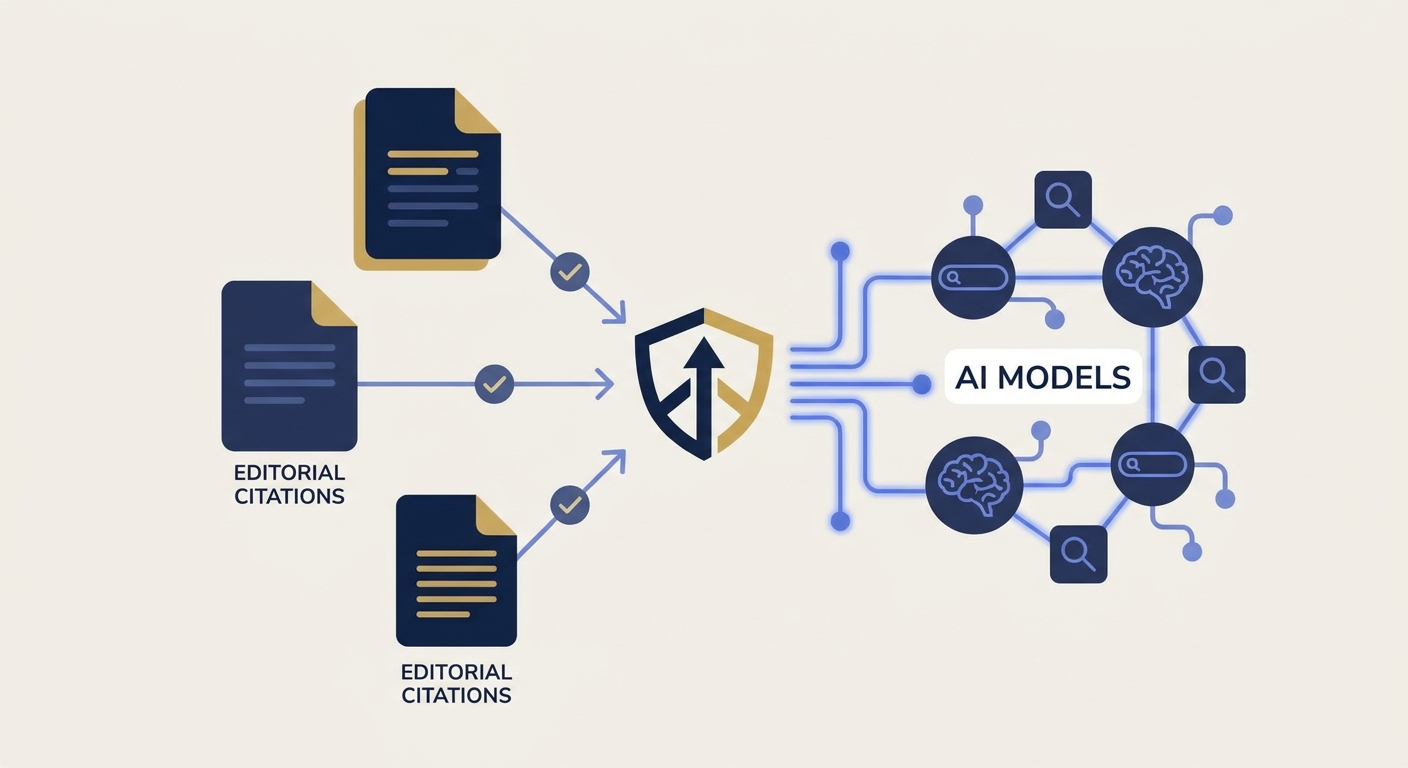
AI search doesn't "crawl" the web like Google did ten years ago. It prioritizes "Citation Authority." If you want your brand to be the answer in an AI Overview, you need to be the source the machine trusts.
Your backlinks need to be contextual and data-rich. When a high-authority site links to your primary research, that link is a verification signal. And stop obsessing over linking only to your blog posts. You want links pointing to your commercial "money pages." When your high-value pages have the strongest authority, your entire site rises.
Avoiding the Penalty Box: The "No-Go" List
The barrier for entry is higher, and the penalty for failure is brutal. Google’s algorithms are getting better at spotting the fake stuff. Stay strictly within Google’s Webmaster Guidelines regarding link schemes.
Avoid the "Anchor Text Trap." If you’re over-optimizing with exact-match keywords like "best software service," you’re waving a red flag. Your anchor text should be natural—branded, naked URLs, and descriptive phrases. If you’re buying from PBNs or marketplaces that sell "guest posts" on dead sites, you’re just paying for a future penalty.
The 2026 Outreach Template Library
The "Human-First" approach is the only way to get past the gatekeepers. Keep it short, respect their time, and show them how you’re making their life easier.
| Feature | The Old Way (Spammy) | The 2026 Way (Value-Driven) |
|---|---|---|
| Strategy | Automated Blast | Personalized Outreach |
| Focus | Link Exchange | Value Exchange |
| Content | AI-Generated Templates | Unique Insights/Data |
| Goal | Quantity/DA Metrics | Authority/Relevance |
The "Value-Add" Template: "Hi [Name], I was reading your piece on [Topic]. Great deep dive. I noticed you referenced the 2023 data for [Metric]. We just published our 2026 industry survey which shows a 15% shift—thought it might be a useful update for your readers. Here is the raw data [Link]. No pressure, just thought you’d appreciate the context."
Essential Tools for the Modern Link Prospector
Stop living in spreadsheets. Use the Ahrefs backlink checker to perform deep manual reviews of potential partners. Look at the traffic, not just the numbers. If a site’s traffic is tanking while their outbound link count is skyrocketing, run. You want to partner with sites that are growing, not sites that are selling off their reputation.
Frequently Asked Questions
Does link building still matter in the age of AI search?
Yes. Links are trust signals. Even as AI summarizes information, it relies on these signals to verify credibility. By being the primary, cited source, you cement your authority and ensure you’re the one the AI references.
What is the difference between "organic" link building and "manual" link building?
Organic link building is the result of creating high-quality assets—research, tools, insights—that naturally attract links. Manual link building is the active, relationship-based work of getting that content in front of the right editors. You need both to win.
How many backlinks do I need to rank for a competitive keyword?
There is no "magic number." It’s relative to the competition. You need just enough to match or exceed the authority of the domains currently holding the top spots. If your competitor has 10 great links, 50 spammy ones won't move the needle. You need 11 great ones.
Are niche edits still considered safe in 2026?
Niche edits are safe only if they are truly editorial. The site must have real, human-driven traffic, and the link must be contextually relevant. If the edit feels forced or the site is just a link farm, it will hurt you.
How do I identify a "Seed Site" in my industry?
Look for the publications your audience reads daily. These are the industry hubs—the sites that maintain strict editorial standards and get cited by major news outlets. If a site is being referenced in top-tier reports, that’s your seed site.