Organic Link Building: What They Are & How to Get Them

TL;DR
- ✓ Organic link building focuses on earning citations through high-value content instead of manual outreach.
- ✓ Spammy guest posting and link farms are now liabilities that trigger Google penalty risks.
- ✓ Search engines prioritize entity authority and editorial trust over simple backlink volume.
- ✓ Organic links act as long-term assets that build a defensible moat for your brand.
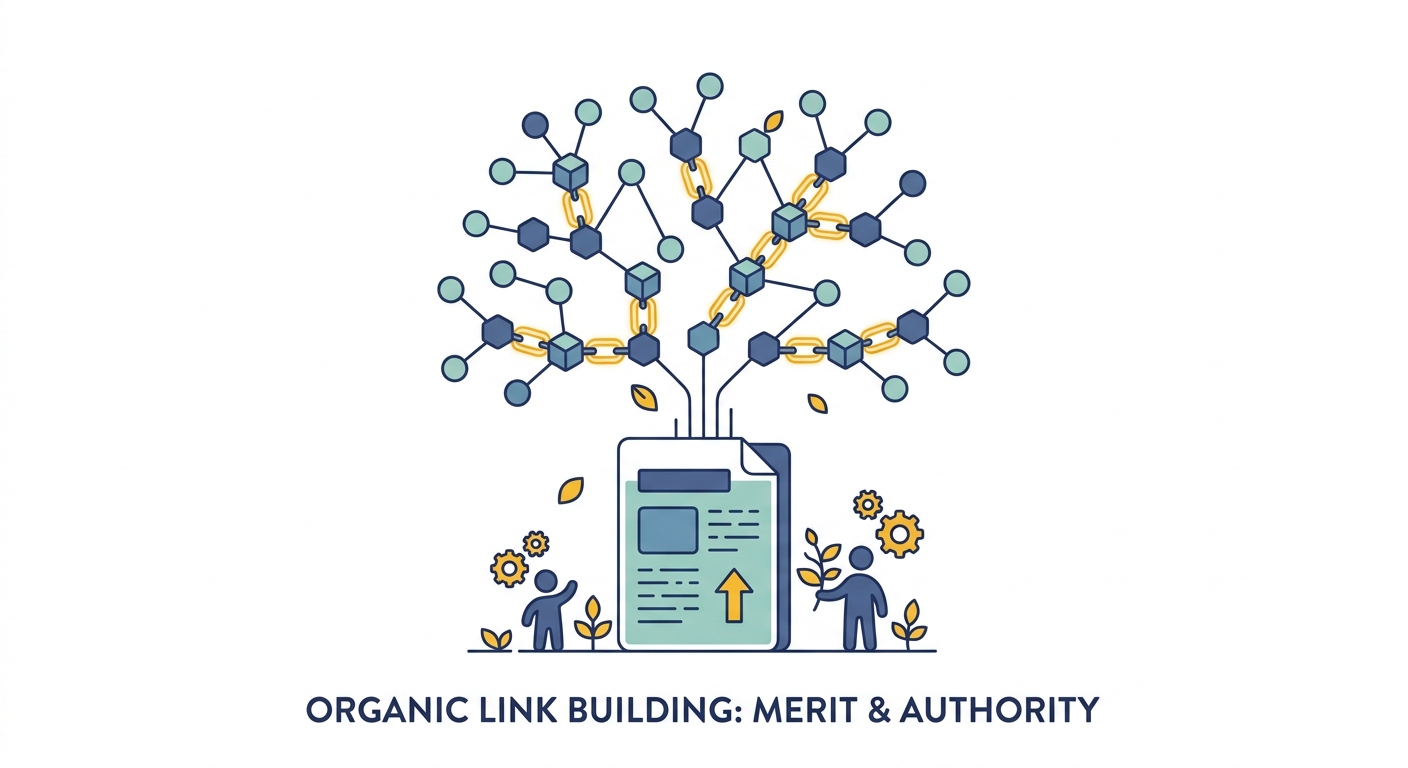
Organic link building is simple in theory, yet brutal in practice. It’s the art of earning a nod of approval from another website—not because you paid for it, nagged the editor, or traded favors in a dark corner of the internet—but because your content is actually worth citing. It’s meritocracy in its purest form.
We’ve hit a wall in 2026. The SEO tactics that defined the last decade—the spammy guest post farms, the endless reciprocal back-scratching, those robotic cold emails—are officially dead weight. They aren't just ineffective anymore; they’re a liability. Today, a backlink acts as a digital seal of approval. If your content doesn't offer a fresh perspective or solve a real-world problem, no amount of outreach will convince a high-authority site to link to it. Google’s latest Link Spam Guidelines make the reality clear: if you’re trying to manufacture links to game the system, you’re playing a losing game.
Why the "Link Building" Era is Over
For years, SEO was treated like a broken math equation: X links + Y keywords = Z ranking. We spent a decade treating backlinks like a commodity—a cheap resource to be bought and sold. But the web has shifted under our feet. We’re currently drowning in a sea of AI-generated mediocrity. The signal-to-noise ratio is at an all-time low, making it harder than ever to be heard.
Google’s algorithms have stopped counting links like they’re trading cards. Instead, they’re evaluating the authority of the entity behind the link. When a low-quality, "content farm" site links to you, it’s white noise. It doesn't move the needle. But when a reputable industry publication or a peer-reviewed paper cites your proprietary data? That’s a signal. That’s authority. This pivot from "building" links to "earning" them is the defining transition of modern SEO. You don’t "build" a reputation; you earn it through consistent, high-value output. Links are just the byproduct of that hard work.
Defining Organic Link Building and Its Resilience
Organic link building is defined by one thing: the absence of coercion. An editorial backlink is a vote of confidence given freely by another creator because your content made their work better. This is the only way to future-proof your domain.
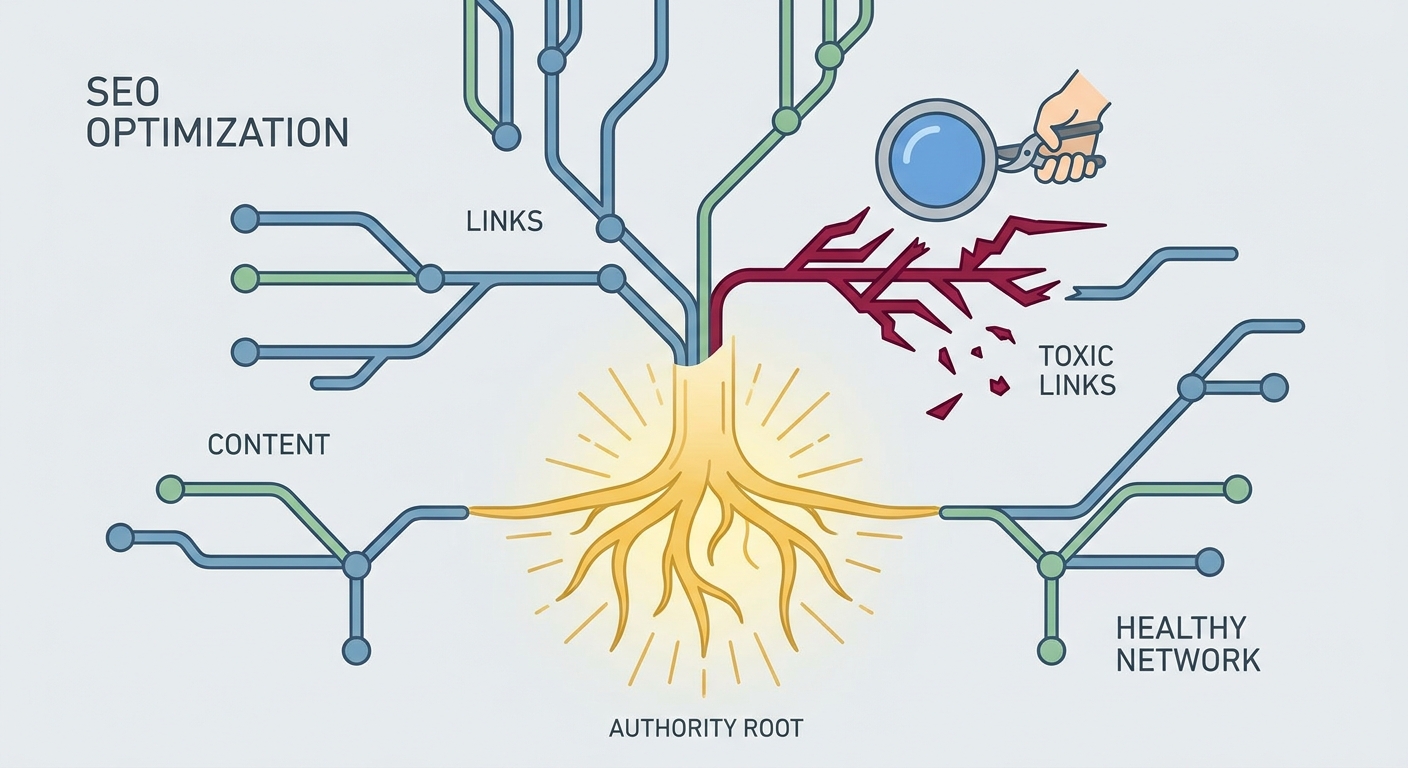
When you rely on manufactured links, your growth is tethered to the longevity of those artificial networks. If those networks get de-indexed or hit by a manual penalty, your site goes down with them. It’s a house of cards. Conversely, organic links are assets that appreciate over time. When you’re cited as a primary source of truth, that link remains relevant for years. It creates a defensible moat around your brand that competitors can't simply "buy" their way through. As noted in Backlinko's Link Building Studies, the most consistent growth in organic search rankings correlates strongly with high-quality, non-manipulated backlink profiles.
The Link Earning Flywheel
Stop grinding your gears with manual outreach. You need to embrace the "Link Earning Flywheel." This model shifts the focus from "getting a link" to "creating an asset that is impossible to ignore."
The flywheel starts with Content Utility. Don't write just to fill a calendar. Build resources that serve a specific audience. Once that utility is established, Digital PR acts as the engine, placing that research in front of the right people—journalists, influencers, and industry peers. This leads to Editorial Citations, which in turn builds your Domain Authority. As your authority grows, your Organic Reach expands, putting your next piece of content in front of an even larger audience. It’s a cycle that makes the next round of link earning exponentially easier.
AI and the Originality Gap
We are currently witnessing an "Originality Gap." Because AI models can synthesize existing information in the blink of an eye, generic summaries have become worthless. No one is going to link to your "10 Tips for Marketing" blog post because ChatGPT can generate that in three seconds.
To earn links today, you must provide what AI cannot: first-party, proprietary data. When you conduct a survey of 500 industry professionals or analyze trends in your specific niche, you aren't just summarizing the web; you’re adding to it. Human editors and journalists are desperate for verifiable research to bolster their own work. They will prioritize a link to your original study over a link to someone else’s AI-generated summary every single time. This is the "Expert-to-Expert" pipeline.
The Hierarchy of Link Magnets
Not all content is created equal. If you want to win, you must invest in assets that act as magnets for natural citations.
- Original Research and Proprietary Studies: This is the gold standard. Whether it’s a report on market shifts or a case study of your own performance, data is the most cited asset on the web. If you need help structuring this data-heavy approach, our Content Strategy Services focus on identifying these high-value opportunities.
- Functional Tools and Calculators: If you build a free tool that solves a specific pain point—like a custom ROI calculator or a specialized industry tool—it becomes a utility that people link to because they want to share the solution with their audience.
- Contrarian Perspectives: Challenging the status quo with evidence is a powerful way to get noticed. Journalists love a story that flips a standard narrative on its head, provided you have the data to back it up.
Executing a Digital PR Strategy
Digital PR is the modern evolution of link building. It is not about begging for a link; it is about providing value to a journalist who needs a source for their story. The days of sending the same templated "I saw your article and thought you'd like this link" email are dead.
Instead, focus on the "proprietary data pitch." When you have a unique study, your pitch should be: "I have data on [X industry trend] that contradicts the current consensus; would you be interested in seeing the charts?" This turns you into an asset for the journalist, not a nuisance. You can also utilize platforms like Connectively (formerly HARO) to monitor for active queries from writers looking for experts. For a deeper look at how to master these pitches, check out our Digital PR Case Studies.
Tactics to Avoid in 2026
The "Blacklist" of 2026 is longer than ever. Avoid PBNs (Private Blog Networks), automated link-building software, and low-quality guest post marketplaces at all costs. These are traps. Google’s algorithms have become incredibly good at identifying patterns of unnatural, manufactured links.
Furthermore, be wary of "over-optimization." If every single link pointing to your site uses the exact same keyword-rich anchor text, you are begging for a manual penalty. A natural link profile should be messy; it should include branded links, naked URLs, and a wide variety of descriptive text. As noted in the comprehensive Ahrefs Link Building Guide, the diversity of your link profile is a key indicator of health.
Measuring Success Beyond Volume
Stop looking at "Total Backlink Count" as your north star. It is a vanity metric. A thousand spammy links are worth less than one link from a highly respected industry publication.
Instead, measure "Authority Flow." Are you getting links from sites that are relevant to your niche? Are these links driving actual referral traffic? Referral traffic is the ultimate proxy for link quality. If a human actually clicks the link to visit your site, that is a high-quality link. If a link sits on a page that sees zero visitors and never sends a single click, it is essentially invisible to both users and the algorithms. Focus on building relationships with sites that your target audience actually reads.
Frequently Asked Questions
Does content quality really matter as much as link volume?
In 2026, quality is the only driver of sustainable link volume. Low-effort content is invisible to the people who have the authority to link to you. If you want links, you must create content that is worth citing.
How do I get organic links if I don't have a big brand?
Focus on "niche authority." You don't need to be a global brand to be the go-to source for a specific, narrow topic. By producing deep, original research on a hyper-specific subject, you can become the primary reference point that even big brands will eventually cite.
Is guest posting still considered "organic"?
It is only organic if it is truly editorial. If you are writing a high-quality, insightful piece for a reputable site that adds genuine value to their readers, that is a legitimate editorial link. If you are paying for the post or writing thin content just to drop a link, it is a gray-hat tactic that carries significant risk.
How can I optimize my content to be cited by AI models?
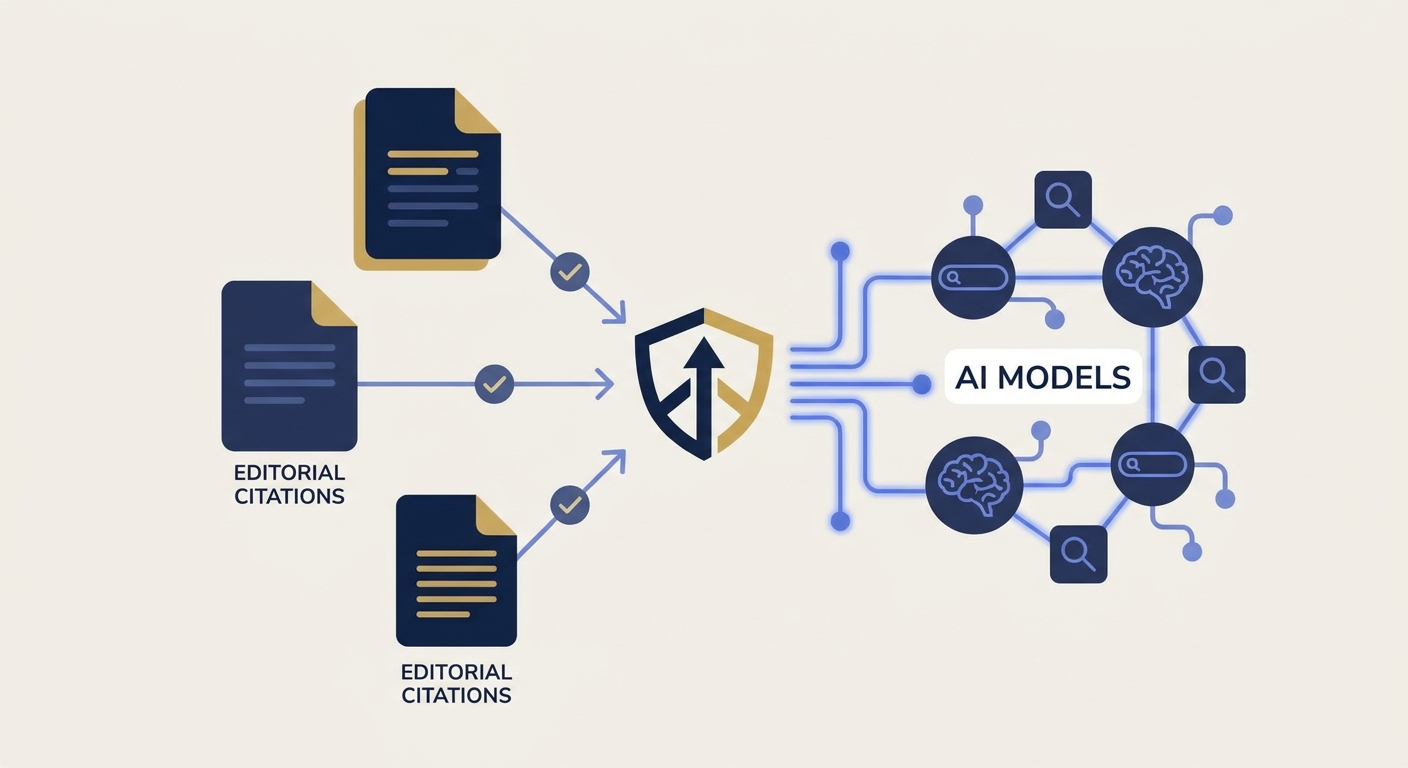
AI models are trained to prioritize primary sources that are structured clearly. Use descriptive H2s and H3s, include schema markup for your data, and present your core findings in pull-quotes or clear, data-backed lists. When an AI can easily digest your content as a factual, verified source, it is more likely to synthesize that information in its outputs.