Object Hyperlinking Defined

TL;DR
- ✓ Object hyperlinking transforms static physical products into interactive digital media channels.
- ✓ Scanning a product triggers a digital twin to provide personalized customer experiences.
- ✓ Cloud middleware processes scans to deliver context-aware content and data insights.
- ✓ Adopting GS1 Digital Link standards ensures a unified and scalable phygital ecosystem.
For years, a product sitting on a store shelf was just that—a static object. A box held your shampoo, a barcode told the register how much to charge, and that was the end of the story. The package was a silent, passive participant in the customer journey.
That era is over.
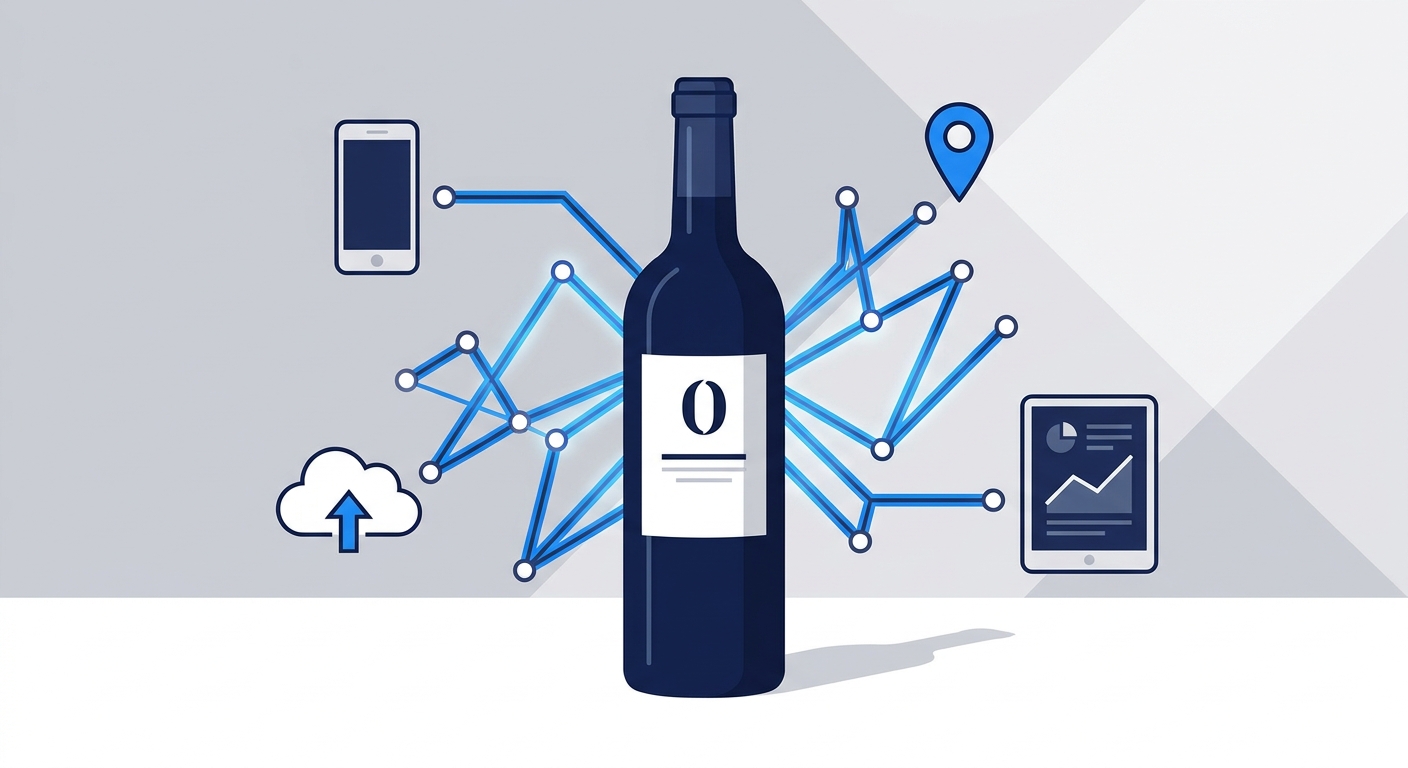
Today, your product is a media channel. Object hyperlinking is the process of taking a physical item—whether it’s a bottle of wine, a piece of heavy machinery, or a designer handbag—and turning it into an interactive digital interface. It’s the connective tissue of the "Phygital" world. A quick tap or scan is no longer just a way to pull up a website; it’s a bridge to a personalized experience, a tool for authentication, and a window into your supply chain.
Why Does Object Hyperlinking Matter Now?
We’ve moved past the novelty phase. Consumers today expect instant gratification. If a customer picks up your product and wants to verify its origin, see a tutorial, or snag a discount, they want it done in three seconds or less. If you can’t deliver that, you’re failing to use the most powerful marketing asset you own.
The "web" is no longer confined to a screen on a desk or in a pocket. It’s embedded in the materials around us. By 2026, the brands that win will be the ones that treat their physical goods as high-intent data nodes. If your product doesn't talk back to the customer, you’re missing out on a massive opportunity to build loyalty right at the point of sale.
How Does It Actually Work?
It sounds like tech-heavy magic, but it boils down to three things: a trigger, a transmission mechanism, and a backend brain. The triggers—QR codes, NFC chips, or RFID tags—are just the physical "handshake." The real power is in the cloud middleware that interprets the scan.
When a user interacts with a physical object, they aren't just visiting a URL. They are triggering a "Digital Twin." This is a live, virtual replica of that specific item, containing its history, status, and context.
This cycle—Scan, Process, Redirect—is the secret sauce. A single product can now serve a dozen different purposes depending on who is scanning it and where they happen to be standing.
The Standards Powering the "Phygital" Web
The "Phygital" web can feel like the Wild West, but it doesn't have to be. To keep things from becoming a fragmented mess, industry leaders are rallying around the GS1 Digital Link Standard. It allows a single code to handle both inventory logistics and consumer content. It’s the difference between a clean, unified ecosystem and a proprietary nightmare.
Then there’s the hardware. QR codes are the reigning kings of accessibility—everyone has a camera, and no one needs an extra app. But if you want that premium, "tap-and-go" feel, NFC Forum standards are the way to go. It’s a UX choice: do you want the high-visibility call-to-action of a printed QR code, or the frictionless, proximity-based elegance of a hidden NFC tag?
Driving Engagement: Solving Real Problems
The best brands don't use hyperlinking to show off; they use it to solve problems.
Take authentication. Counterfeiting is a massive headache for luxury brands and electronics manufacturers. By using serialized, non-cloneable links, you provide immutable proof of ownership. The customer scans it, and they know exactly what they’re holding is the real deal.
Then there’s sustainability. Modern shoppers are tired of vague "eco-friendly" promises. With a simple scan, you can show them exactly where the raw materials came from and what the product’s carbon footprint looks like.
Context is king, too. A wine bottle scanned at a restaurant should suggest food pairings. The same bottle scanned in a grocery store aisle? Maybe offer a discount for a bulk purchase. It’s all about the "where" and "when." Before you start building these flows, make sure to brush up on Mobile-First Landing Page Best Practices to ensure that high-intent moment doesn't die on a slow-loading, clunky page.
The Ultimate First-Party Data Goldmine
With third-party cookies dying a slow death, marketers are scrambling. But guess what? Your physical products are a goldmine of first-party signals.
When a user scans an object, they aren't "accidentally" clicking an ad. They are making a deliberate, physical action. They are telling you who they are, where they are, and exactly what they’re interested in. That is the most honest data a brand can get.
By pushing these users into your CRM, you turn a one-time buyer into a known relationship. If you’re just getting started, Our Guide to First-Party Data is a great place to map out the strategy for turning those anonymous scans into long-term profit.
Designing the Perfect Scan-to-Action
You have about ten seconds. That’s the "brutal constraint." If the user doesn't find value in that window, they bounce. Speed isn't just a feature—it’s the product.
Also, for the love of everything, keep it "app-less." Forcing a user to download an app just to see a product’s origin is a conversion killer. Keep the experience in the browser.
We’re entering the "Spime" (Space-Time) paradigm—the idea that every object has a history in both space and time. As noted in The Future of IoT Packaging, the next iteration of the web is all about integrating physical objects into the digital stream. Keep your landing pages ephemeral, fast, and hyper-relevant to the exact coordinate of the scan.
Measuring Success: Moving Beyond Vanity Metrics
Measuring ROI in this space requires a total shift in mindset. We’re moving away from "impressions"—the vanity metrics that make marketing departments feel good—and toward conversion-based physical tracking.
When you track the scan-to-purchase journey, you finally get to put a dollar figure on your packaging and retail displays. You aren't just counting eyeballs; you’re counting intent.
Frequently Asked Questions
What is the difference between simple QR codes and true Object Hyperlinking?
A simple QR code is a static shortcut to a URL. Object hyperlinking is a dynamic, data-rich backend process. While a static QR code always sends the user to the same place, an object hyperlink uses the context of the scan—location, time, user history, and product serial number—to deliver a tailored experience that can change daily or even hourly.
Is Object Hyperlinking secure?
Yes, provided you utilize cryptographic tokens. By embedding a unique, non-cloneable identifier into the link, brands can prevent "bad actors" from hijacking the traffic or creating counterfeit scan experiences. This ensures that the user is always interacting with the authentic, brand-sanctioned Digital Twin.
How do I measure the ROI of a hyperlinked physical object?
ROI is measured by tracking the conversion rate from the point of scan. By assigning unique identifiers to every physical unit, you can track the entire customer journey from "scan" to "purchase," allowing you to calculate the precise value generated by specific packaging iterations or retail displays.
Do I need an app for object hyperlinking?
Absolutely not. Modern smartphone browsers are fully capable of handling complex interactions, including augmented reality and secure authentication, without the friction of an app download. Keeping the experience "app-less" is the single most important factor in maximizing scan-to-conversion rates.
How does Object Hyperlinking impact my SEO strategy?
High-intent physical traffic serves as a powerful signal to search engines. When a user scans a product and engages with your landing page, it signals that your brand is relevant and locally significant. This localized, high-authority engagement can boost your search visibility for product-specific queries, proving that your physical products are actively driving your digital brand authority.