Is Your Link Building Agency Delivering? How to Measure SEO Campaign Success


TL;DR
- ✓ Abandon link volume metrics in favor of topical authority and referral traffic quality.
- ✓ Recognize that low-quality link spam now triggers algorithmic penalties rather than ranking growth.
- ✓ Prioritize content-led digital PR to earn high-value citations from authoritative industry sources.
- ✓ Optimize your brand for AI-powered answer engines instead of traditional keyword rankings.
If your monthly SEO report is a bland spreadsheet filled with Domain Rating (DR) charts and a tally of "guest posts" secured, wake up. You’re playing a game that’s already over.
The 2026 search landscape isn't about "ranking for keywords" anymore. That’s ancient history. We’ve entered the age of "owning the answer" inside AI-powered engines. If your agency is still peddling a flat monthly fee for a specific number of backlinks, they aren't building your authority. They’re liquidating your brand equity. They are trading your long-term reputation for cheap, low-quality signals that Google’s algorithms—and the LLMs training on the web—are learning to ignore or, worse, penalize.
The Death of the Link Volume KPI
For years, the industry leaned on a lazy, flawed premise: search is a numbers game. Whoever has the most links wins. This birthed the plague of the "100 links for $500" package—agencies spamming placements on irrelevant, dead-end websites that exist only to host outbound links.
Today, this is a liability. Look at Google's E-E-A-T Guidelines. The goal isn't "more links." It’s Experience, Expertise, Authoritativeness, and Trustworthiness. A link from a site with zero human traffic contributes exactly zero to your E-E-A-T score. In fact, an unnatural anchor text profile or a sudden flood of links from "link farms" is a giant neon sign to Google that you’re gaming the system.
When you measure success by "link volume," you’re paying your agency to take the path of least resistance. You aren't buying authority; you’re buying noise. And noise doesn't convert.
Green Flags of a High-Performance SEO Agency
If you want to know if your agency is actually worth their salt, stop counting links. Start looking at the strategy. A modern, high-performance agency acts more like a boutique digital PR firm than a directory submission mill.
Content-Led Digital PR
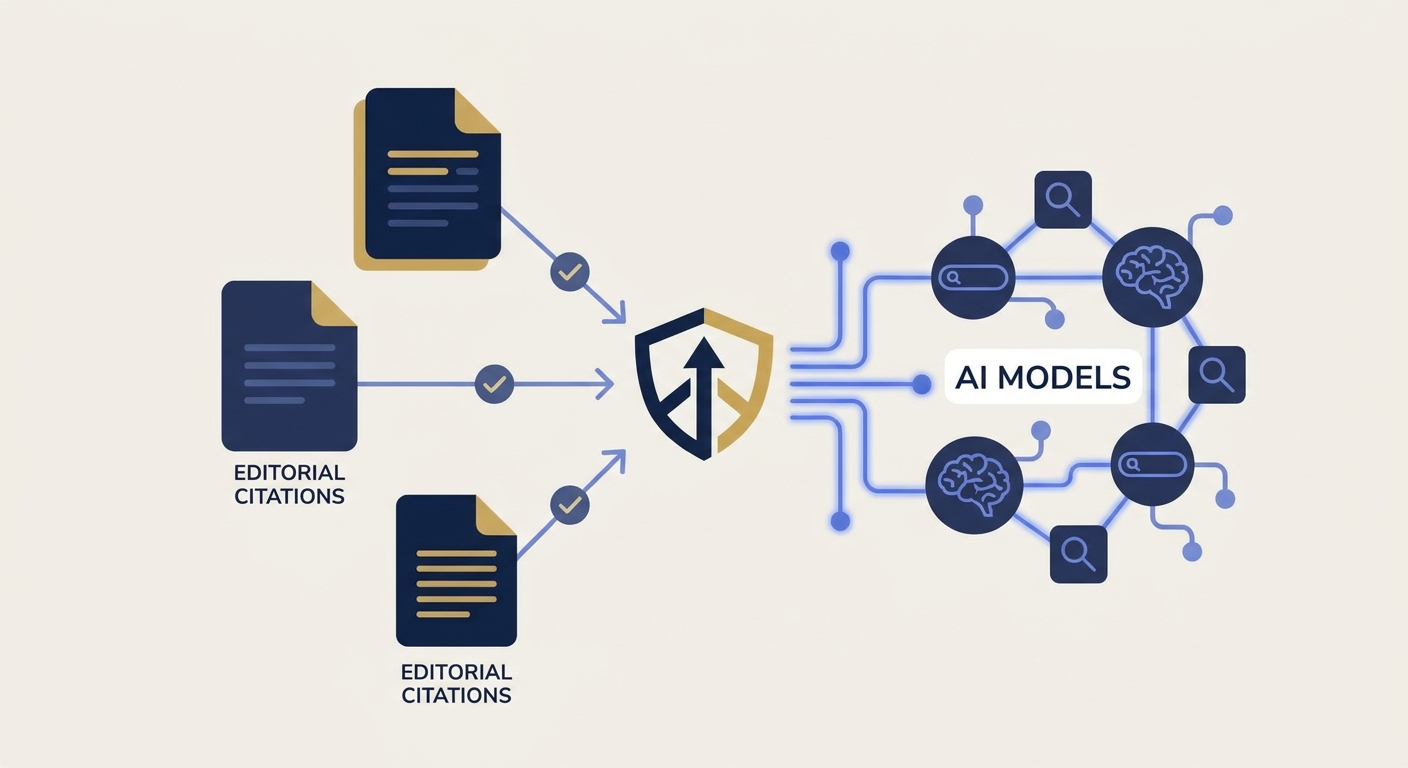
The best links are the ones you don't buy. They are earned. An agency that knows its stuff prioritizes original data research, interactive tools, or proprietary industry analysis. This is the bedrock of our Content Marketing Strategy Guide—building assets so sharp that journalists and industry bloggers feel compelled to cite them. That’s not outreach; that’s prestige.
AI Search Optimization
We are living in the era of the answer engine. Brands are being cited directly in AI-generated responses from tools like Perplexity AI. A sophisticated agency understands that getting cited in these environments requires the same authoritative signals as traditional search. Ask your agency: "How are you positioning our brand to be cited in AI summaries?" If they answer with "we build more links," fire them. They’re stuck in 2015.
Radical Transparency
Can your agency show you the publisher list before a placement goes live? Do they provide data on referral traffic, or just hide behind DR metrics? If they’re cagey about where your brand is showing up, they’re hiding a PBN (Private Blog Network) or a low-quality guest post farm. You deserve full visibility into your brand’s digital footprint.
Red Flags That Should Trigger an Immediate Audit
If your gut tells you your current strategy is more "spam" than "authority," don't wait for a manual action to take action. Use our SEO Audit Services to spot the gaps, and watch out for these warning signs:
- The Secrecy Trap: If they won't share a list of potential placements until it’s too late, they’re hiding the quality. You own your brand; you should have a say in where it appears.
- Anchor Text Over-Optimization: If every link uses the exact same "money keyword" anchor text, you are walking into a Google penalty. Natural backlink profiles have a messy, eclectic mix of branded, URL, and generic text.
- Irrelevant "Link Dumping": A link from a pet food blog to a SaaS accounting firm? Useless. It doesn't build topical authority. It just looks like a bot did the work. If there’s no thematic overlap, it’s a waste of your budget.
The 2026 Framework: Measuring True SEO Success
To move to a "Traffic-First" model, you have to redefine ROI. A link is only as good as the audience it reaches.
| Metric Type | 2015-Style Report | 2026-Style Report |
|---|---|---|
| Primary KPI | Domain Rating (DR) | Referral Traffic / Conversions |
| Backlink Focus | Quantity of links | Quality of mentions/citations |
| Visibility | SERP rankings | AI Engine citations/Brand share of voice |
| Reporting | "X number of links built" | "X amount of revenue attributed to organic growth" |
By linking your acquisition strategy to actual organic traffic and brand lift, you shift from a "cost-center" mindset to a "growth-investment" mindset. Referencing the State of Backlinks Report, it's clear: quality links drive dominance, but only when they're part of a broader, content-led ecosystem.
How to Pivot Your Existing Campaign
If you’re currently paying for high-volume junk, stop. Pivot today.
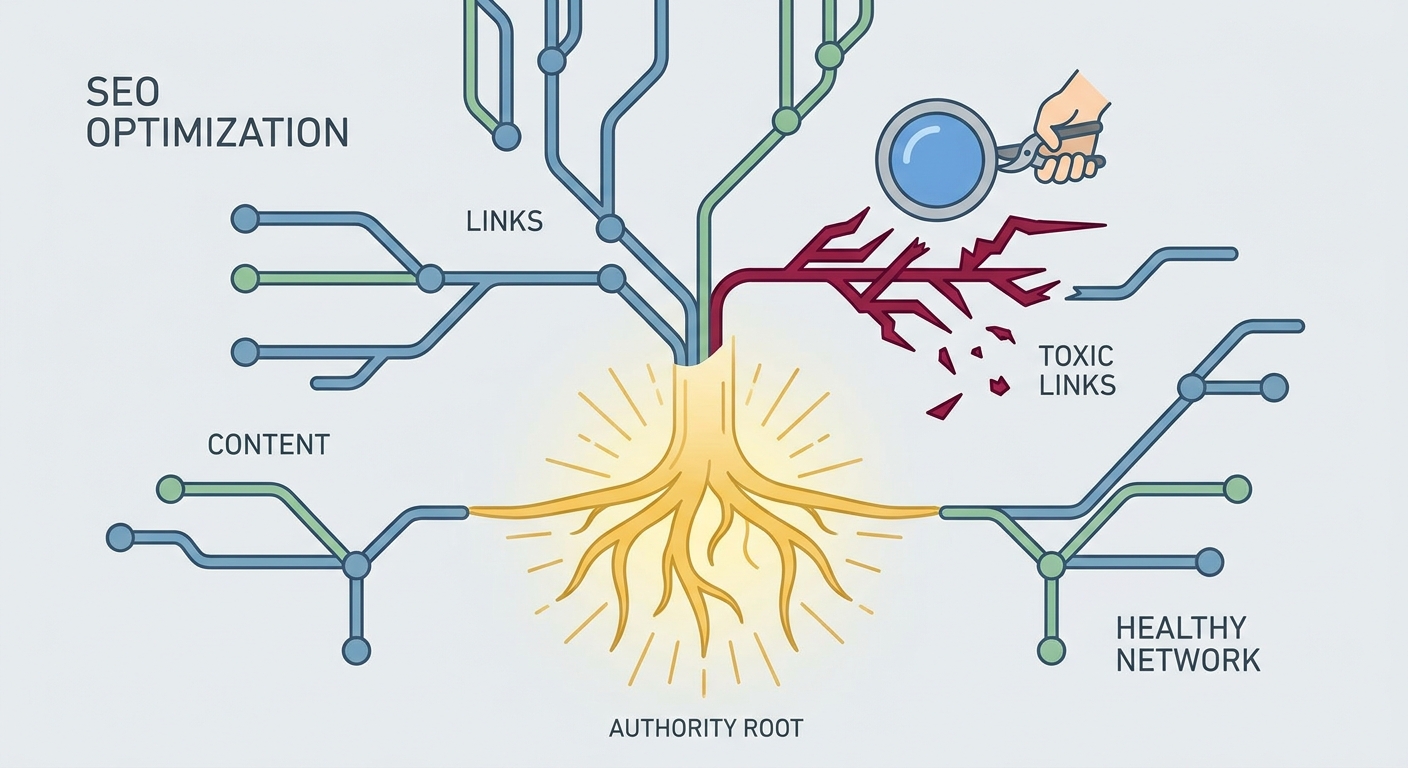
Step 1: The Link Audit Audit your profile. Find the toxic, spammy, and irrelevant links. Use the Google Disavow tool if you have to. Don't let a mountain of bad history drag down your future.
Step 2: Invest in Linkable Assets Shift your budget from "outreach labor" to "asset creation." Create original surveys, white papers, or calculators. Have something worth linking to. It’s the only sustainable way to build authority in 2026. Review our Content Marketing Strategy Guide for the framework on how to build assets that earn links naturally.
Demystifying the $5k–$10k Budget
When you see quotes for $5,000–$10,000 per month, you aren't paying for "links." You’re paying for the brainpower to conduct original research, the editorial staff to pitch high-tier publications, and the technical oversight to ensure your site is optimized for AI. Cheap link-building is the most expensive path because it requires constant "cleanup" work and eventual recovery from algorithmic hits. High-end, strategy-first SEO is an investment that compounds. Bulk-outreach packages? They require a total restart every 18 months.
Future-Proofing Your Authority
The future of search isn't just a blue link on a results page. It's about your brand becoming the "source of truth." When you focus on building genuine authority through high-quality Digital PR and linkable assets, you aren't just chasing a Google update—you’re building a brand that AI models and human users trust. Stop counting links and start measuring impact.
Frequently Asked Questions
How do I know if my link-building agency is using "black hat" tactics?
Look for a lack of transparency regarding placement sites, unnatural anchor text velocity (where every link uses your main keyword), and links appearing on sites that have zero human traffic or relevance to your industry.
Why should I care about AI visibility if I’m only focused on Google?
Google’s Search Generative Experience (SGE) and AI-driven search models prioritize the same authoritative signals that ChatGPT and Gemini use to synthesize answers. Being cited in these AI tools is becoming a primary signal of brand authority that influences how Google itself ranks your content.
What is a realistic timeline to see results from a professional link-building campaign in 2026?
Unlike "bulk" outreach that produces immediate, low-value spam, content-led Digital PR takes 3–6 months to gain momentum. However, this approach provides exponential, compounding long-term growth, as your assets continue to earn links long after the initial campaign.
How do I calculate the ROI of my link-building agency?
Stop measuring "Cost Per Link." Instead, calculate "Attributed Organic Revenue" by tracking referral traffic from high-quality mentions and monitoring the growth of organic keyword rankings for your high-value product pages.
Does Domain Rating (DR) still matter at all?
DR is a rough proxy for site strength, but it is a vanity metric. It should never be the primary KPI. A single link from a high-traffic, relevant industry publication is worth more than a hundred links from high-DR sites that have no actual human readership.