7 Link Building Strategies That Actually Work in 2026

TL;DR
- ✓ Abandon spammy guest posts and link farms to avoid manual Google penalties.
- ✓ Prioritize digital PR to earn media placements from high-authority industry journalists.
- ✓ Create proprietary data-led content to naturally attract high-value backlinks.
- ✓ Build authentic relationships with industry experts rather than using cold outreach.
- ✓ Focus on E-E-A-T signals to improve search visibility in a zero-click reality.
In 2026, the old-school link building playbook is effectively dead. If you’re still buying bulk guest posts or spinning low-quality articles to juice your Domain Rating, stop. You aren’t helping your site; you’re digging its grave. Google’s Site Reputation Abuse policy has turned those "shortcuts" into direct liabilities.
The game has changed. We’re living in a "zero-click" reality where AI models synthesize answers directly on the SERP. In this environment, links aren't just pipelines for traffic. They are trust signals. They verify your E-E-A-T—Experience, Expertise, Authoritativeness, and Trustworthiness—to both the users clicking your links and the algorithms deciding your fate. If you want to rank, quit chasing numbers and start chasing relevance.
The "Death" of Shortcuts: What Strategies Should You Abandon Immediately?
If you’re still banking on expired domains, mass-produced guest posts, or link exchanges, you’re building your house on sand. Google’s algorithms are getting scarily good at spotting "link farms" masquerading as premium publishers.
Using expired domains used to be the "pro" move to inherit aged authority. Now? It’s a fast track to a manual action. We’ve entered an era where "reputation" is a hard, quantifiable metric. If your site is tangled up with low-quality, irrelevant, or spammy outbound links, it drags your entire entity profile into the mud. Abandon the "spray and pray" mentality. If a site doesn't offer genuine value to a human reader or isn't a recognized authority in your niche, it’s not worth the pixels.
1. Digital PR: Moving Beyond "Link Trading"
Digital PR is the only sane successor to traditional link building. It’s not about begging for a follow link; it’s about becoming a source of authority that journalists, podcasters, and industry newsletter writers actually want to cite. You want earned media—placements that happen because your data or insight is simply too good to ignore.
Relationship-based outreach is the bedrock here. Forget cold-emailing thousands of people. Curate a list of 50 journalists or editors who actually cover your beat. Engage with their work. Comment on their pieces. Provide value before you ever ask for a link. By the time you pitch, you aren't a stranger—you’re a known, credible entity.
2. Data-Led Content: Why "Link Magnets" are the Gold Standard
If you want high-authority sites to link to you, give them something they can’t find anywhere else. Proprietary data sets, original industry surveys, and interactive calculators are the "link magnets" of 2026. Data is objective. It’s shareable. It gives journalists a reason to cite you as the primary source.
When you invest in scaling your outreach with professional Content Marketing Services, focus on creating assets that serve as the backbone of your link-building efforts. Don't just publish a blog post. Publish a "State of the Industry" report packed with unique charts, raw data, and expert analysis. Journalists are perpetually hunting for data to back up their narratives. If your research is the source, the link is the natural cost of admission.
3. Community-Based Link Building: Where Should You Be Engaging?
The "Give-First" methodology is the only way to play in niche-specific communities like professional Slacks, Discords, or industry forums. These spaces are often gatekept by people who can smell a "self-promotional link builder" from a mile away.
To win here, you must be a contributor. Spend weeks or months answering questions, sharing genuine insights, and helping members solve problems—without asking for anything in return. Once you’ve built actual social capital, your links will be seen as helpful resources rather than spam. When someone asks a question that your content perfectly answers, you aren't "link building." You're providing a solution.
4. Unlinked Mention Reclamation: Turning Awareness into Value
You’re likely being discussed online right now, but not every mention comes with a hyperlink. Unlinked mention reclamation is the easiest SEO win in the book. Use monitoring tools to track your brand name, your key personnel, or your unique research. Find the sites already talking about you.
The outreach is simple: "Thanks for the shoutout! I noticed you mentioned our [Project Name], would you mind turning that into a link so readers can find the full study?" Most editors are happy to oblige because they’ve already vetted your brand. It’s a frictionless way to turn existing brand awareness into concrete SEO value.
5. Broken Link Building 2.0: Targeted Relevancy
Broken link building isn't dead; it’s just evolved. The "spray and pray" method of digging through random, unrelated sites is a massive waste of time. The 2026 approach demands laser-focused targeting. Use Ahrefs Backlink Benchmarks to find pages that have high authority but are missing out on linking opportunities because their sources have gone stale.
By finding broken links on pages that are highly relevant to your business, you give the webmaster a quick win (fixing a broken link) and earn yourself a high-quality backlink. It’s a win-win, as long as the content you offer as a replacement is genuinely better than what was there before.
6. Entity-Based Link Building: Connecting the Dots
In 2026, Google’s Knowledge Graph is king. Entity-based link building focuses on co-citations—making sure your brand is mentioned alongside other recognized authorities in your niche. If you’re a SaaS tool, you want to be mentioned in the same breath as the big players.
Get your brand into expert roundups, podcasts, and reputable industry directories. When search engines see your brand name consistently appearing in the same context as established entities, they begin to associate you with that same level of authority. A link is great, but a co-citation that builds your entity profile is a long-term strategic advantage.
7. The "Anti-Spam" Audit: Protecting Your Domain
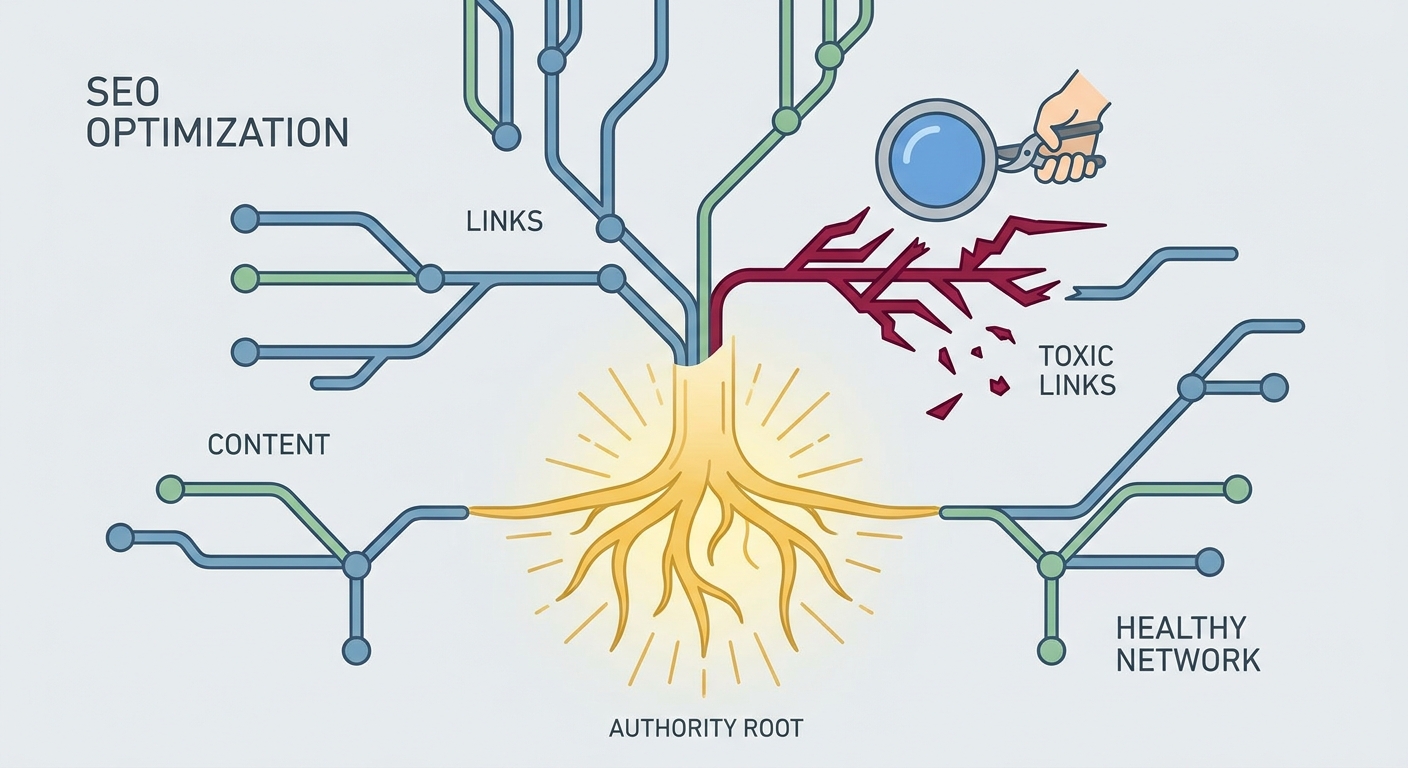
Before you start building new links, ensure your current profile isn't a ticking time bomb. An "anti-spam" audit is non-negotiable hygiene. You should periodically run a full health check using our SEO Audit Guide to identify toxic backlinks that might be triggering algorithmic sensitivity.
Look for spikes in low-quality links, patterns of identical anchor text, or links coming from sites that have been penalized. Use the disavow tool sparingly, but don't be afraid to prune the "junk" that’s accumulated over the years. Cleaning your profile is just as important as growing it.
How to Optimize Your Content for AI Search (SGE/AI Overviews)
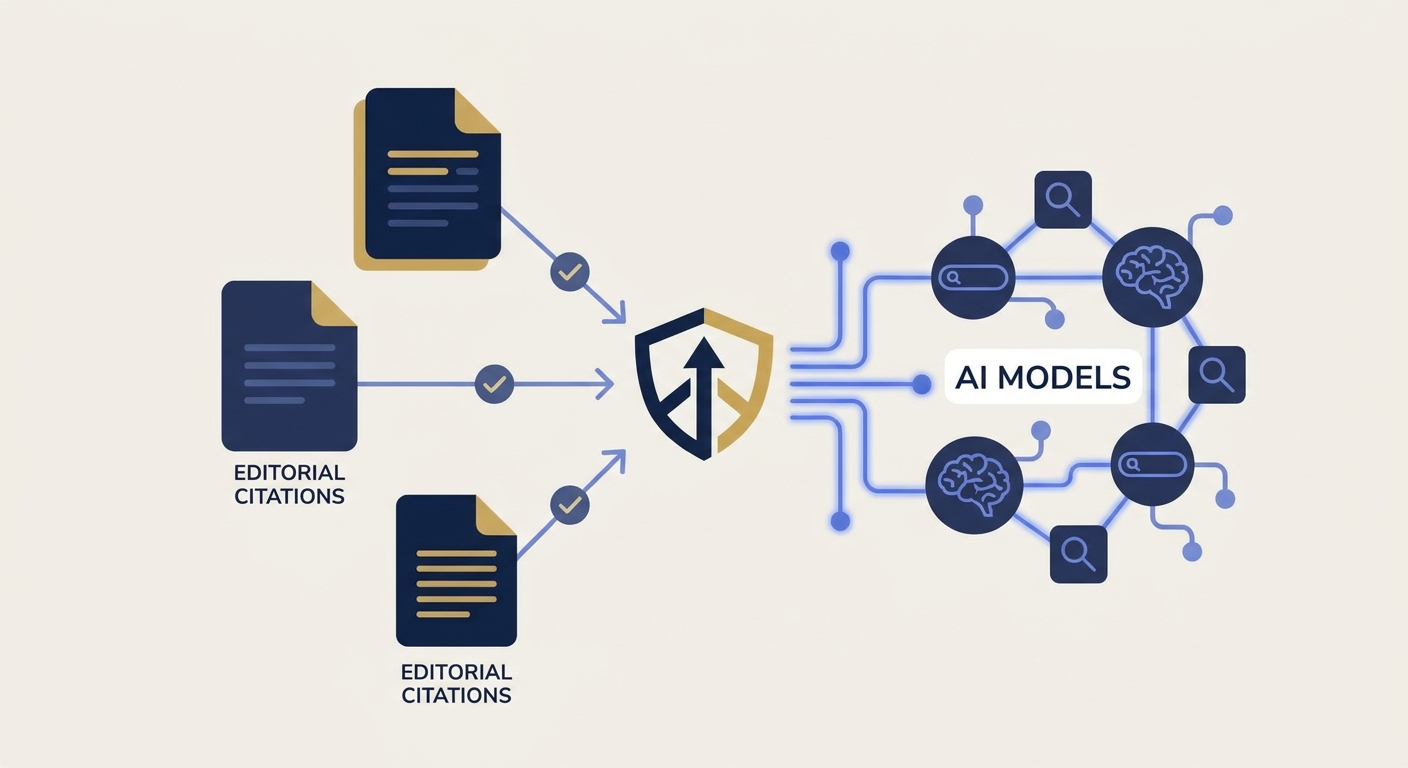
AI Overviews are fundamentally shifting the SERP. The models powering these experiences rely heavily on structured data and authoritative brand mentions to verify facts. To "get cited" by an AI, your content needs to be structured logically. Use clear headings, concise definitions, and schema markup that tells the search engine exactly what your content is about.
As noted in Search Engine Land’s latest insights on AI Overviews, the move toward "Zero-Click" means the AI is doing the heavy lifting for the user. Your goal is to be the source the AI trusts. Move away from fluff. Focus on high-utility, fact-dense content that is easy for a machine to parse and verify.
Conclusion: Future-Proofing Your Backlink Profile for 2027
Link building in 2026 is a discipline of quality, relevance, and, above all, patience. The tactics that rely on gaming the system are being systematically dismantled by smarter, more nuanced algorithms. If you want to survive the next year and beyond, stop viewing links as a metric to be gamed. Start viewing them as a proxy for your brand’s reputation. Build content that people want to cite, build relationships with the people who hold the keys to those citations, and ensure your site is technically sound. That is the only path to sustainable, long-term growth.
Frequently Asked Questions
Is link building still relevant in the age of AI search?
Yes. While AI search models provide answers directly, they rely on backlinks as a primary signal to determine which sources are authoritative and trustworthy enough to cite in their responses.
Do 'nofollow' links matter in 2026?
Absolutely. While they may not pass direct link equity, 'nofollow' links drive referral traffic, increase brand awareness, and put your name in front of the right audience, all of which contribute to your overall entity authority.
How do I build links without guest posting?
Focus on Digital PR, proprietary data-led research, and active participation in niche communities. By providing value and becoming a trusted source, links will come naturally as others cite your expertise.
How many links do I need to rank in 2026?
There is no magic number. One link from an industry-leading publication that is highly relevant to your topic is worth more than a thousand links from low-quality, generic websites. Prioritize relevance and authority over sheer volume.