Is Your Link Building ROI Meeting Expectations? A Guide to Performance Metrics

TL;DR
- ✓ Stop obsessing over backlink volume and vanity metrics like Domain Authority.
- ✓ Prioritize topical relevance and niche authority to build AI-resilient SEO signals.
- ✓ Focus on links that drive qualified prospects through your conversion funnel.
- ✓ Transition from automated outreach to manual, high-value editorial link acquisition.
If you’re still counting backlinks like they’re trading cards or obsessing over Domain Authority (DA) as if it’s the holy grail, you’re stuck in 2020. Your competitors? They’re playing by 2026 rules.
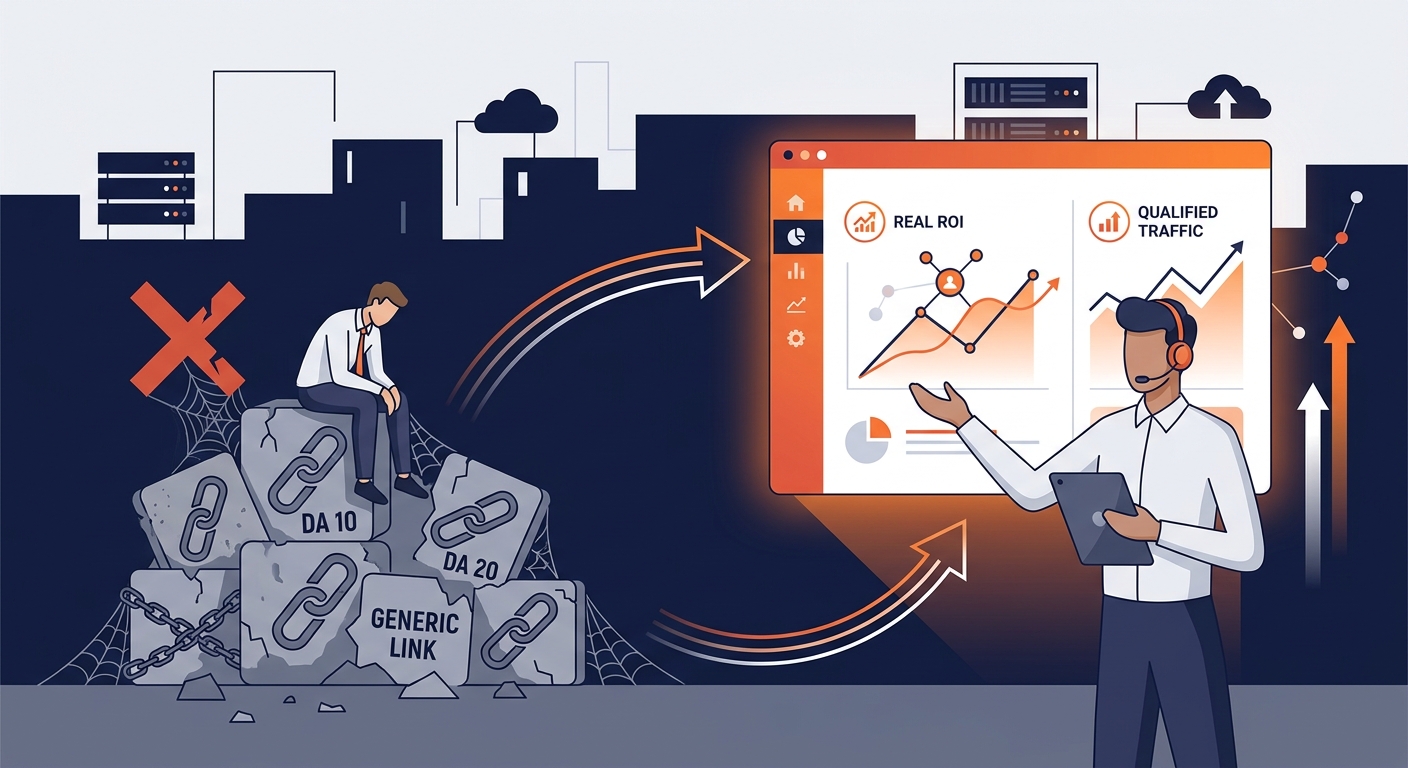
Let’s be honest: your link building ROI isn’t "low" because you aren't working hard enough. It’s low because you’re measuring the wrong things. You’re treating links as digital tokens to hoard, rather than strategic assets meant to pull qualified buyers into your ecosystem. When you focus on the number of links, you end up with a high-cost vanity project that leaves your bottom line untouched.
Stop asking, "How many links did we get this month?" Start asking, "How many of these actually moved a prospect through the funnel?"
The "Black Box" Problem: Why Traditional Link Metrics Fail in 2026
For years, the industry treated link building like a black box. You threw money at an agency, they blasted out emails, and eventually, the "magic" of rankings appeared. Those days are dead.
Search engines aren't just counting links anymore. They’re evaluating the authority, the intent, and—crucially—the relationship between the sites. If you’re still relying on volume-based, automated spam, you aren't just being ineffective. You’re building a liability. Per Google’s Webmaster Guidelines on Link Schemes, spammy tactics aren't just bad SEO; they’re a fast track to a manual penalty.
The disconnect is glaring. You might rank for a high-volume keyword, but if the referring domain has zero topical relevance to your business, the traffic hitting your site will be cold, confused, and gone in seconds. In 2026, one link from a respected industry publication that drives three qualified demo requests is worth more than five hundred directory links that bring in "ghost" traffic.
What Does "Quality" Actually Mean in the Age of AI Search?
Quality isn't a vague feeling anymore. In a web saturated with AI-generated sludge, search engines are desperate for "human-verified" signals.
Niche authority is the new currency. It’s the measure of how well your brand is recognized as a leader in your specific sandbox. A link from a generic, high-DA site that covers everything from tax law to dog walking is a relic. Today, you want a link from a site your target audience actually trusts for industry news.
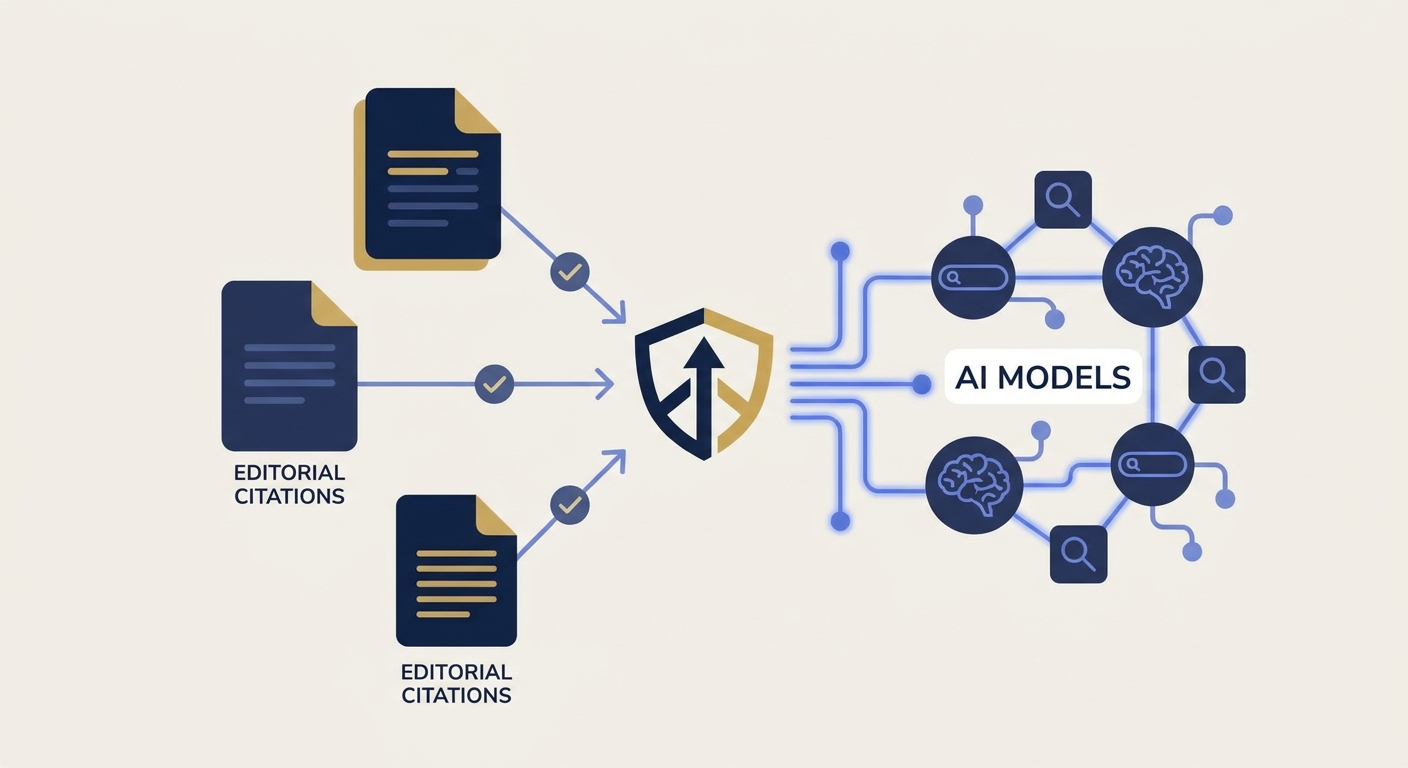
Human-curated editorial standards are the new gatekeepers. When you invest in Digital PR Services, you aren't paying for a link. You’re paying for the vetting process that puts your brand in front of the right people, at the right time, in the right context.
How Do You Map SEO Efforts to Revenue?
The "Attribution Gap" is the biggest barrier to proving your worth. Most teams see where a link came from in Google Analytics, but they lose the user the second they hit the landing page. To fix this, you have to bridge the gap between SEO data and your CRM.
When a visitor clicks a backlink from an industry site, that "first-touch" needs to be tagged. If that visitor eventually requests a demo or signs up for a trial, you have a direct line of sight from the backlink to the revenue.
Once you have that visibility, everything changes. You can finally calculate your true Cost-Per-Acquisition (CPA) for links. If you spent $5,000 to earn ten high-authority links that generated five qualified leads—each worth $2,000 in lifetime value—your ROI is no longer a guess. It’s a fact.
Is Your Current Link Profile Hurting Your Performance?
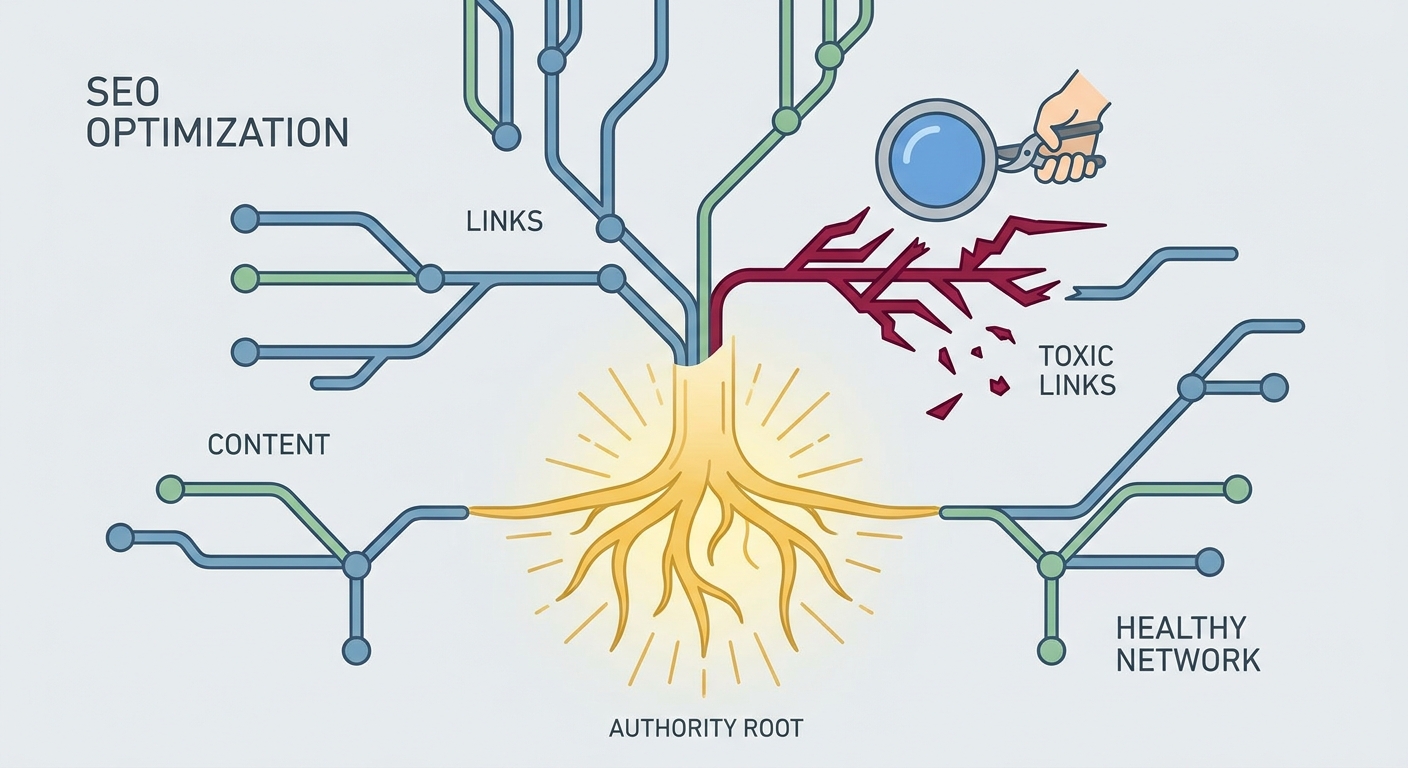
Not all links are created equal. Some are actively working against you. The internet is flooded with low-quality, AI-generated content farms that link out to anyone with a credit card. If your site has accumulated a "toxic" profile of these links—often through lazy automated tools—you’re telling search engines that your brand lacks editorial standards.
Performing a regular Link Profile Optimization audit is mandatory. You need to identify the bottlenecks, disavow the junk, and clear the path for your high-quality content to shine. If you aren't sure where to start, Our SEO Audit Services can help you isolate the links dragging you down versus those fueling your growth.
The Link-to-Lead Framework: How to Calculate Your Success
Stop chasing vanity metrics. Adopt the Link-to-Lead framework. This methodology treats every backlink as a potential top-of-funnel entry point.
- Backlink Referral: The link sits on a high-traffic, relevant industry site.
- Organic Landing Page: The user clicks through to a page designed to capture their interest.
- Lead Conversion: The user engages and provides contact information.
- CLV Impact: The lead enters the sales pipeline and contributes to the Customer Lifetime Value.
As noted in Backlinko’s SEO Statistics 2026, conversion rates are heavily dictated by the alignment between the referring source and the landing page. If the intent is mismatched, the funnel breaks.
How to Present Link Building Value to a Skeptical CFO
If you walk into a board meeting talking about "Domain Rating" or "Referring Domain counts," expect blank stares. CFOs don't care about SEO metrics; they care about the pipeline.
Speak their language. Instead of saying, "We increased our referring domains by 20%," say, "We secured placements in three top-tier industry publications, which increased our brand visibility within our target demographic by 15% and contributed to a 10% increase in qualified demo requests." Use the "Cost-Per-Backlink" comparison against the Customer Lifetime Value (CLV) of your clients to prove that link building isn't a cost center—it’s a sustainable, scalable channel for long-term growth.
Which Metrics Should You Retire Immediately?
It’s time to let go of the ghosts of SEO past.
Domain Authority (DA) is, at best, a directional guide; it is not a goal. It is easily manipulated and ignores user behavior entirely. Similarly, chasing a raw "Referring Domain count" is a fool’s errand. If you have 1,000 links from irrelevant, low-quality sites, you are worse off than if you had 10 links from authoritative, industry-specific sources. As explored in this Ahrefs Link Building Guide, the difference between true authority and vanity metrics is the difference between a ranking that sticks and one that vanishes with the next algorithm update.
Frequently Asked Questions
Why does my link building ROI look low even when rankings are stable?
Rankings are a vanity metric if they don't lead to conversions. You may be ranking for high-volume keywords that lack commercial intent. Your link building might be successfully pushing you to page one, but if your content doesn't answer the user's specific problem or offer a clear path to a demo/purchase, the ROI will remain stagnant.
How do I prove the value of link building to a skeptical CFO?
Stop using SEO jargon. Focus on "Revenue-contribution metrics." Connect the dots between your link building efforts and the leads that actually enter your CRM. Present your results as a contribution to the sales pipeline and use the "Cost-Per-Acquisition" of a lead via SEO vs. paid ads to show the long-term cost-effectiveness of your strategy.
Should I still track Domain Authority in 2026?
Only as a rough, low-fidelity signal. It is a secondary metric at best. Focus instead on "Niche Authority"—how well your site is perceived within your specific industry vertical. A site with a lower DA that is hyper-relevant to your niche will always outperform a generic site with a high DA.
How many links do I actually need to see a positive ROI?
There is no magic number. ROI is driven by the quality and relevance of the link, not the quantity. One high-authority, topically relevant link can drive more revenue than a hundred low-quality ones. Focus on the "threshold of impact," where your site becomes a recognized authority in your niche, and the links start to attract themselves through your content's value.