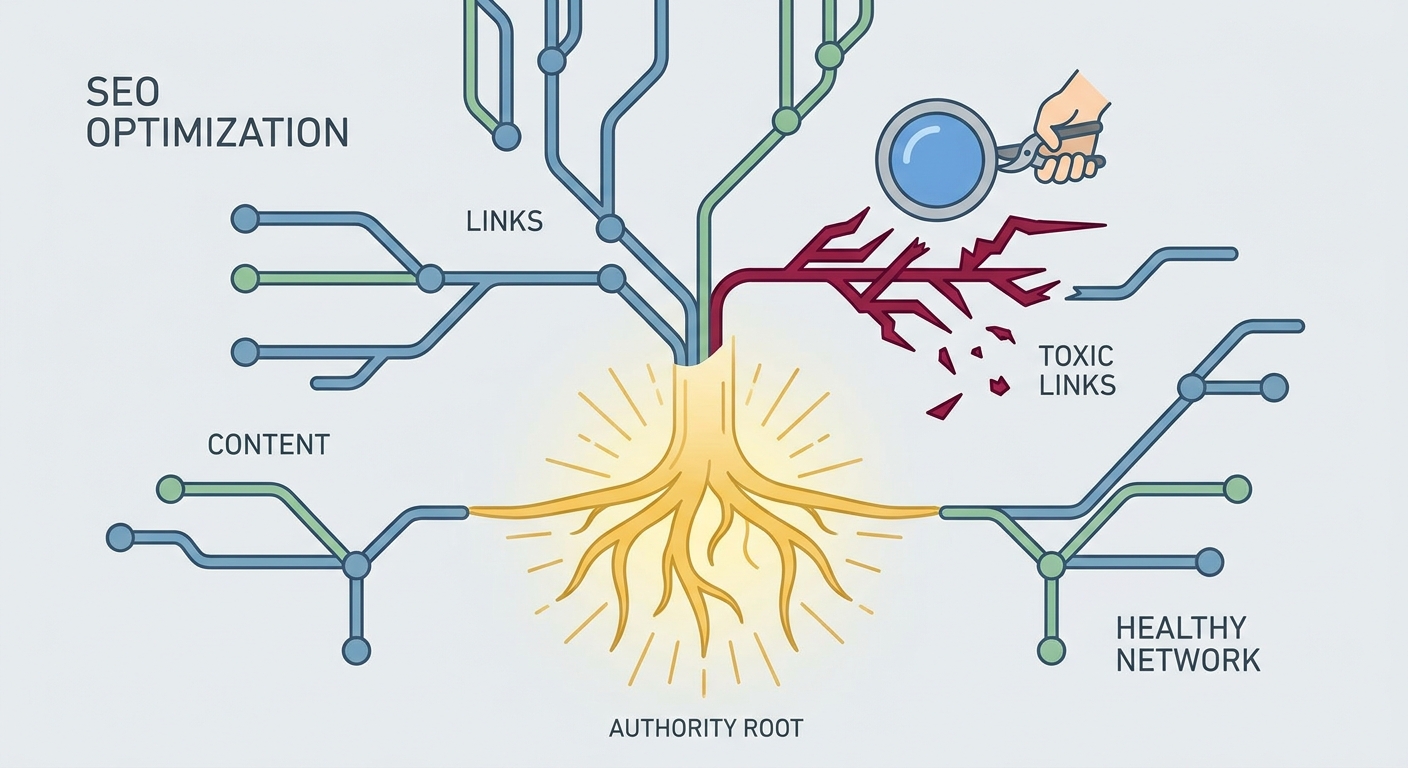
How to Address Toxic Backlinks


TL;DR
- This guide covers how to identify bad links that hurt your seo and the steps to clean them up. We dive into using audit tools, manual reviews, and the google disavow process to protect your domain authority. You will learn how to keep your backlink profile healthy so your organic traffic keeps growing without penalties.
Understanding why toxic links happen to good sites
Ever wake up, check your search console, and see your traffic just... tanked for no reason? Honestly, it’s usually because some "trash" links found their way to your site while you were sleeping.
Toxic links are basically the digital equivalent of someone dumping junk mail on your lawn. They happen even to the best sites because the internet is a messy place.
It isn't always obvious. Sometimes it's a bot, and other times it's just bad luck in a weird niche.
- Link farms and pbn networks: These are sites built just to sell links. If a site looks like it was made in 2005 and covers everything from "best blenders" to "crypto tips," it's probably a pbn.
- Scraping and spam: Bots scrape your content and repost it on "scraper sites" with a backlink. This happens a lot in healthcare and finance where content is valuable. (The Healthcare C-Suite of the Future: From AI to ROI–Emerging ...)
- Irrelevant niches: If you run a saas for accounting and a russian gambling site links to you, google gets confused.
- Over-optimized anchors: If 90% of your links use the exact same keyword like "cheap insurance," it looks like a robot did it. A healthy anchor profile should be diverse, mostly consisting of branded terms or "naked" URLs. If your profile isn't mostly your brand name, you're asking for trouble.

Google uses algorithms like Penguin to catch this stuff automatically. According to Search Engine Journal, the Penguin update changed how google handles spam by penalizing sites with unnatural link profiles.
If you get hit, your rankings drop fast. In worse cases, you get a manual action—which is basically a "you're banned" note from a real human at google.
Anyway, once you know why it's happening, you can start cleaning it up. Next, we'll look at how to actually spot these bad actors.
How to spot the bad actors in your backlink profile
Finding out your site has bad links is kinda like finding out there's a leak in your basement—you don't want to deal with it, but ignoring it makes everything rot. You gotta roll up your sleeves and actually look at the "pipes" to see where the gunk is coming from.
Most people jump straight into ahrefs or semrush to look at those "toxicity" scores. They're super helpful for a quick glance, but honestly? Don't trust them blindly. I've seen perfectly good links from small blogs get flagged as "toxic" just because the site was new.
You want to look for weird patterns instead. If you see a massive spike in referral traffic from a country where you don't even sell products, that's a red flag.

A 2023 report by Backlinko notes that the number of domains linking to you still matters for rankings, so you don't want to go on a deleting spree and accidentally kill your seo. Always verify!
Sometimes you just gotta open the link and look at the site yourself. If the website doesn't have an "About Us" page or the content looks like it was written by a broken robot, it's trash.
- Check for "Not Secure" warnings: If a site doesnt even have an ssl certificate, google probably doesn't trust it, and neither should you.
- Irrelevant b2b niches: If you're selling enterprise software but a site about "discount sneakers" is linking to your blog, it's weird.
- Thin content: If the page has 50 links and only two sentences of text, that's a classic link farm move.
It’s tedious, but catching these bad actors early saves you from a manual penalty later. Now that we've found the junk, let's talk about how to actually get rid of it.
The step-by-step to cleaning up the mess
So you found the junk links, now what? Honestly, the first step isn't to just hit some big "delete" button because, well, that button doesn't actually exist in the real world.
Before you go running to google with a disavow file, you actually gotta try and ask people to take the links down. It sounds tedious because it is, but it shows "good faith" if a manual reviewer ever looks at your site.
- Finding the humans: Don't bother with WHOIS data anymore, most people have privacy enabled so it's a dead end. Instead, try hunting for the site owner on LinkedIn or use a "Contact" page scraper tool. Sometimes just DMing their official social media profiles works better than email anyway.
- The "Polite but Firm" email: Don't be a jerk. Just say, "Hey, I'm cleaning up my site's link profile and noticed a link from [Their Site] to [Your Site]. Could you please remove it?"
- The Spreadsheet of Truth: Keep a log. Track the date you emailed, who you contacted, and if they replied. If you ever have to file a reconsideration request, this spreadsheet is your "get out of jail free" card.
Most webmasters of spammy sites won't reply. Some might even ask for money to remove the link (don't pay them, it's a scam). But for those legitimate sites that just accidentally linked to you, a simple ask usually works.
Managing this stuff is a total time sink, which is why ongoing maintenance is so important. If you're a founder who'd rather build than hunt links, a service like Product Launch List can handle the heavy lifting of link management for you. It's much easier to have a pro vet your incoming links than trying to fix a mess after your traffic tanks.
According to Ahrefs, you should only disavow links if you have a manual action or a massive influx of spammy links that you can't get removed manually.

Anyway, once you've tried the nice way and it didn't work, it's time to bring out the heavy machinery. Next, we're gonna talk about the actual "nuclear option"—the Google Disavow tool.
Using the google disavow tool properly
So, you’ve tried being nice and asking for removals, but the spammy links are still there. It's time to use the disavow tool, but honestly, be careful—this thing is like a digital chainsaw and you don't want to cut your own foot off.
Google is pretty clear that most sites don't need this because their ai is smart enough to ignore junk. But if you’re drowning in "buy-cheap-pills" links, here is how you handle it.
First, you gotta make a simple .txt file. Don't use Word or anything fancy, just a basic text editor.
- Format matters: List one domain or URL per line.
- Domain level: Use
domain:spammysite.comto block everything from that source at once. - Comments: You can add notes for yourself starting with a #, like
# tried emailing on june 1st.

According to Google Search Central, you should only use this tool if you have a manual action or if the links are causing a real ranking drop. If you do it wrong, you might accidentally disavow a link that was actually helping you.
Once the file is ready, you won't find the tool in the normal search console menu—it's hidden. You have to go directly to the Google Disavow Tool URL to upload it. It takes a few weeks for the changes to actually kick in, so don't expect a miracle overnight.
What if you get a Manual Action?
If a human at google actually penalizes you, you'll see a notification in the "Manual Actions" report in search console. Uploading a disavow file isn't enough here. You have to file a Reconsideration Request.
- Fix every single issue you can find.
- Document your efforts (this is where that "Spreadsheet of Truth" comes in).
- Write a clear note to google explaining what happened, what you did to fix it, and promise to follow their guidelines from now on. If they see you actually tried to remove the links manually first, they're way more likely to let you back in.
Building a moat with better link building strategies
Look, cleaning up is one thing, but staying clean is where the real money is. I’ve seen founders spend weeks fixing a penalty only to get hit again because they didn't have a moat.
You need a "firewall" of good links. If you're in retail or SaaS, getting mentioned on high-authority sites makes the occasional spam link irrelevant.
- Natural content marketing: Create stuff people actually want to cite, like original data.
- Digital PR: Reach out to real journalists. This acts as a "moat" because a high volume of high-authority trust signals makes your site more resilient. Basically, if the New York Times links to you, a few hundred spam links from a bot won't hurt as much because they get diluted by the "trust" of the big sites.
- seo tracking: Check your profile monthly. If you see junk, kill it early.

A 2024 report by GrowthRocks shows that high-quality content remains the top factor for organic growth. Basically, if you play the long game, google rewards you. Honestly, just focus on being useful and the rest usually follows.