Guest Post Pitch Email Templates That Get 30%+ Response Rates

TL;DR
- ✓ Shift from generic requests to offering solutions for the editor's content needs.
- ✓ Build a proof-first foundation with high-quality articles before sending any outreach.
- ✓ Use hyper-personalized hooks to prove you understand the editor's specific audience.
- ✓ Identify content gaps using research tools to provide immediate value to publishers.
- ✓ Keep pitches lean and low-friction to respect the editor's limited time.
If you’re still sending "I love your blog, can I write for you?" emails, you’re basically setting your brand equity on fire. In 2026, the average editor’s inbox is a war zone. To crack a 30% response rate—or higher—you need to quit acting like a solicitor and start acting like a partner.
High-performing outreach isn't about volume. It’s about proving, in ten seconds or less, that you know their audience better than they do. Whether you are building authority through our Definitive Guide to Link Building or trying to scale your organic presence, the secret is a value-first, low-friction pitch that respects the editor's time.
Why Your Outreach is Getting Ignored in 2026
The game has shifted from "link building" to "relationship building." Gone are the days when a generic, automated blast could land you a placement on a decent blog. Editors are currently drowning in AI-generated sludge that reads like it was written by a lukewarm toaster. If your email looks like the rest of the garbage in their inbox, it’s deleted before the second sentence hits their eyes.
Hitting a 30% response rate isn't a pipe dream; it's the standard for pros who treat outreach as a skill, not a chore. You have to make a fundamental shift: stop asking for a favor and start offering a solution to the editor’s biggest headache—the constant, grinding demand for fresh, high-quality content.
Before You Hit Send: Is Your "Proof-First" Foundation Ready?
If you cold-email a site without a digital footprint, you’re walking into a boardroom without a resume. Editors need to know you can actually write. Before you reach out, you need a "Proof-First" foundation. That means having at least three polished, high-quality articles live somewhere that showcase your voice and expertise.
If your portfolio is thin, stop pitching and start creating. Read How to Write High-Quality Content That Ranks to make sure your landing page or portfolio doesn't just list titles, but actually demonstrates a deep understanding of E-E-A-T. If an editor clicks your link and finds a thin, AI-generated mess, they’ll never reply. Your portfolio is your handshake. Make sure it doesn't feel like a wet fish.
What Does a 30%+ Response Rate Email Actually Look Like?
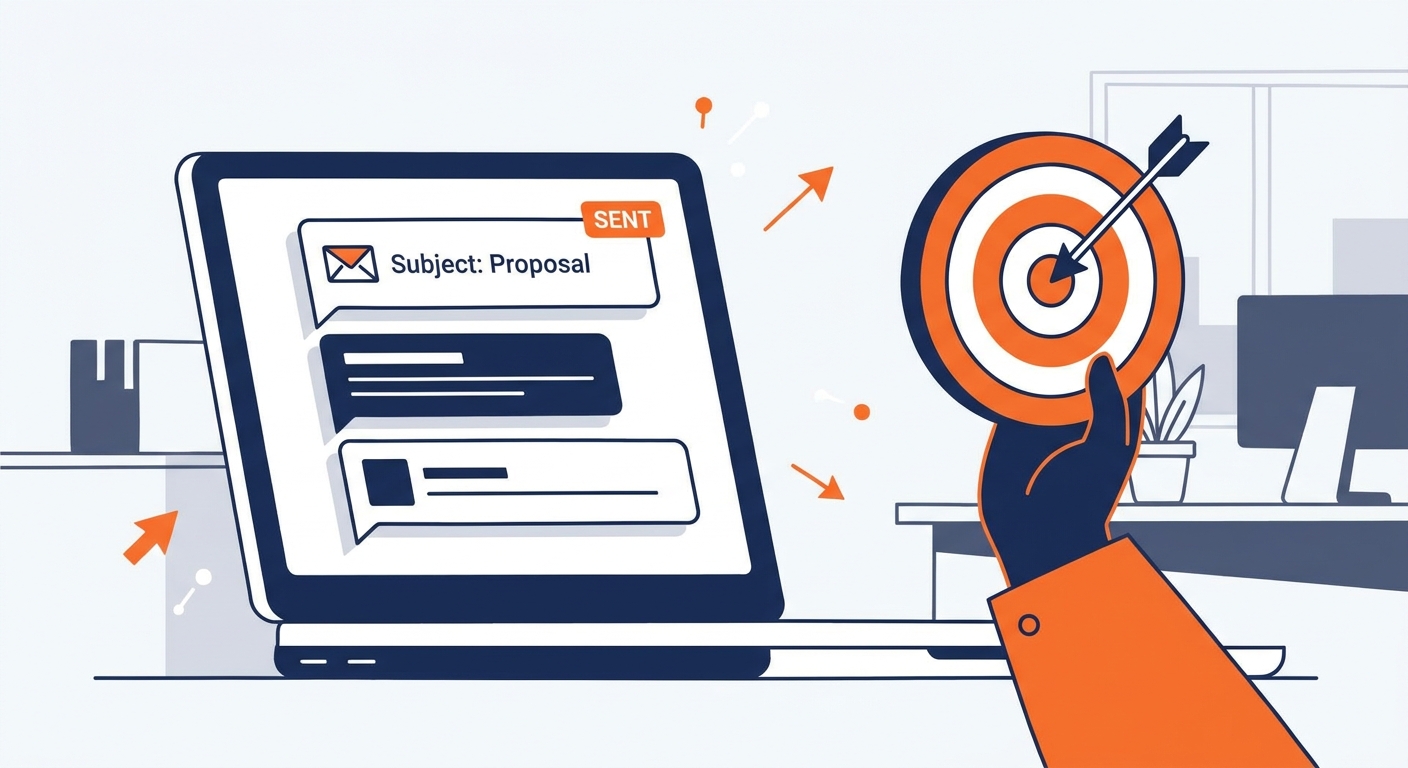
A high-conversion pitch is a surgical instrument. It’s lean, it’s precise, and it cuts through the noise. The anatomy of a winning email consists of four simple parts:
- The Hyper-Personalized Hook: Mention a specific article they published in the last 30 days. Don’t just drone on about how you "like their blog." Say, "Your piece on [Topic] really hit the nail on the head regarding [Specific Nuance]."
- The Content Gap: Use BuzzSumo to find topics their competitors are crushing that they’ve missed. Propose three distinct headline ideas that bridge this gap.
- The Social Proof: Drop links to three of your best articles. Pick pieces that actually align with the target site’s tone.
- The Low-Friction CTA: End with a question that demands a simple yes or no. Don't make them do the heavy lifting of brainstorming.
The Anatomy of a High-Conversion Pitch
The "AI-Proof" Template Library
To keep these effective, you have to inject your own voice. If these templates sound like a robot, they will perform like one. Use these as a skeleton, not a copy-paste crutch.
Template 1: The "Content Gap" Pitch
Subject: Loved your piece on [Topic] + a few ideas for [Target Site]
Hi [Name],
I’m a long-time reader of [Target Site]. Your recent article on [Specific Point in their article] was a great read—it really clarified [Concept] for me.
I noticed you’ve covered [Topic A] and [Topic B], but I haven't seen much on [Content Gap Topic]. I’ve been digging into this and have a few unique angles that I think would resonate with your readers:
- [Idea 1: Catchy, Benefit-Driven Headline]
- [Idea 2: Catchy, Benefit-Driven Headline]
- [Idea 3: Catchy, Benefit-Driven Headline]
I’ve written for [Site 1], [Site 2], and [Site 3] recently. Would you be open to me drafting one of these for you?
Best, [Your Name]
Template 2: The "Expert Insight" Pitch
Subject: Question about your recent [Topic] article
Hi [Name],
I really enjoyed your take on [Topic]—especially the section on [Specific Detail].
I work in [Your Niche] and have been tracking some interesting data regarding [Specific Trend]. I think there’s a massive opportunity to expand on your article by adding a piece on [Your Unique Angle].
I’d love to put together a guest post that shares this data-backed perspective. You can see my writing style here: [Link 1], [Link 2], [Link 3].
Let me know if that sounds like a good fit for your editorial calendar?
Best, [Your Name]
Template 3: The "Broken Link/Update" Pitch
Subject: Quick suggestion for [Target Site]’s [Topic] page
Hi [Name],
I was reading your guide on [Topic] today and noticed that the link to [Resource] is currently broken. It’s a great resource, but it’s definitely causing some frustration for readers.
I’ve actually written a comprehensive guide on [Topic] that covers that same ground (and a bit more). If you’re looking to update that post, I’d be happy to share my content or help you fill that gap.
Either way, hope this helps!
Best, [Your Name]
How to Master the 15-Day Follow-Up Sequence
Most people quit after one email. The money is in the follow-up. Use this 15-day cadence to nurture the relationship without becoming a nuisance.
The psychology here is simple: editors are slammed. They might have liked your first email but forgotten to hit reply. Your follow-ups should be brief, helpful, and never accusatory. On Day 3, send a quick "Just wanted to see if you had a chance to look at those ideas." By Day 15, the "break-up" email—asking for feedback on why it wasn't a fit—is a masterclass in recovering lost opportunities.
Subject Line A/B Testing: What Actually Gets Opened?
Your subject line is the gatekeeper. If it’s boring, the content doesn't matter.
| Outreach Type | Subject Line Example | Est. Open Rate |
|---|---|---|
| Generic | Guest Post Inquiry / Contribution | 5-10% |
| Hyper-Personalized | Loved your post on [Topic] + a few ideas for [Target Site] | 40-50% |
| Urgency-Driven | A quick suggestion for your [Topic] article | 35-45% |
Keep it under 50 characters. If it looks like a sales pitch, it’s going in the trash. If it looks like a conversation, it’s getting opened.
Identifying the Right Targets (Without Wasting Time)
Stop guessing. Use Hunter.io to find the actual email address of the Content Manager or Head of Content. Don't send to info@ or contact@ addresses; those are black holes. Once you have a list, use the Ahrefs Backlink Checker to ensure the site has the domain authority and traffic quality worth your time. If the site looks like a graveyard of low-quality guest posts, move on. Your time is better spent on one high-quality placement than ten low-quality ones.
Common Mistakes: Why Your Outreach Fails
- The 150-Word Rule: If your email requires scrolling, you've already lost.
- Ignoring the Style Guide: If they have a "Write for Us" page, read it. If you ignore their rules, you aren't an expert; you're a burden.
- Asking for a Link: Never ask for a link in your first email. Ask to provide value. The link is the byproduct of the value you provide, not the goal of the email.
Frequently Asked Questions
How many guest posts should I aim for each month?
Focus on quality over volume. 2–4 high-authority guest posts are significantly more valuable for your SEO and brand reputation than 20 low-quality placements on irrelevant sites.
Is it okay to pay for guest posts?
Generally, no. Paying often leads to "sponsored" tags or low-quality placements that offer zero SEO value and can even trigger search engine penalties. Stick to earned, editorial placements.
How do I find the right person to email?
Look for titles like "Content Manager," "Editor," or "Head of Content" on LinkedIn or the site’s "Team" page. Use tools like Hunter.io to verify the email format once you have a name.
How long should my pitch email be?
Keep it under 150 words. Editors are time-poor. They want to see that you’ve done your research and have a concrete value proposition within the first two sentences.
What should I do if an editor says "no"?
Don't take it personally. Thank them for their time, ask if they’d be open to hearing from you again in a few months, and keep them on your radar. A "no" today is often a "yes" once they have a new content strategy in place.