Contextual Backlinks: Why Placement Beats Volume Every Time

TL;DR
- ✓ Contextual backlinks inside article bodies provide stronger semantic signals than footer or sidebar links.
- ✓ Search engines prioritize topical relevance and co-occurrence over the sheer volume of backlinks.
- ✓ High-volume link building is now a liability that search algorithms easily identify as noise.
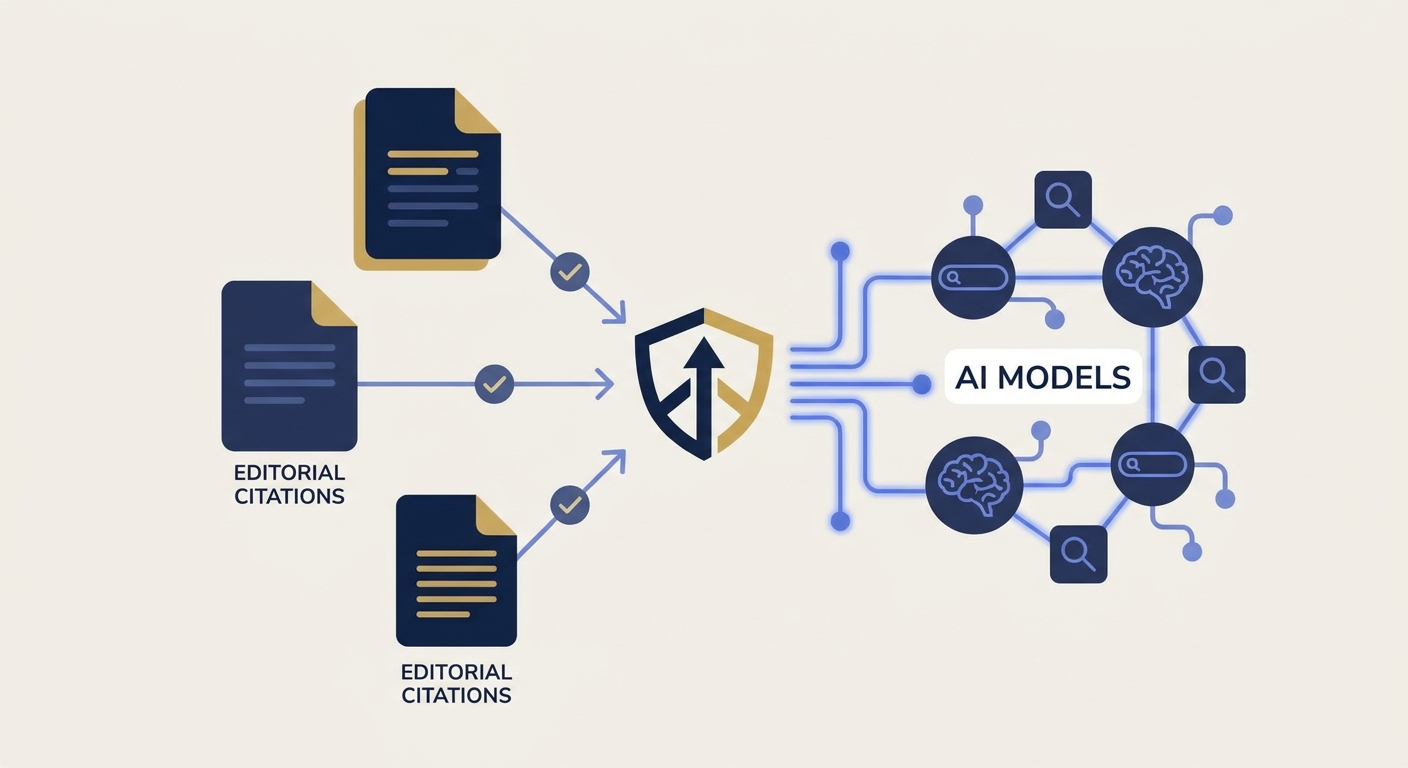
- ✓ Editorial links act as trusted recommendations that validate your content for search crawlers.
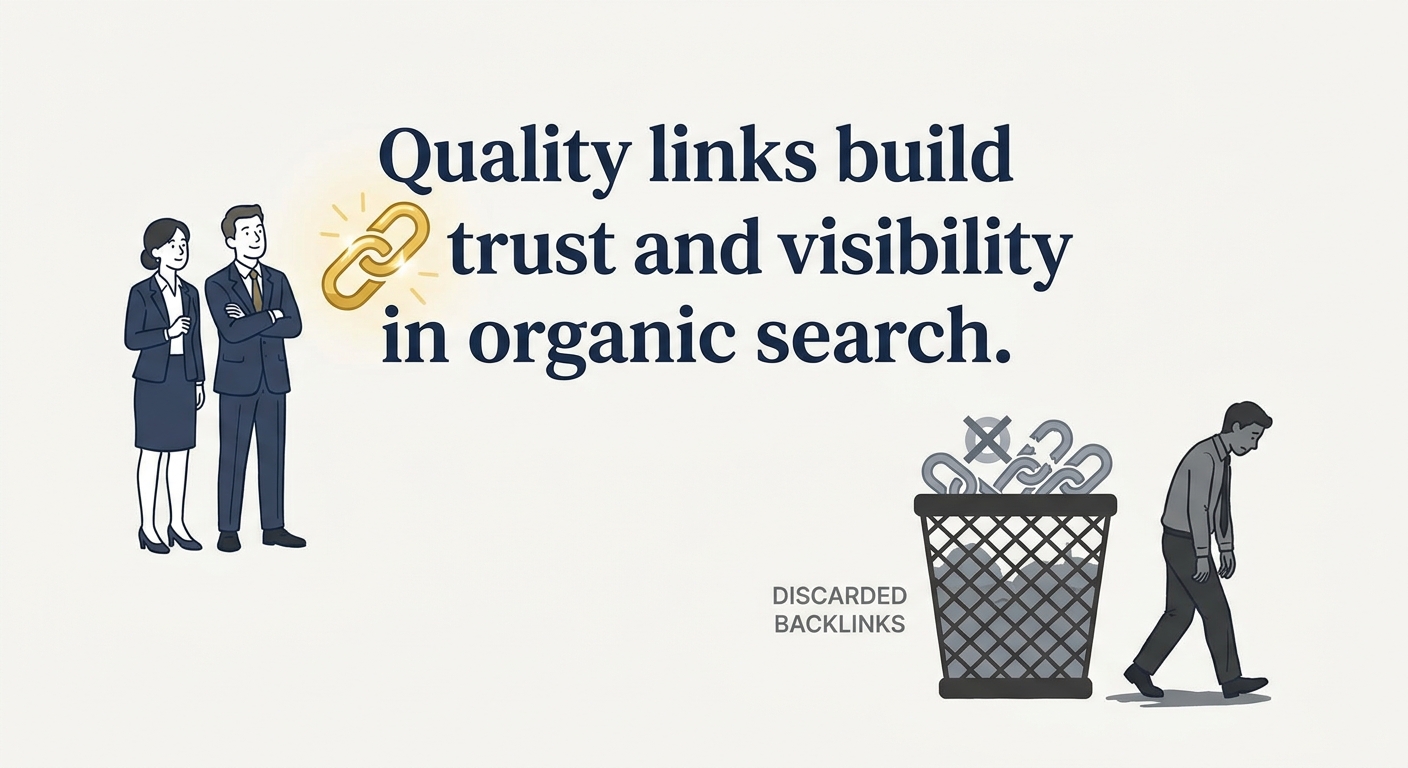
In the current search ecosystem, a backlink is no longer just a tally mark on a scorecard; it’s a semantic signal. If you’re still obsessed with hoarding thousands of low-quality directory links, you’re shouting into a hurricane while your competitors are whispering into the ears of the right people.
Think about it. A link buried in a website footer is the digital equivalent of a business card left in a trash can. Nobody looks there. Nobody cares. Conversely, a contextual backlink—a recommendation woven naturally into the fabric of a high-quality article—is like a trusted colleague pulling you aside to say, "You need to see this." As search engines pivot toward AI-integrated experiences that prioritize topical authority and user intent, placement has officially eclipsed volume as the primary driver of search rankings. For a deeper dive into the broader shift in ranking factors, refer to our Ultimate SEO Guide.
What Exactly Are Contextual Backlinks?
Contextual backlinks are exactly what they sound like: links that live inside the body of a page. They aren't relegated to the header, the sidebar, or the graveyard of a footer. They exist where the reader’s eyes are actually locked—in the paragraphs, the bullet points, and the narrative flow of a piece.
The logic here is rooted in something called semantic co-occurrence. Modern search algorithms don't just see a link; they read the neighborhood. They analyze the words immediately preceding and following your anchor text to figure out the "aboutness" of the destination. If you’re a software company, a link from a paragraph discussing "enterprise cloud security" carries real weight. A link from a generic "partners" page? That’s just noise. The algorithm uses that surrounding text to disambiguate intent, confirming that your link is a genuine resource rather than a paid-for spam injection.
Why Does Placement Beat Volume Every Time?
High-volume link building is now a liability—a budget-burning exercise in futility. In the old days, you could hide a mediocre site behind a massive wall of backlinks. Today, search engines have the processing power to identify "link noise" instantly. When a bot crawls your site, it’s looking for validation signals. Does this content actually help the user? Are the citations supporting the claims, or are they just filler?
When you prioritize placement, you’re signaling to the machine that your content is part of a real-world conversation. If you want to understand the mechanics of this shift more thoroughly, Search Engine Journal's Backlink Guide provides an excellent breakdown of how modern algorithms value these editorial mentions. AI models, in particular, are trained to prioritize "helpful content" that provides depth. A link embedded in a comprehensive, well-researched article is a massive vote of confidence because it implies that your resource was necessary to complete the reader's understanding of the topic.
Where Should Your Links Live? An Architectural Guide
Not all placements are created equal. You have to view your link profile like a pyramid. At the base, you have your navigational elements—the "Tier 3" zone. These are fine for user experience, but they hold the least weight in the eyes of an algorithm. Moving up, "Tier 2" consists of resource pages or curated lists. They’re better than a footer, sure, but they’re often seen as mere lists rather than true editorial endorsements.
The "Gold Standard" is Tier 1: High-authority editorial content. These are the links that live in the middle of a deep-dive article, a case study, or a news feature. These placements demonstrate that your expertise was sought out to add value to someone else's work.
How to Earn Contextual Links: The Modern Playbook
Earning these links requires a total pivot from "outreach" to "contribution." You can’t just ask for a link; you have to provide a reason for that link to exist. The bedrock of this strategy is content-led link building. If you don't have high-quality content—the kind that solves actual problems—you have nothing to link to that is worth an authority site's time. To see how we approach this, check out How We Build High-Quality Content.
The "Bridge" strategy is the most effective way to secure these placements. Identify high-authority pages in your niche that are ranking for your target keywords. Read them. Does the author miss a nuance? Do you have a piece of data that makes the argument stronger? Reach out not to ask for a backlink, but to offer a "bridge"—a piece of research, a unique insight, or a clarifying example—that fills a gap in their work. When you make their content better, the link becomes a natural byproduct, not a requested favor.
Measuring Success: Moving Beyond "Domain Authority"
If you’re still measuring success solely by Domain Authority (DA), you’re looking at a vanity metric. DA is a proxy, but it doesn't tell you if your links are driving the right kind of attention. Instead, focus on KPIs that actually correlate to business growth:
- Referral Traffic: Is the link actually sending qualified visitors to your site?
- Topical Relevance: Is the linking domain closely aligned with your industry?
- Keyword Ranking Correlation: When you secure a high-quality contextual link, how does your target page's ranking shift in the subsequent weeks?
To get a clearer picture of your link equity, audit your profile using the frameworks detailed in Ahrefs' Link Building Strategy Overview. We have seen firsthand how focusing on these metrics transforms a site's performance; you can see the results of this strategy in our Case Study: Improving Rankings via Link Strategy.
Risk Management: Avoiding the "Penalty Trigger"
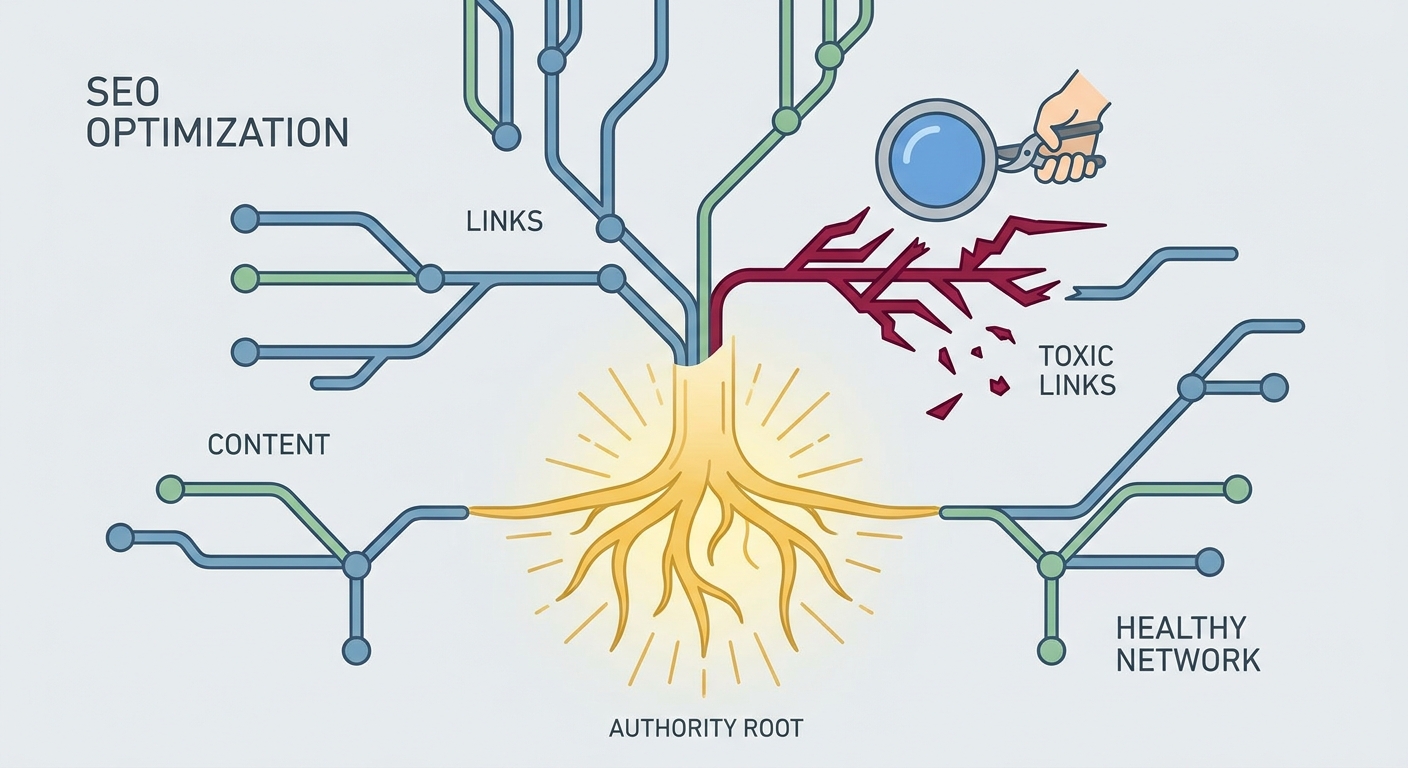
The biggest trap in modern SEO is over-optimization. If your anchor text looks like a robot wrote it—constantly hammering your exact target keyword—you’re waving a red flag at the search engines. Natural language is the goal. Use branded anchors, descriptive phrases, and sometimes even naked URLs.
Furthermore, be wary of the "contextual trap." Many sites now offer "guest posts" that are nothing more than glorified link farms. If you find a site that publishes content on everything from "best keto diets" to "industrial HVAC repair," run away. These sites lack topical authority and are eventually flagged by Google’s Link Spam Policies. If the site doesn't have a dedicated, niche-specific focus, the links you earn there will eventually do more harm than good.
Conclusion: The Long-Term SEO Advantage
The future of SEO isn't about gaming the system; it’s about participating in the digital conversation. By focusing on contextual placement, you align your site with the very goals search engines have: surfacing the most relevant, helpful, and authoritative information to the user. Volume may have worked in the early days of the web, but in the era of AI-driven search, quality-first architecture is the only sustainable strategy. Stop counting your links and start measuring the quality of the conversations you are part of.
Frequently Asked Questions
Are sidebar and footer links dead in 2026?
They aren't "dead," but they are no longer primary ranking drivers. They function as navigational aids, not as votes of confidence. In the era of AI-driven search, their value is marginalized compared to in-content, editorial placements.
How many contextual links should I aim for monthly?
Stop chasing a volume number. Focus on a sustainable cadence that matches your site’s content growth. A single, highly relevant link from a top-tier industry publication is worth more than fifty generic directory links.
What is the best anchor text ratio for contextual backlinks?
Prioritize natural language over keyword stuffing. A healthy profile uses a mix of branded, descriptive, and naked URLs. If your anchor text looks like a robot wrote it, search engines will treat it as a signal to be ignored or penalized.
How do I know if a website is "contextually relevant" for a link?
Analyze semantic alignment. Does the linking page discuss topics that support or expand upon your target page's core subject? If a reader would naturally click that link to find more information on the same topic, the link is contextually relevant.