How Might We Grow Diverse Internets of Things? Learning ...

TL;DR
- ✓ Current IoT relies on fragile proprietary clouds vulnerable to service shutdowns.
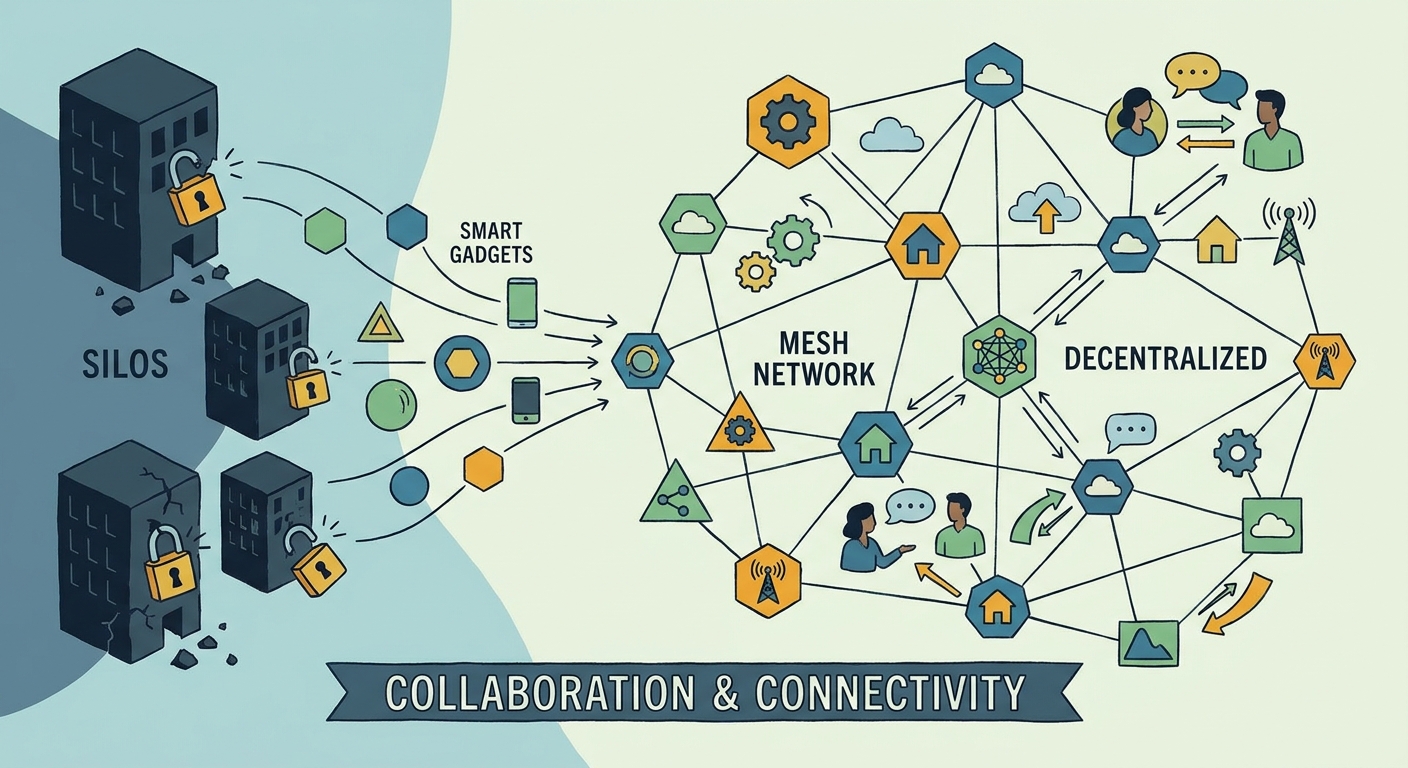
- ✓ We must transition from centralized silos to decentralized, mesh-based network architectures.
- ✓ True interoperability requires open standards that prevent corporate gatekeeping of smart devices.
- ✓ Decentralized identity is essential for creating a resilient and diverse IoT ecosystem.
We’ve been sold a lie. The "smart" world we’re building isn’t actually a network; it’s a collection of digital fiefdoms. We treat connected devices like cheap appendages to proprietary clouds, and the moment a startup runs out of venture capital, your thermostat becomes a paperweight. It’s not just annoying; it’s a fundamental design failure. If we want a diverse Internet of Things (IoT) that actually lasts, we need to stop building walls and start building meshes.
The industry is currently chasing a $620 billion market projected by 2033, but that growth is built on sand. When the "cloud" decides to sunset a service, the hardware dies with it. That’s not progress. That’s just planned obsolescence disguised as innovation. To build an IoT that matters, we have to recognize that a network is only as strong as its weakest, most autonomous node.
The Ghost of Project Xanadu and the Architectural Crossroads
We are sleepwalking into the same trap that killed the open web. Rewind to the late 1960s: Ted Nelson had a vision called Project Xanadu. He imagined a non-linear, interconnected space where links were permanent and users—not corporations—held the keys to the kingdom. It was supposed to be a decentralized playground. Instead, we got the modern web: a series of walled gardens where your content is held hostage by a handful of tech giants.
IoT is standing at that exact same crossroads today. Your smart lightbulb is a feudal subject. It talks to a hub, which reports to a specific cloud, which reports back to you. It’s fragile. It’s exclusionary. If the "gatekeeper" goes offline, your house stops being smart. True diversity in IoT means returning to that Xanadu spirit. We need connectivity that’s hard-coded into the protocol, not a temporary privilege granted by a CEO’s quarterly earnings report. We need decentralized identity and open standards that let a device from Company A shake hands with a gateway from Company B without begging for permission from a third-party server.
Why Interoperability is the "Holy Grail" of 2026
Interoperability is the front line. On one side, you have initiatives like the Matter Smart Home Standard, which tries to act as a universal translator. On the other, you have the stubborn, cold-blooded reality of business models that thrive on locking you in.
The real risk? Homogenization. If we force every device to speak the exact same language, we might accidentally bake in a new kind of "soft-centralization" that only the biggest players can afford to comply with. True interoperability isn't just about syntax. It’s about ensuring the protocol itself doesn't become a barrier to entry.
When we shift from proprietary hubs to a unified mesh, we aren't just making things easier for the user. We’re building a system that doesn't collapse just because a company goes bust. That is the definition of a resilient network.
How Edge Computing Fuels a Diverse IoT
Edge computing is the secret weapon of the decentralization movement. When you move the "brain" from a remote server farm back onto the device—or a local gateway—you shift the power dynamic entirely.
Right now, the vendor holds the keys to your kingdom. If their server pings out, your home goes dark. Edge-native infrastructure flips that script. Your devices become autonomous agents. They don't need to ask for permission to flip a switch. It’s faster, it’s private, and it’s inherently more secure because your data stays in your house. For those looking to harden their systems, our Security Best Practices for Connected Devices detail how local authentication and edge-processing can mitigate the risks of network outages and malicious external access.
Diversity loves the edge. When a device doesn't need a constant, umbilical cord connection to a vendor's server, it becomes a modular, long-lasting tool. It opens the door for niche, specialized hardware that doesn't need to be part of a monolithic ecosystem to thrive. We’re moving away from "smart-everything" toward "capable-everything."
What Does "Responsible IoT" Look Like in Practice?
We need to stop treating ethics as a PR checkbox. As highlighted by ThingsCon: The State of Responsible IoT, responsible design is a technical requirement. Privacy and sustainability belong on the circuit board, not in a policy document.
Think about it: a standard smart thermostat is essentially a data-harvesting machine. It wants to know your habits to sell your profile. An open-source industrial project, however, treats you as the sovereign owner of your data. Which one would you trust? The latter is not just more ethical; it’s more robust. It’s built to serve the user, not the platform’s shareholders. By designing for longevity and fighting the urge to bake in planned obsolescence, we can actually start to curb the massive carbon footprint of IoT e-waste.
How Will Regulation Shape the Future of Connected Networks?
Regulators are finally waking up to the mess we’ve made. Groups like the European Commission: Next Generation Internet are pushing for a more human-centric internet. But there’s a catch: if the rules are too stiff, only the giants will be able to afford the compliance costs.
Policy shouldn't dictate how to build; it should mandate interoperability and data sovereignty. That’s the floor, not the ceiling. We’ve developed Our Approach to Scalable Infrastructure to help teams navigate these standards without losing their creative edge.
When you align regulation with edge-processing and user-controlled data, you create a sandbox where the best ideas win. That’s how we make "diverse" IoT the default.
Designing for the Long-Term Ecosystem
Diversity isn't some abstract goal for a boardroom presentation; it’s the bedrock of a future-proof infrastructure. If the Internet of Things is going to stick around, it has to be robust enough to survive the death of individual companies and flexible enough to adapt to the weird, wonderful needs of actual humans.
We have to commit to open-source protocols, decentralized identity, and edge-first architecture. We have to walk away from the convenience of the walled garden. The developers and stakeholders who choose this path today are the ones who will define the architecture of the next generation. Stop building for the next quarter’s growth. Start building for the next century’s utility.
Frequently Asked Questions
What does a "diverse" Internet of Things actually mean?
It refers to a network where ownership and control are democratized. Instead of being beholden to a single cloud provider, users and developers can mix and match devices from various manufacturers that all speak a common, open language, ensuring that the network is defined by its interoperability rather than by platform lock-in.
Why is interoperability so difficult to achieve in 2026?
The primary obstacle is the tension between commercial incentives and technical reality. Many companies view data capture as their primary revenue stream, creating a financial incentive to keep their ecosystems closed. Overcoming this requires dismantling the technical debt of these legacy proprietary systems and shifting the business model toward value-added services rather than data extraction.
How does the history of the WWW apply to the future of IoT?
The early web began with open, decentralized protocols that allowed for massive innovation. Over time, it shifted toward centralized platforms that prioritized control and data harvesting. We are currently seeing the same cycle in IoT; by learning from the early, open days of the web, we can intentionally choose a path of decentralization and open protocols to avoid repeating those same mistakes.
Can we have a secure IoT without centralized control?
Yes. In fact, decentralized security is often more resilient. By utilizing edge-based authentication and local encryption, devices can verify identity and secure data without relying on a central server that could be a single point of failure or a target for mass data breaches.
How does edge computing improve the life cycle of IoT devices?
Edge computing prevents "bricking." When a device relies on a manufacturer’s cloud, it is at the mercy of that company’s financial health. By processing data locally, a device remains functional even if the manufacturer goes out of business, significantly extending the lifespan of the hardware and reducing the volume of e-waste.