What is a broken link building strategy?

TL;DR
- ✓ Broken link building repairs the web by replacing dead links with superior content assets.
- ✓ This strategy improves user experience and builds genuine relationships with busy site owners.
- ✓ You can steal competitor authority by creating better versions of their lost backlinks.
- ✓ Modern broken link building is a safe, white-hat method that avoids Google penalties.
- ✓ Use tools like Ahrefs and Screaming Frog to identify high-value broken link opportunities.
Let’s be honest: the internet is a mess. It’s a digital graveyard of abandoned blogs, expired domains, and content that stopped being relevant three years ago. We call this "link rot," and for the average webmaster, it’s a headache. For you? It’s a golden ticket.
Broken link building isn’t about tricking Google or grinding out "link equity." That’s old-school thinking. In 2026, this is a service-based strategy. You find a broken link, you provide a better resource to fix it, and you earn your spot on the page. It’s clean, it’s helpful, and it’s one of the few strategies that actually aligns with the Google Search Quality Evaluator Guidelines.
How Does Broken Link Building Actually Work?
Think of yourself as a digital curator. You aren't just hunting for backlinks; you’re cleaning up the web.
The cycle is simple but requires a human touch. First, you scan industry sites for dead links. When you find one, you don’t just fire off a canned email. You analyze the original piece of content, build something that blows it out of the water, and reach out to the site owner. You aren't asking for a favor; you're solving a problem for them.
Why Bother with This in 2026?
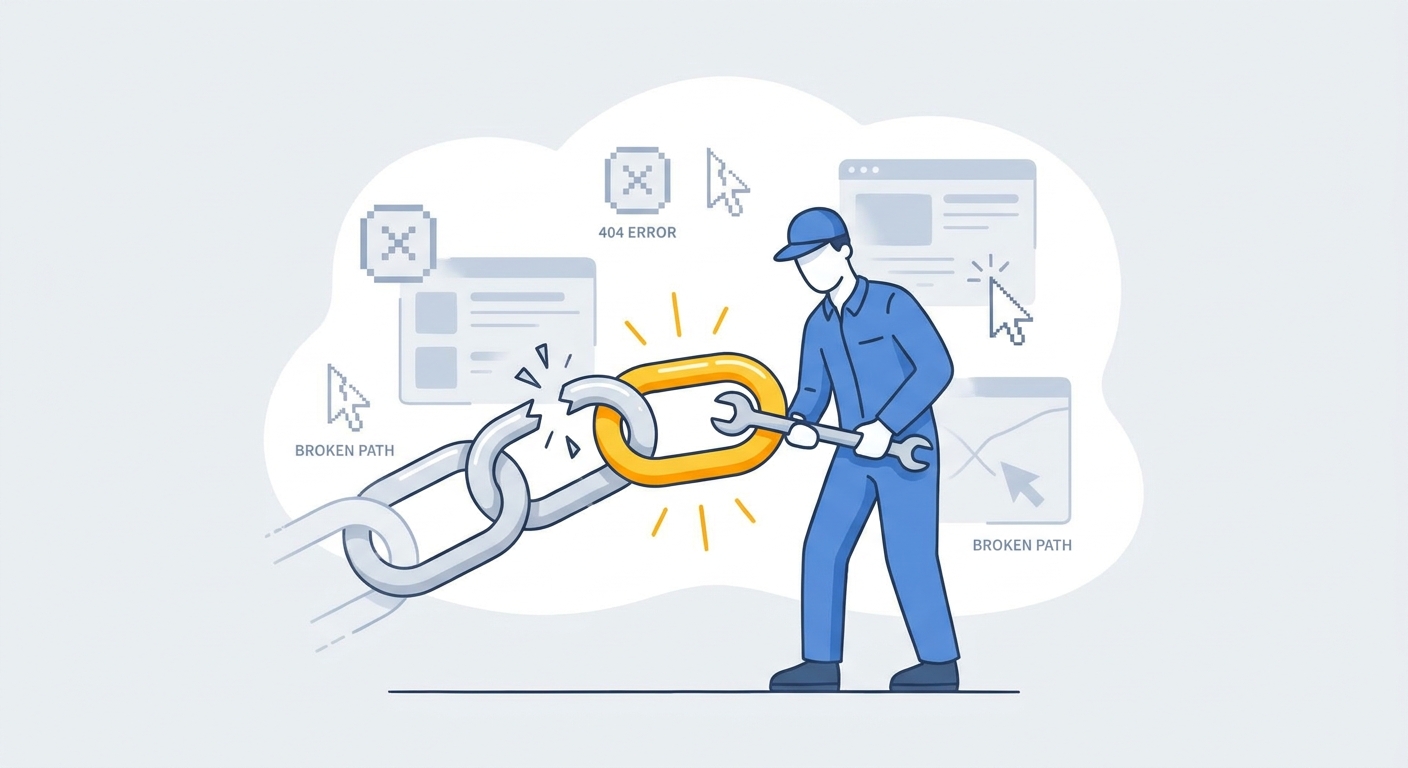
The web is fragile. Businesses fold, URLs change, and site owners get lazy. Every time a user clicks a link and hits a 404 error, that site owner loses a visitor.
The UX Argument
When you point out a broken link, you’re doing the webmaster a favor. It’s a "heads-up." By framing your outreach as a helpful nudge rather than a cold demand for a link, you build a bridge instead of a barrier.
Competitive Intelligence
Ever wonder what your competitors are doing wrong? Look at their broken backlinks. These are resources that other sites wanted to link to, but couldn't because the content vanished. If you build a better version of that missing resource, you’re effectively stealing their authority. It’s not just smart; it’s surgical.
The Low-Risk Play
Buying links is a nightmare waiting to happen. Private blog networks? Don't bother. Broken link building is safe because it’s inherently "white-hat." You’re adding value to the ecosystem, not just gaming a metric.
Phase 1: Hunting for Broken Links at Scale
Don't waste your time clicking every link on the internet. You need tools.
Use Ahrefs Site Explorer to peek into your competitors’ backlink profiles. Filter their external links by "404 Not Found." Suddenly, you have a list of high-value opportunities where your competitors are losing steam.
And don't forget your own backyard. Use the Screaming Frog SEO Spider for a weekly audit. If your own site is riddled with broken links, you have no business telling others how to fix theirs. Clean your house first.
The "Resource Page" strategy is still the king of volume. Search for keywords like "industry terms + resources" or "industry terms + useful links." These pages are gold mines for broken links because they are often curated manually and eventually forgotten.
Phase 2: Building "Link-Worthy" Assets
If you’re replacing a 2018 guide, don't just write a 2026 version of the same thing. That’s boring. It needs to be better, faster, and more useful.
I remember a client who found a dead link to an old, static guide. Instead of writing another blog post, we built an interactive calculator. The result? A 40% conversion rate on outreach. Why? Because we didn't just replace the link; we upgraded the experience. Before you start, check your Content Marketing Strategy Guide to make sure your asset is actually going to move the needle.
Phase 3: Outreach That Doesn’t Suck
Stop the "shotgun" emailing. If you send 500 identical templates, you’re just spam. Use AI to prospect, but keep the actual writing human.
Your pitch should be simple:
- The Wrong Way: "Hey, I saw you have a broken link. Link to my site instead." (Gross.)
- The Right Way: "Hey, I was reading your piece on X and noticed the link to Y is dead. I actually put together a resource on that topic that might be a better fit for your readers. Hope it helps!"
If you’re too busy to do this properly, our Link Building Services can handle the heavy lifting while keeping the tone conversational and personal.
Phase 4: The Internal "Link Rot" Audit
Before you go hunting for external links, fix your internal ones. This is "link reclamation."
If you have a page that you deleted months ago, but it still has backlinks pointing to it, you’re wasting potential. Set up a 301 redirect to your most relevant, live content. It’s the fastest way to boost your domain authority without writing a single new word. It’s like finding money in the pocket of an old pair of jeans.
Phase 5: The Quality Rubric
Not every broken link is worth fixing. Use this to keep your standards high:
| Indicator | Good Prospect | Bad Prospect |
|---|---|---|
| Traffic Trend | Stable or Upward | Sharp Decline |
| Spam Score | Low (< 5%) | High (> 15%) |
| Relevance | Exact Topical Match | Irrelevant/Generalist |
| Maintenance | Regularly Updated | Abandoned Since 2020 |
If a site hasn't been touched in three years, walk away. You want links from sites that are alive, kicking, and actually read by humans.
Frequently Asked Questions
Does broken link building still work in 2026?
Absolutely. The web is constantly breaking. As long as sites disappear and URLs change, there will be a need for people who know how to fix those gaps.
Is broken link building considered a spammy tactic?
It’s only spam if you’re a spammer. If you use automated bots to blast thousands of sites with junk, you’re the problem. If you’re providing a genuine resource to fix a broken user experience, you’re a hero.
How do I know if my replacement content is "good enough"?
Ask yourself: "If I were the original author, would I be happy someone found a better version for me?" If the answer is yes, you're on the right track.
What is the best tool for identifying 404 errors?
For spying on competitors, Ahrefs Site Explorer is the gold standard. For your own technical health, Screaming Frog SEO Spider is the only tool that gives you the granular control you need.