Is Your Backlink Quality Assessment Hurting Your Rankings? A Diagnostic Checklist

TL;DR
- ✓ Over-aggressive backlink pruning often causes self-inflicted damage to your search rankings.
- ✓ Google’s modern algorithms automatically ignore low-quality links rather than issuing manual penalties.
- ✓ Toxicity scores from third-party tools are often unreliable and lack context-aware relevance.
- ✓ Focus on topical relevance instead of chasing a perfectly clean backlink profile.
Stop scrubbing your backlink profile. Seriously.
Your obsession with "cleaning up" your links is likely doing more damage to your search visibility than the spammy links you’re so desperate to delete. It’s 2026, yet the SEO industry is still haunted by a decade-old paranoia: the fear that a stray, low-quality link is going to trigger a Google manual penalty.
The reality? It’s much more nuanced.
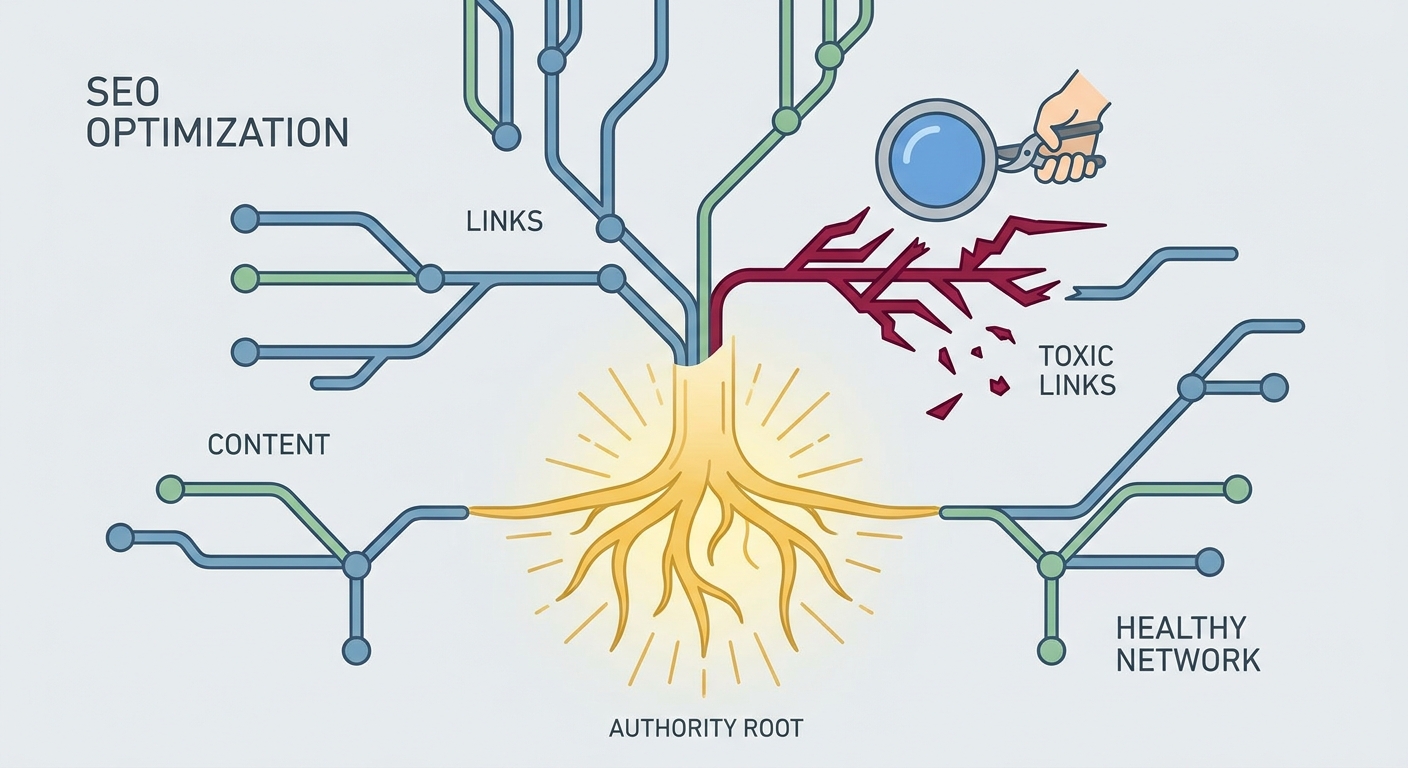
By blindly trusting the "toxicity scores" spat out by third-party software, you are often pruning the very rungs of the ladder that hold your authority in place. Google’s algorithms have grown up. They’re sophisticated, context-aware systems that prioritize relevance over simple link counting. Most of those "toxic" links you’re worried about? Google is already ignoring them. When you manually disavow them, you aren’t "protecting" your site. You’re telling Google to ignore signals it had already filtered out—or worse, you’re stripping away the natural, incidental links that provide the baseline trust your site needs to rank.
The "Toxic" Myth: Why Your Cleanup Might Be a Takedown
The concept of a "toxic" link belongs in a museum—right next to keyword stuffing and hidden text. The web of 2026 is a different beast. Modern search algorithms don't view your site through a binary "good vs. bad" lens. They look at the ecosystem. They look at the intent.
The real danger isn't bad links; it's the reliance on "Toxicity Scores." These are proprietary, black-box calculations that bear almost no resemblance to how Google’s actual core ranking systems function. When a tool flags 15% of your profile as "high risk," you’re looking at a statistical outlier, not a diagnostic of a penalty.
The "Disavow Trap" is a real thing. Over-aggressive pruning is the fastest way to orchestrate a self-inflicted ranking drop. When you disavow, you aren't just sending a link into the abyss; you're discarding the underlying authority that link passed to your domain. If you prune too deeply, you shrink your site’s footprint until it’s invisible. You’re performing surgery on a perfectly healthy patient and removing vital organs in the process.
How Does Google Actually See Your Links in 2026?
The era of "link counting" is dead. Long live "contextual relevance."
Google doesn't keep a simple spreadsheet of every site pointing to your domain. It asks a much harder question: Does this link make sense here?
Algorithmic filtering is the new standard. If a link comes from a site that has nothing to do with your niche, or from a clearly bot-driven source, Google’s systems just assign it a value of zero. It doesn’t penalize you. It just ignores it. There is a massive, critical difference between a link that is "ignored" and a link that is "penalty-inducing." A penalty-inducing link is one you bought or orchestrated in a manipulative scheme. An ignored link is just the price of doing business on the open web.
Diagnostic Checklist: Are You Assessing Quality Correctly?
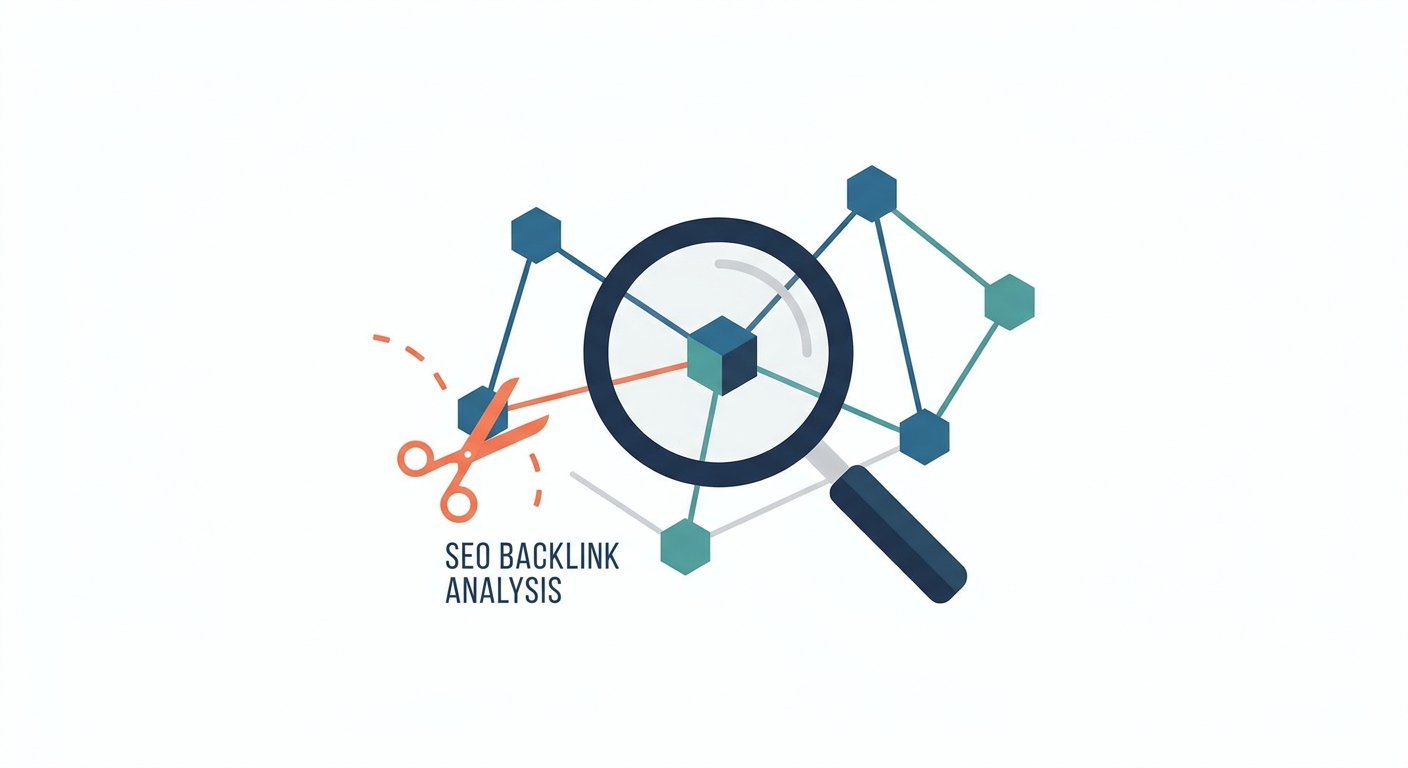
Before you touch that disavow file, put down the scalpel. Treat your link profile with the precision of a surgeon, not a janitor.
Step 1: Are You Confusing Algorithmic Noise with Manual Actions?
The most common mistake? Reacting to ranking fluctuations as if they were a penalty. A traffic dip after a core update is almost never because of a "toxic link"—it’s because your content relevance shifted. If you haven't received a red-flag message in your Google Search Console, you aren't under a manual action. Before you do anything, review Google's Official Disavow Guidance to see just how rarely you actually need to use that file.
Step 2: Does Your Audit Prioritize Topical Authority?
Domain Authority (DA) is a vanity metric. It’s the SEO equivalent of a high school popularity contest. Topical Authority, however, is a ranking signal. A link from a low-DA, hyper-niche hobbyist blog that obsesses over your exact topic is worth ten times more than a link from a generic, high-DA news aggregator. To understand how to weigh these, look at Majestic's Link Context Guide. It highlights exactly how the surrounding content dictates value.
Step 3: What is Your "Red Line" for Disavowal?
You need a strict decision matrix. Do not disavow a link just because a software tool gave it a "low trust score." Only reach for the disavow tool if you have actual evidence of a coordinated negative SEO attack or if you have a manual action notification sitting in your inbox.
Common Pitfalls: Why "Sanitizing" Your Profile Kills Growth
There’s a "Perfect Profile" fallacy that traps many SEO professionals. They want to see a 100% "clean" profile. No low-quality domains. No spam.
But to a machine-learning algorithm, a 100% "perfect" profile looks artificial. It looks curated, managed, and suspicious. It looks like you’re hiding something.
Every site—even the ones at the top of the SERPs—collects low-quality links naturally. It’s the cost of existing online. When you sanitize your profile, you remove the bottom rungs of your authority ladder. If you find yourself paralyzed by the complexity of this process, our SEO Audit Services are designed to help you differentiate between genuine threats and harmless background noise.
From Audit to Action: How to Build a Trust Profile
Stop playing defense. Start playing offense.
Instead of looking at your audit as a "cleanup" project, look at it as a way to find your "Missing Authority." Where are your competitors winning? What kind of high-relevance sites are they grabbing that you’re ignoring?
Building a trust profile is about finding the gaps in your topical map. When you see your competitor with a strong link from a niche industry directory or a community forum, that isn't a "toxic" link—that’s a growth opportunity. For more on this, review the Search Engine Land: Quality Backlinks guide to see how the industry is shifting toward proactive acquisition. When you’re ready to pivot from maintenance to growth, explore our Effective Link Building Strategies to start filling those gaps with high-value, relevant signals.
Leveraging AI for Smarter Link Analysis
Stop blindly following "Toxicity Scores." Use Large Language Models (LLMs) to perform pattern analysis on your link profile instead. Export your backlink data and prompt an AI to categorize the links based on the context of your site’s primary content clusters.
Try this prompt: "I am providing a list of backlinks for my website, which focuses on [Topic]. Please categorize these links based on their topical relevance to my site. Identify any clusters of links that appear to be from unrelated domains or potential spam networks, and explain why they might be considered low quality, while excluding any links that look like natural, incidental mentions."
This approach puts you in the driver’s seat. It allows for human-led decisions rather than relying on a black-box percentage score that could be destroying your rankings.
Frequently Asked Questions
Does having thousands of low-quality links automatically trigger a penalty?
No. Google is generally excellent at ignoring them. You only need to worry if you have a manual action or have actively participated in link schemes that were designed to manipulate ranking signals.
How do I know if I should use the Disavow Tool?
Only disavow if you have received a manual action notification in Google Search Console or if you have specific, documented evidence of a negative SEO attack causing a significant, sustained ranking drop.
Can a "toxic" backlink audit actually hurt my rankings?
Yes. By disavowing links that Google was already ignoring (or that were providing minor, neutral signals), you can inadvertently strip away authority that was helping your site, leading to ranking drops.
What is the biggest mistake in backlink audits in 2026?
Relying solely on third-party "Toxicity Scores" without manually validating the relevance and context of the links.
How often should I perform a comprehensive backlink health assessment?
An annual check-up is sufficient for most sites. Unless you are in an incredibly competitive, spam-ridden niche, constant monitoring and "cleaning" is unnecessary and potentially counterproductive.