The Definitive Guide to Link Building Strategies for B2B SaaS in 2026


TL;DR
- ✓ Abandon outdated cold-email outreach and focus on building high-authority product-led links.
- ✓ Leverage AI-driven search models by establishing semantic relationships across your industry ecosystem.
- ✓ Prioritize integration-led link acquisition to gain high-intent traffic from major SaaS marketplaces.
- ✓ Shift your strategy from link volume to domain authority and relevance for competitive ranking.
If you’re still treating link building like a frantic game of cold-email bingo and guest-post bartering, stop. You’re burning your budget on a strategy that died three years ago.
The search landscape isn’t just shifting—it’s been completely gutted and rebuilt. We’ve moved past the era of chasing blue links. We are living in the "Answer Engine" age. Backlinks are no longer just a rank-boosting hack; they are the currency of trust. They are the bedrock of your E-E-A-T profile. For B2B SaaS, this means link building has to stop being a manual chore. It needs to become a systematic, product-led engine that earns authority by actually being useful.
The Death of the "Link Velocity" Myth
For a decade, the industry was obsessed with "link velocity"—how fast you could stack up backlinks. That obsession is dead. Today, the correlation between backlink count and search rankings is messy and nuanced. It doesn’t matter if you have a thousand links if they’re all from garbage domains. It’s about the authority and relevance of the sites pointing back to you.
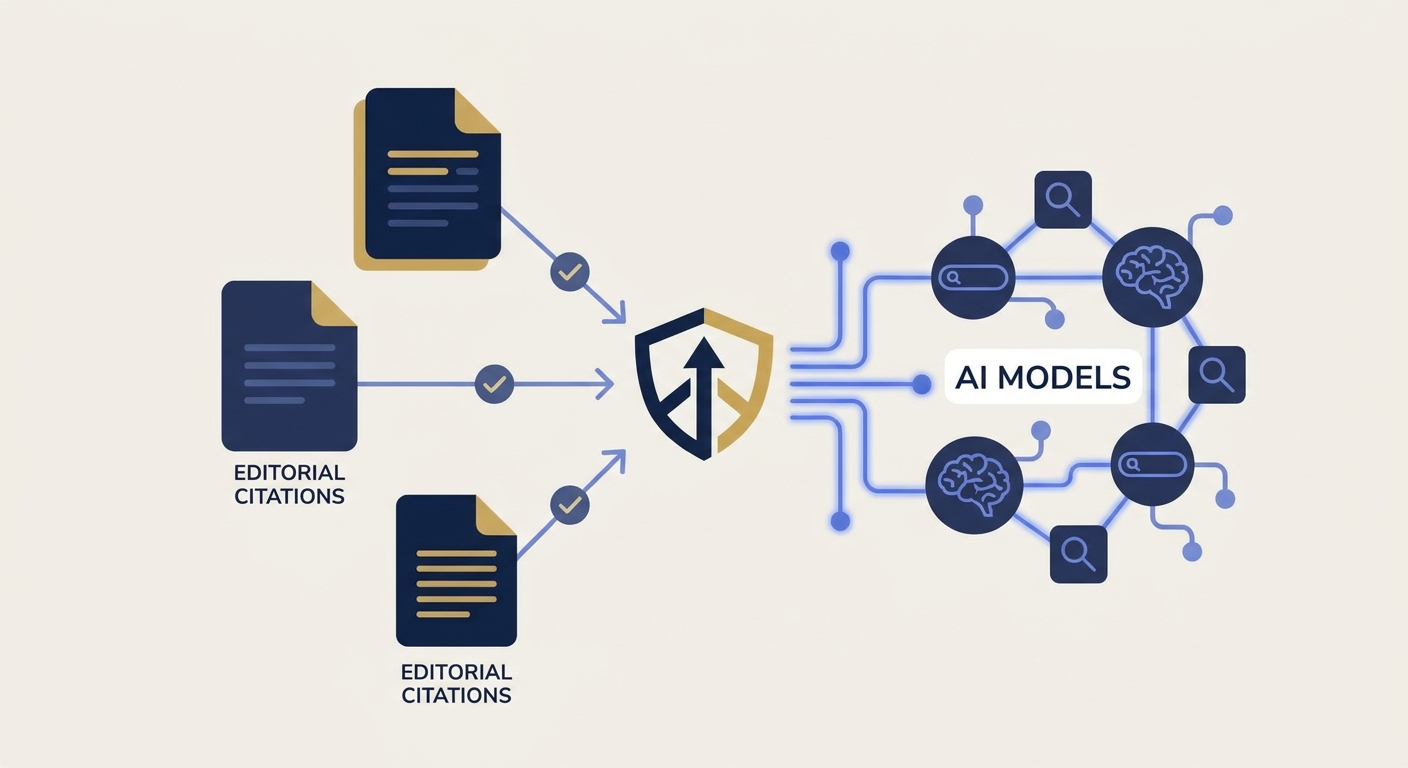
As AI models like Google’s AI Overviews ingest the web, they aren’t just counting heads. They’re looking for semantic relationships. They want to see how your SaaS platform fits into the broader industry fabric. If your site is a ghost town of generic guest posts but lacks citations from actual industry partners, you’re going to get steamrolled on high-intent keywords. To see how your current strategy stacks up, check out our SaaS SEO Strategy Guide. If your technical foundation is shaky, no amount of link building will save you.
Link Building in the Era of AI Overviews
AI models use "Knowledge Graphs" to decide who gets the crown. When a user asks an AI, "What’s the best project management software for enterprise teams?", the model scans your backlink profile to verify your street cred. If your competitors have links from deep-industry white papers and heavy-hitting integration marketplaces, but you only have links from bottom-tier SEO blogs, the AI sees an "Authority Gap."
Mapping this gap is your first move. Look at your top three search competitors. Are they winning because they have more links, or because they have better links from the right nodes in your ecosystem? If you’re trailing, don’t just churn out more volume. Go after the high-authority domains that are already fueling your competitors’ AI presence.
The Product-Led Link Acquisition Engine
The most defensible links in 2026 don’t come from outreach. They emerge from your product’s ecosystem. We call this "Integration-Led SEO." Instead of begging a random site to link to your "Top 10" blog post, build deep, functional integrations with the platforms your customers already live in.
Think about the SaaS stack: Slack, HubSpot, Salesforce, Notion, AWS. When you build a legitimate integration and land on those marketplaces, you aren’t just getting a backlink. You’re opening a high-intent referral channel.
This creates a self-sustaining loop. Marketplace listings are high-authority trust signals. When partners mention your integration in release notes or newsletters, you earn editorial links that no amount of cold outreach could buy.
Digital PR: The New Gold Standard
If your product isn't ready for deep integrations, Digital PR is your best bet. But let’s be clear: this isn’t "link bait." Journalists are drowning in AI-generated fluff. They are starving for proprietary, data-backed insights.
You are sitting on a goldmine of anonymized product data. If you’re in HR SaaS, publish a "State of Remote Work Compensation 2026" report. If you’re in FinTech, report on B2B payment trends. Package this data into a visual-heavy, interactive report. That is a "linkable asset." This is the cornerstone of Content Marketing for SaaS that actually moves the needle. Media outlets don't care about your homepage; they care about verifiable, original research.
The "Double-Dip" Strategy
A link that drives 1,000 bots is worthless. A link that drives 10 highly qualified visitors who sign up for a demo? That’s a gold mine. This is the "Double-Dip": you prioritize domains that serve a dual purpose—SEO authority and direct, high-intent traffic.
Focus on industry-specific aggregators, niche communities, and analyst reports. A link from G2, Capterra, or a specialized newsletter is worth more than a dozen guest posts on generic marketing blogs. As noted in the Ahrefs Backlink Authority Guide, quality is the only metric that matters. If your link strategy isn’t driving users to your product, you’re just playing a vanity game.
Operationalizing Link Hygiene
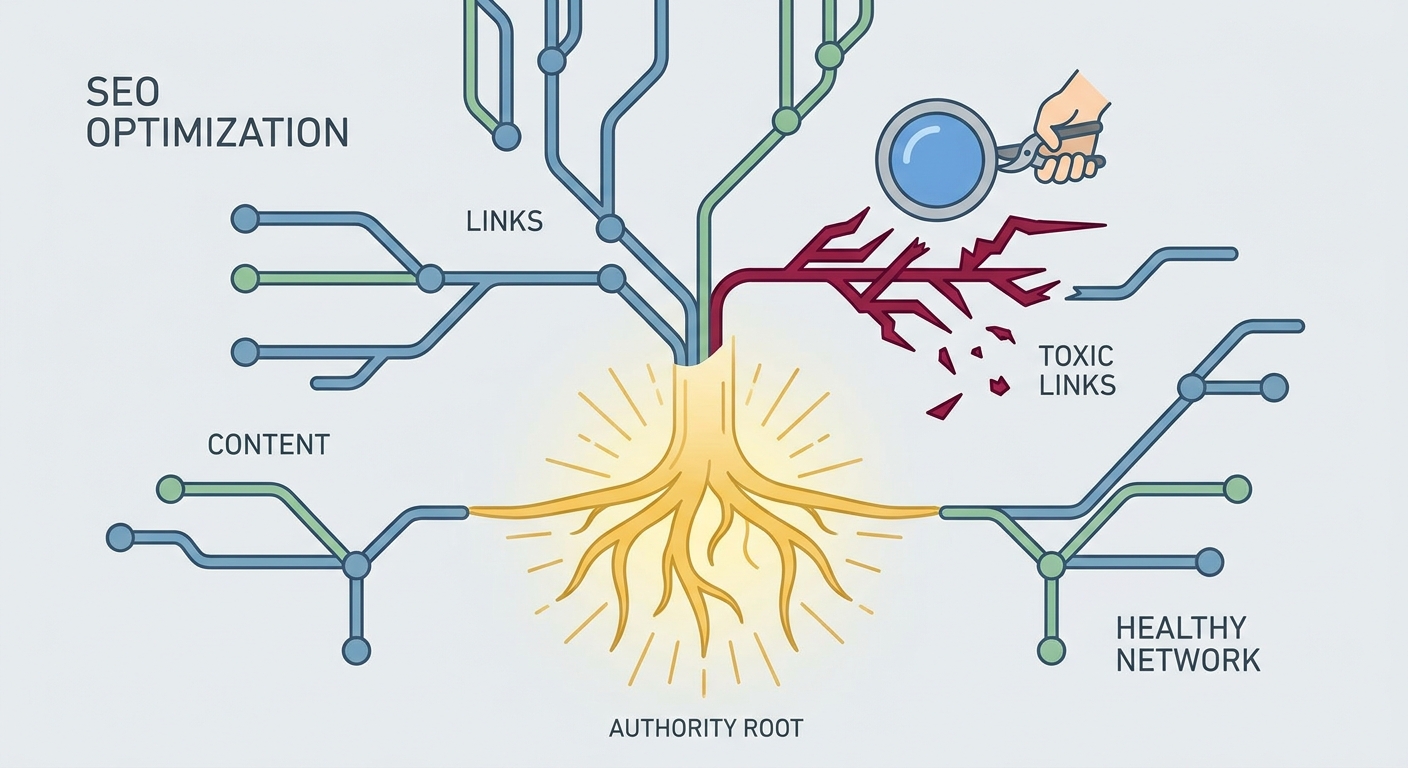
You can’t build a house on a sinking foundation. In 2026, link maintenance is just as important as acquisition. Spurious, toxic links can trigger algorithmic volatility, especially if your domain gets hit by negative SEO or just accumulates spam over time.
Be proactive. Audit your profile. Use Google’s disavow tool where necessary. Remember that Google’s spam policies are strict. Trying to buy your way up is a shortcut to a manual penalty. Treat your backlink profile like a product feature: monitor it, prune it, and improve it.
The Modern Outreach Workflow
When you have to do outreach, stop asking for links. Asking for a link is a tax on the recipient. Instead, offer a "Value-Add."
If you see an unlinked brand mention, don’t send a generic "Hey, link to us" email. Try this: "I saw you mentioned our platform in your article. I just published a new research brief on [Topic] that adds more context to that point—would you like to include it as a resource for your readers?"
This turns a transactional request into a collaborative exchange. Validate the domain authority before you send a single email. Don't waste time on sites that provide zero value.
Measuring the ROI
If you’re still reporting "Domain Authority" (DA) scores to your stakeholders, stop. DA is a vanity metric that doesn't pay the bills. You need to track "Backlink-to-Pipeline Attribution."
Use UTMs and CRM tracking to see which backlinks actually lead to demo requests and closed-won deals. When you can tell leadership, "Our PR campaign last quarter resulted in 50 backlinks, which contributed to 12 SQLs and $40k in pipeline," you stop being a cost center. You become a revenue driver.
Link building today isn't about tricking the algorithm. It’s about building a brand so visible, so useful, and so integrated into the industry that links become a natural byproduct of your excellence.
Frequently Asked Questions
Does buying links still work in 2026?
It carries extreme risk. Google’s spam detection is more sophisticated than ever. Focus on "earned" media through value-add content rather than paid placements, which are easily flagged and can result in significant ranking drops.
How many backlinks does a SaaS startup actually need to rank?
It’s not about a specific number; it’s about the "Authority Gap." You need enough high-quality links to match or exceed the profile of the current top-3 competitors for your specific target keyword. Focus on the quality of the sites linking to you rather than the raw count.
How do I measure the ROI of link building beyond vanity metrics?
Track the correlation between backlink acquisition and growth in non-branded organic traffic, as well as the increase in referral traffic from those specific domains. Use CRM data to link those visits to actual demo requests and SQLs.
What is the difference between a "referral" link and an "SEO" link?
An SEO link is primarily intended to pass authority (PageRank) to your site to help with search rankings. A referral link is placed where your ICP (Ideal Customer Profile) actually spends time, designed to drive qualified human traffic directly to your product. The best links in 2026 achieve both.
How can I make my SaaS product "naturally linkable" for others?
Build tools that provide value outside of your core platform, such as public-facing calculators, industry benchmark reports, or open API documentation that solves a specific pain point. When you provide utility, links will follow without the need for aggressive outreach.