Answer Engine Optimization: How to Get Cited by AI Chatbots

TL;DR
- ✓ Shift your strategy from blue links to becoming a cited AI source.
- ✓ Understand how RAG technology allows AI to hunt for live content snippets.
- ✓ Build topical authority to ensure your brand becomes an AI-recognized entity.
- ✓ Prioritize high information density over traditional domain authority metrics.
- ✓ Structure your content to provide direct answers for AI retrieval engines.
Forget everything you know about chasing the "top spot" on Google. We aren't playing the blue-link game anymore.
Answer Engine Optimization (AEO) isn't about manipulating a list; it’s about becoming the definitive voice inside a chatbot’s head. When a user asks ChatGPT, Claude, or Gemini a question, they don't want a list of ten websites to click through. They want the answer. Right now. If your brand isn't the one providing that answer—and getting the citation for it—you’re invisible.
The era of the "ten blue links" is dying. As Gartner’s 2026 Forecast makes clear, we’re witnessing a massive structural pivot in how humans grab information. We’ve moved from "search-and-click" to "ask-and-receive." If you aren't the source, you’re just noise.
How AI Chatbots "Read" the Web
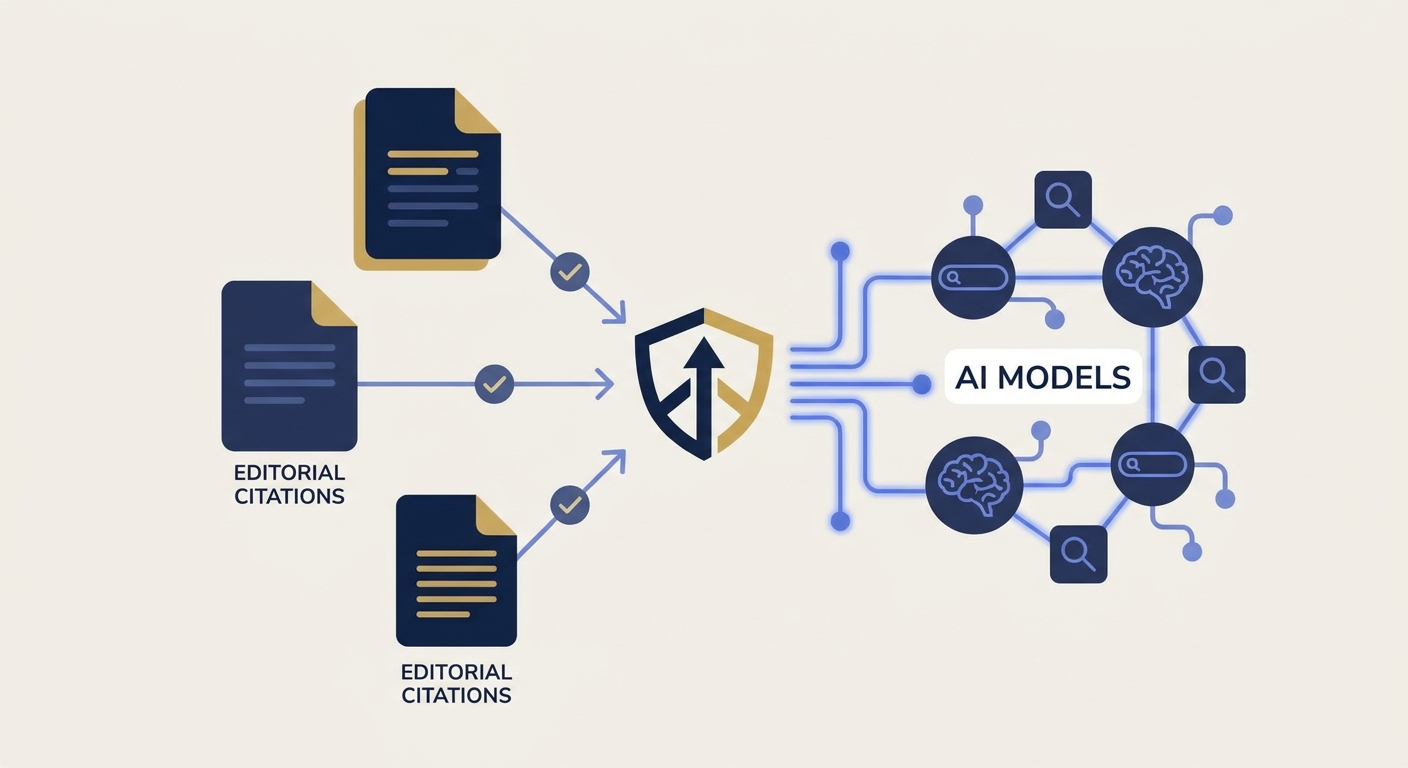
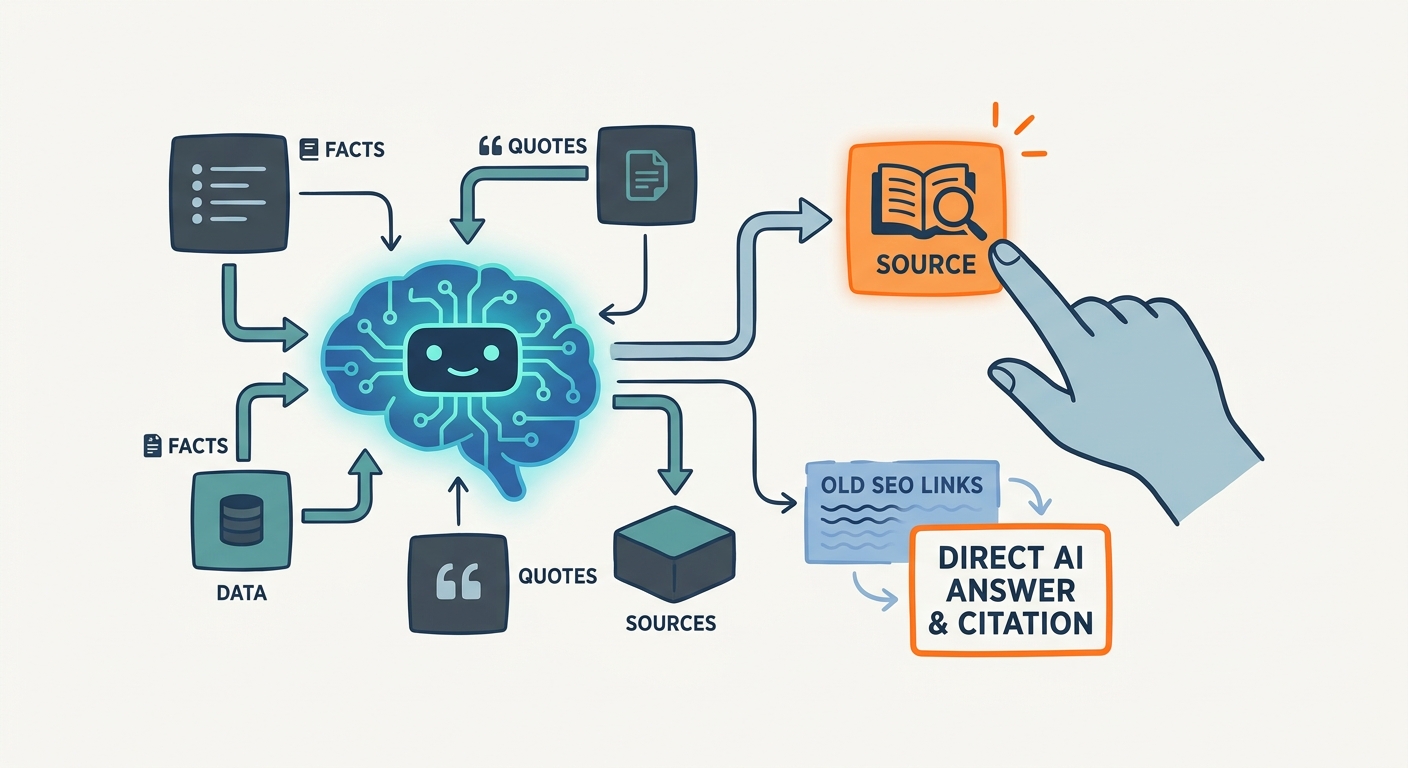
Stop thinking of LLMs as static encyclopedias. That’s a trap. These things are dynamic, hungry engines that use Retrieval-Augmented Generation (RAG). Think of it like this: when you ask a question, the AI doesn't just regurgitate its training data. It goes out, hunts for the best snippets of live, relevant content, and synthesizes them into a single, coherent response.
Understanding Retrieval-Augmented Generation (RAG) is the "aha!" moment for any serious strategist. The AI is a student taking an open-book final. It’s searching for the most credible, concise, and relevant "textbooks"—your website. If your content is buried under corporate fluff, trapped in a clunky site architecture, or just doesn't get to the point, the AI will walk right past you for a source that actually makes sense.
The Mechanism of Preference: Why You Get Cited
AI models don't have "favorites." They don't have human intuition. They rely on probability and pattern recognition. When an AI decides which source to cite, it’s running a cold, hard calculation: Which page offers the highest information density for this specific intent?
Topical Authority vs. Domain Authority
Traditional SEO was all about Domain Authority (DA). You had the backlinks, you won the game. In AEO, that’s only half the battle. You need "Topical Authority."
Let’s say you’re a plumber. It’s not enough to be a big, established site. The AI needs to see that you’re the go-to expert on everything plumbing. It wants deep, granular content—from fixing a leaky faucet to the intricacies of PEX piping. The AI builds associative patterns. It wants to see that your brand is the cluster of solutions for every problem a user might have.
Brand Entity Recognition
You need to stop being a "string of text" and start being an "Entity" in the AI’s Knowledge Graph. This means your brand, your products, and your services need to be defined consistently across your site and the entire web. If the AI sees your brand mentioned in reputable news outlets, industry forums, and your own structured data, it builds a confidence score. Suddenly, you aren't just a website; you're an authority.
Actionable Strategies for AI Citation
Optimization today isn't about stuffing keywords. It’s about "Answer Density." You need to serve the answer on a silver platter, as fast as possible.
The Concise Answer Paradigm
Adopt the Inverted Pyramid. Lead with the direct answer. If someone asks, "How much does a commercial HVAC system cost?", don't spend three paragraphs waxing poetic about the history of climate control. Start with the number: "A commercial HVAC system typically costs between $10,000 and $50,000, depending on square footage, energy efficiency requirements, and installation complexity."
Give the AI the "meat" of the answer immediately. When you make it trivial for the AI to extract a citation, you win.
Structured Data as the Foundation
AI models don't "see" your beautiful design. They read code. Schema markup is the bridge between your content and their logic. If your code is a mess, the AI is blind to your expertise. If you struggle with the technical side of this, our Technical SEO Audit Services can hunt down the gaps in your code that are currently invisible to AI crawlers.
Developing a Linguistic Fingerprint
Your brand needs a voice the AI can recognize as distinct. We focus on this when we build our Content Strategy Services, ensuring your language isn't just generic industry jargon. You want a specific, authoritative dialect that makes your brand stand out from the sea of AI-generated sludge.
The Role of Technical Foundation in AEO
AEO is a layered discipline. You can't build a mansion on a swamp. If your site is sluggish, error-prone, or has a navigation menu designed by a sadist, the AI’s scraper will bounce before it even finds your best content.
Your technical foundation is the "Base" of the hierarchy. Without clean, crawlable code, your beautiful prose doesn't matter. Accessibility and speed aren't just "user experience" factors—they are "machine experience" factors