How to Build Organic Links with 2026 Strategies for Success


TL;DR
- ✓ Focus on building topical authority instead of chasing high domain rating metrics.
- ✓ Prioritize niche relevance to prove your expertise within a specific industry ecosystem.
- ✓ Use editorial context and original research to earn links from high-quality sources.
- ✓ Align your link building efforts with Google E-E-A-T guidelines for better rankings.
Look, let’s get one thing clear: if you’re still obsessed with chasing high-DR sites just to pad your spreadsheets, you’re fighting a war that ended years ago. In 2026, link building isn't a numbers game. It’s reputation management, plain and simple.
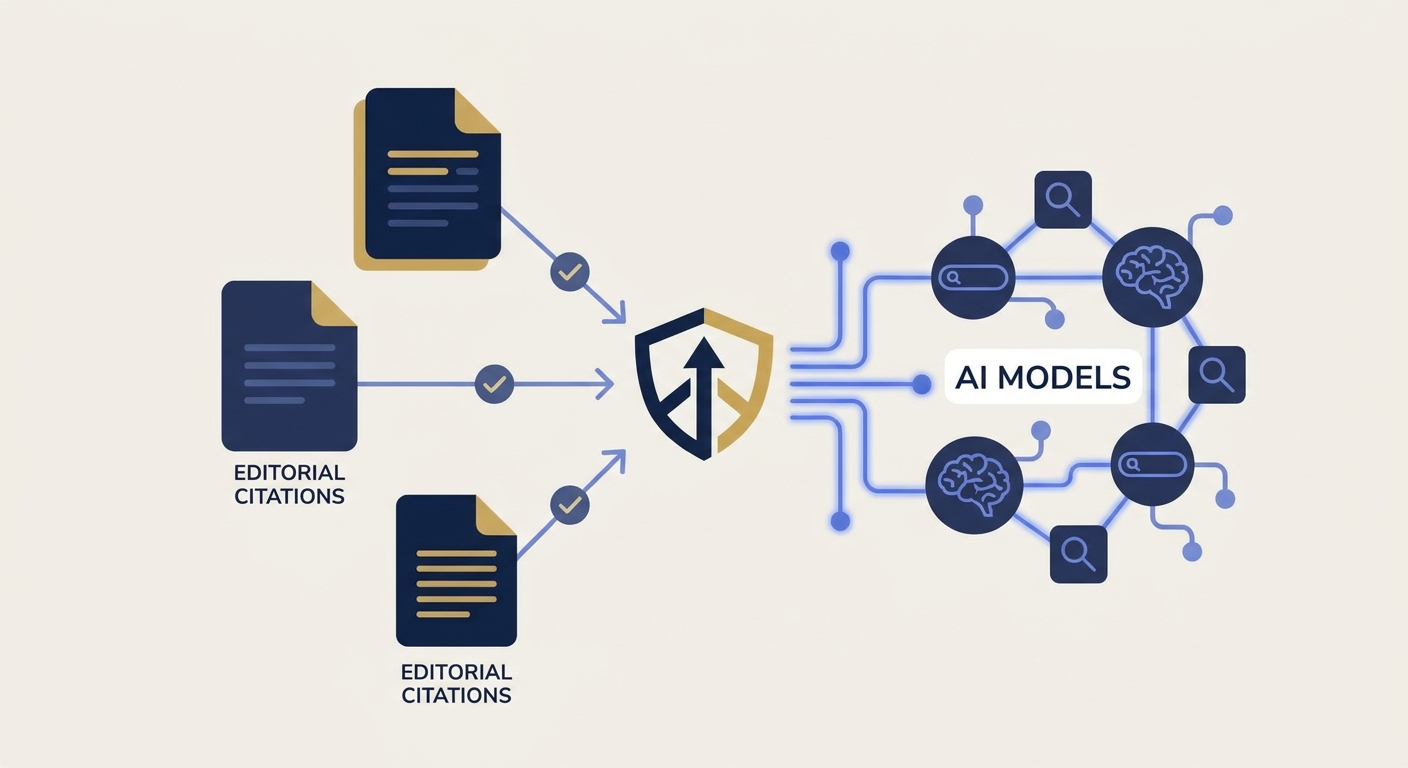
Google’s algorithms have evolved. They’re no longer just counting votes; they’re analyzing the company you keep. To win today, you have to prove you belong in a specific ecosystem. You need to convince both the machine and the human editor on the other side of the screen that you are the definitive authority on your topic. Stop thinking of links as "votes." Start thinking of them as citations of expertise.
Why Is Link Building Still the Backbone of SEO in 2026?
You’ll hear people whisper that "links are dead." Ignore them. That’s the hallmark of someone who hasn't actually looked at a SERP in half a decade. While the weight of an individual link has shifted, the fundamental architecture of the web is still built on the hyperlink.
The real shift? We’re moving away from raw Domain Authority (DA/DR)—which, let’s be honest, is just a third-party metric and not a Google ranking factor—toward "Topical Authority."
Think of it this way: if you run a site about electric vehicle maintenance, a link from a massive, general-interest news site is often worth less than a link from a small, nerdy blog dedicated entirely to automotive engineering.
This evolution is driven by the Google Search Quality Rater Guidelines, which lean heavily into E-E-A-T (Experience, Expertise, Authoritativeness, and Trust). Google’s systems are now smart enough to tell the difference between a link placed to manipulate the system and a link placed because an author genuinely believes your content adds value to their reader. If your link profile doesn't show a laser-focused niche, you aren't building authority. You’re just building a paper trail of irrelevance.
What Does a High-Quality Backlink Look Like in 2026?
A quality backlink sits squarely in the "Golden Triangle": Niche Relevance, Editorial Context, and Author Expertise.
Niche relevance is your baseline. If you’re in SaaS marketing, your links should come from tech, business, or marketing publications. Editorial context is the bridge. A link buried in a footer or a spammy, irrelevant sidebar is invisible to the user and likely carries zero weight with search engines. The link has to live within the body of a well-researched article.
Then, there’s the human element: Author Expertise. In an age where AI can vomit out a thousand generic guest posts in an afternoon, the "experience" factor is the primary filter.
Are you bringing something new to the table? Did you conduct original research? Are you citing proprietary data? Editors are becoming increasingly protective of their real estate. They aren't looking for "content fillers." They’re looking for partners who provide value their own writers can't match. Generic guest posting is a dying art, but expert-authored contributions are more valuable than they have ever been.
How Can You Build a Sustainable Link Acquisition Workflow?
Efficiency is the enemy of quality if you don't have a rigid process. You need an engine that handles the heavy lifting of organization so that your human team can focus on the nuance of the pitch.
Which Link-Building Strategies Actually Move the Needle?
How Do You Leverage Digital PR for High-Impact Placements?
Stop sending press releases about your latest software update. Journalists do not care about your product launch. They care about stories that help them explain the world to their readers. To get high-impact placements, you must provide data-driven journalism.
If you want the Wall Street Journal or a major industry trade publication to link to you, you need to provide them with something they can't get elsewhere. This means creating proprietary datasets. Conduct a survey, analyze a massive public dataset, or report on trends within your industry that no one else has touched. When you package these findings into a report, you become a source rather than a solicitor. For a deeper look at how to build these foundational pieces, check out our Content Strategy Guide.
How Do You Master the "Unlinked Mention" Goldmine?
There are people out there talking about your brand right now who haven't bothered to link to you. This is the lowest-hanging fruit in the industry. Set up monitoring alerts for your brand name, your key products, and even your founders. When you find a mention, reach out with a simple, polite note: "Thanks for the mention in your recent piece on X. I noticed you didn't have a link back to our site; I’d love it if you could add one so your readers can easily find the original source." Most of the time, the editor is more than happy to oblige. It’s a win-win that builds relationships without the friction of a cold pitch.
How Do You Perform a Competitor Backlink Gap Analysis?
If your competitor is ranking for a keyword you want, they are doing something right. Use the Ahrefs Backlink Checker to identify the specific sites that are fueling their authority. However, do not fall into the trap of blindly copying every link. Many of those links might be low-quality or even toxic. Your goal is to qualify the prospects. Does the site have real traffic? Is it relevant? If a competitor has a link from a site that appears to be a link farm, ignore it. Focus your efforts on the high-quality, editorial links that are actually driving the competitor’s topical authority.
What Is the "Right" Way to Execute Guest Posting?
The "right" way to execute guest posting is to stop calling it "guest posting." Stop searching for "write for us" pages. Instead, identify websites that have genuine, engaged audiences—sites that you would read even if you didn't have an SEO agenda. Pitch them an article that solves a specific problem for their readers, demonstrating your expertise and experience. If you aren't doing the work to learn the publication's style and audience before you pitch, you are just another spammer in their inbox.
How Do You Use AI for Outreach Without Losing Your Human Touch?
AI is a tool for prospecting and organization, not for writing your relationship-building emails. The moment an editor sees a template that feels like it was written by a large language model, they hit delete.
Editors are being bombarded with AI-generated pitches. They have developed a sixth sense for the "I loved your article on X" boilerplate. Use BuzzStream to manage your outreach flow and keep track of your conversations, but write your emails yourself. Mention a specific sentence in their recent work. Ask a genuine question. Show that you have actually read their content. If you can't be bothered to spend five minutes writing a personalized email, you don't deserve the link.
How Do You Audit Your Current Profile and Identify Weaknesses?
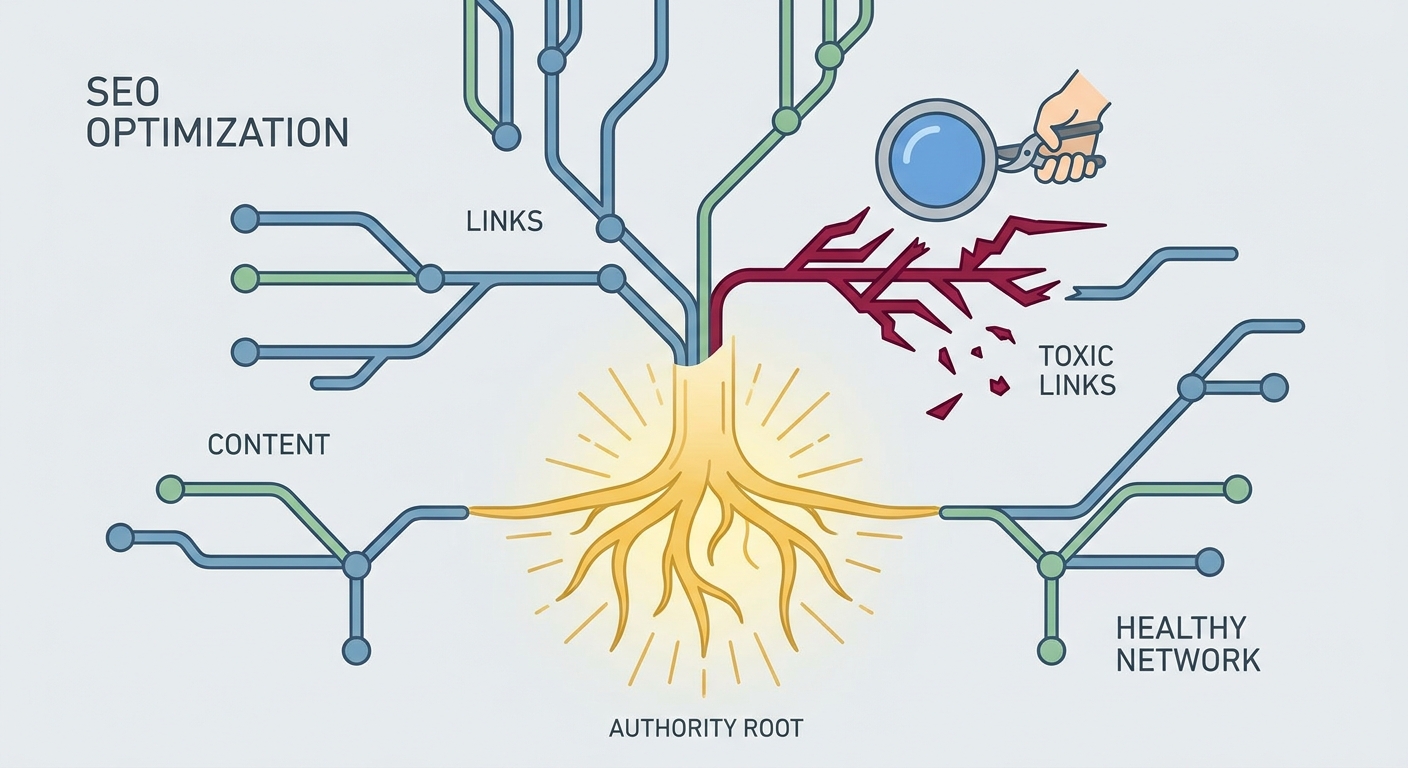
A messy link profile is like a cluttered attic—eventually, you have to clean it out. If you’ve been in the game for a while, you likely have some "legacy" links that don't meet today’s standards. While Google’s Penguin algorithm is long gone, its spirit lives on in modern spam detection. If your profile is heavily weighted toward low-quality, unnatural links, it may be time for a professional review. You can leverage SEO Audit Services to determine whether you need to disavow specific domains or if you should simply focus on burying the bad links under a mountain of high-quality, new ones.
What Are the Common Pitfalls to Avoid in 2026?
The biggest pitfall remains the same: the short-term fix. Buying links is a high-risk strategy that rarely yields long-term SERP stability. AI-powered spam detection is now capable of identifying patterns in link-buying networks that were previously invisible. If you are paying for placements on sites that exist solely to sell links, you are ticking a time bomb. A single penalty can wipe out years of organic progress. Stick to white-hat, authority-building strategies. It takes longer, but it is the only path that survives the inevitable algorithm updates.
How Do You Measure Success Beyond Rankings?
If you are only tracking your keyword rankings, you are missing the bigger picture. In 2026, success is measured by the health of your digital presence. Keep an eye on your referral traffic; if you are getting high-quality, relevant visitors from a link, that is a success regardless of what it does to your SERP position. Monitor your brand sentiment and the growth of your branded search volume. When your authority grows, your brand becomes a known entity, and the links start to come naturally. That is the "long-game," and it is the only way to build a sustainable, organic growth engine.
Frequently Asked Questions
Does Google still count links as a top ranking factor in 2026?
Yes, links remain a critical signal for Google, but the focus has shifted from quantity to quality. Today, topical relevance and the E-E-A-T of the linking site are far more important than raw numbers.
Is buying links ever safe for my website?
No. Google’s AI-powered spam detection has become highly sophisticated at identifying paid link networks. Buying links is a high-risk strategy that can lead to manual actions or algorithmic de-indexing, which are difficult and time-consuming to recover from.
How long does it take to see results from organic link building?
Unlike paid advertising, organic link building is a long-term strategy. You should typically expect to see a positive impact on your organic traffic and rankings within 3 to 6 months of consistent, high-quality efforts.
Can I use AI to write my outreach emails effectively?
You can use AI to help organize your prospect lists and draft initial outlines, but you should never send raw AI-generated content to editors. Personalization is the key to getting a response; always rewrite your pitches to reflect a human, authentic voice.
What is the difference between a "linkable asset" and a standard blog post?
A standard blog post is meant to inform or entertain. A "linkable asset," such as a proprietary dataset, an industry report, or an interactive tool, is designed specifically to provide unique value that other websites will want to cite as a reference in their own content.