Understanding Hypertext Systems and Link Structures

TL;DR
- This article covers the historical evolution of hypertext and how link structures impact modern seo for b2b saas. We dive into the shift from linear books to tangled web networks and what this means for your domain authority. You'll learn how to build a link profile that actually makes sense for both users and google bots without wasting your marketing budget on junk.
The jump from books to hypertext systems
Ever wonder why we get so frustrated when a website doesn't have a search bar or a clear menu? It's basically because our brains have spent the last few decades unlearning how to read books and learning how to "surf" instead.
Moving from the physical page to digital hypertext wasn't just a tech upgrade; it was a total shift in how we process info. For startup founders, understanding this is huge because if you build your site like a linear book, your users are going to bounce faster than you can say "seed round."
We used to be trained to start at page one and grind through until the end. But David Kolb points out in his "Sprawling Places" project that hypertext structure is always under pressure from our old print habits. Even though we try to make things linear, the web has created this expectation that all the "action" should be right there on one page.
- The Page-by-Page Rule is Broken: In a book, the author controls the journey. In hypertext, the reader is the boss. They skip, they jump, and they leave.
- SEO and Skipping: Users don't arrive at your "front door" anymore. Thanks to google, they drop into the middle of your site. If that page doesn't stand on its own, you've lost them.
- Cognitive Load: Reading a long, argumentative text on a screen is exhausting. (Why Does Reading Make Me Tired? The Scientific Reasons Behind ...) Most people are "efferent" readers—they just want to take away a specific piece of info and get out.
"The book can do a very controlled presentation. The hypertext may do more for opening up the reader's horizons." — David Kolb (2008)
Long before we had the internet, people were already dreaming of a way to escape the "file cabinet" mentality of storage. Back in 1945, a guy named Vannevar Bush wrote an article called "As We May Think." He described a device called the Memex.
It was this wild, theoretical desk that would store books and records on microfilm. But the cool part wasn't the storage; it was the "associative trails." He wanted a machine that worked like the human mind—linking one idea to another instantly.

This shift from just "storing" things to "connecting" them is what led to guys like Ted Nelson coining the term "hypertext" in the 60s. He saw it as "branching and responding text."
Think about how you use a healthcare portal versus a retail site. In a healthcare app, you might start at your "Lab Results," but a link takes you to a "Doctor's Note," which then links to a "Prescription Refill." You aren't reading a manual; you're following a trail of your own data.
In retail, a user might land on a specific pair of boots from an ad. If your site structure is too "book-like," they have to hit the back button to find anything else. But a good hypertext system uses "related items" to create those associative trails Bush dreamed about.
Anyway, it's pretty clear that we don't read the way we used to. Next, we're going to dive into how these early dreams actually became the messy, linked web we use today.
Link structures and the messy web
Ever wonder why you can spend three hours on a wiki and end up reading about 14th-century plumbing when you started on quantum physics? it's because the web isn't a library—it’s a messy, tangled net that doesn't care about your "linear" plans.
When we talk about link structures, most people think of a tree. You have a homepage, it branches into categories, and those branch into pages. That’s what we call arborescent (tree-like) structure. it's clean, it's logical, and honestly, it's often too stiff for how people actually use the internet.
On the other hand, you have axial structures. These are basically like a straight line with a few tiny side quests. Think of a long-form landing page for a B2B SaaS product. You go from the header to the features, then the pricing, then the signup. it’s easy to follow but doesn't give much freedom.
But the "real" web—the one we actually live in—is networked. This is the messy stuff. There’s no clear beginning or end. Nodes (pages) link to each other in a giant web. it’s like Shelley Jackson’s "Patchwork Girl" (a seminal piece of electronic literature that uses a nonlinear narrative to tell a story), which literally has no single way to read it.

For a startup founder, this is a bit of a nightmare. You want to control the "user journey," but the user wants to jump around. If your site is just a strict tree, you’re fighting the very nature of hypertext. But if it’s too messy, your users get "lost in hyperspace."
We’ve all been there. You click a few links in a healthcare portal or a retail site, and suddenly you have no idea how to get back to where you started. This is the classic "lost reader" problem. As mentioned earlier, David Kolb talked about how we try to force book-like habits onto these digital spaces, and when that fails, we get frustrated.
To fix this, we use navigation aids. But here is the thing: these aren't just tools; they are "instruments of seduction." You’re trying to tempt the reader to stay on a path while giving them enough breadcrumbs to feel safe.
- Typed Links: This is a big one. In a technical sense, these are semantic HTML attributes (like
rel="nofollow"orrel="author") that tell search engines how pages relate. But for users, it means the anchor text should clearly label the relationship—is it a "related article" or a "technical deep dive"? - Breadcrumbs: They might look old-school, but they tell the user exactly where they sit in the hierarchy.
- Visual Cues: Changing colors or styles for different "voices" or sections helps the brain map out the territory without a literal map.
In the 1980s, a system called NoteCards—developed at Xerox PARC—used a "Browser card" to show a graphical overview of how cards were linked. As noted by Xerox PARC researcher Frank Halasz in his 1988 paper, this helped people handle complex info without losing their minds. modern web design doesn't always give us a map, so we have to build "associative trails" that make sense.
Let’s say you’re building a fintech app. You shouldn't just link "Transaction History" to "Settings" because it’s in the menu. You link it because a user looking at a weird charge wants to go to "Help" or "Dispute."
Here is a quick bit of logic (don't overthink the code, it's just an idea) for how you might track if a user is getting "lost" based on their click depth without a conversion:
def check_user_frustration(click_history, conversion_goal):
    # if they've clicked 10+ times and haven't hit the goal
    if len(click_history) > 10 and conversion_goal not in click_history:
        return "Show Navigation Hint Tooltip"
    return "Let them wander"
The goal isn't to force them down one path. it's to balance your "authorial control" with their "reader freedom." You want them to explore, but you don't want them to give up and close the tab.
Anyway, the web is always going to be a bit of a mess. That’s actually its strength. Next up, we’re going to look at how these internal structures connect to the broader external web ecosystem.
How link building strategies fit into the system
So, if the web is this big, messy "patchwork" we talked about before, how do we actually grow a business in it? You can't just build a pretty site and hope people stumble upon it—you gotta build paths that lead back to you. This is where link building moves from being a "tech chore" to a legitimate growth strategy.
Think of your backlink profile like the "associative trails" Vannevar Bush dreamed about. Every link is a vote of confidence that tells the system your node (your site) is actually worth visiting. But in 2024, the game has changed from just "getting links" to managing a complex hypertext ecosystem.
If you're running a B2B SaaS, you probably know that not all links are created equal. Getting a link from a random hobby blog doesn't help you much. You need quality control because, honestly, the web is full of "junk" nodes that can actually hurt your reputation with search engines.
- Quality Control is Non-Negotiable: You want links from sites that already have authority. If a healthcare software company gets a link from a reputable medical journal, that carries weight. If it’s from a "link farm," it's basically digital poison.
- Guest Post Outreach: This is about building real relationships. You write something actually useful for another site, and in exchange, they give you a bridge back to yours. It’s a trade of value, not just a transaction.
- managing your profile: Tools like productlaunchlist.com (which helps manage where your startup appears) are becoming essential. You need a way to track these connections so your "trail" doesn't get messy or broken.
- Spam Protection: Link requests are getting wild. If you aren't careful, your inbox will be buried in low-grade offers. Professional services act as a filter, making sure you only engage with "nodes" that actually fit your industry.
In a networked system, certain nodes become "hubs." These are the sites everyone points to because they have the best info. According to Wikipedia, hypertext is an "extension and generality" of structure. When you build links, you're extending your site's structure into the wider web.
If you’re a fintech startup, you want to be linked from finance hubs. This creates a "cluster" of relevance. Search engines look at these clusters to decide who is an expert. If you're linked by a bunch of random, unrelated sites, the system gets confused about what you actually do.

We gotta talk about the "dark side" for a second. There is a temptation to use automation to blast links everywhere. But this creates a terrible user experience. Remember what we said about "lost in hyperspace"? When you create fake or misleading links, you're just adding to the noise.
Responsible link building is about helping the user find what they need. If I’m reading about "SaaS marketing," a link to a "backlink management tool" actually makes sense. It’s a helpful trail. If it’s a link to "cheap insurance," it’s a trap.
Here is a quick bit of logic for how a marketing tool might prioritize which sites to reach out to based on "Domain Authority" (da) and relevance:
def evaluate_link_prospect(site_da, industry_match):
    # we only want high authority or perfect niche matches
    if site_da > 50 and industry_match == True:
        return "High Priority Outreach"
    elif site_da > 30 and industry_match == True:
        return "Secondary Outreach"
    else:
        return "Skip - Not worth the effort"
I’ve seen this play out with a few startups. One company in the retail space spent six months just doing "directory submissions." They got a lot of links, but their traffic didn't budge. Why? because those directories weren't "hubs." They were dead ends in the hypertext system.
Once they switched to a digital pr strategy—getting mentioned in actual retail news cycles—their organic growth exploded. They weren't just "getting links" anymore; they were becoming part of the conversation. They were building those "associative trails" that actually lead somewhere.
Another thing to watch is your "link velocity." If you suddenly get 500 links in one day, the ai filters at google are going to flag you. It looks unnatural. Real growth in a hypertext system is organic. It’s a slow build of authority, node by node.
At the end of the day, link building isn't just about SEO. it's about defining your place in the digital world. You're building the bridges that help people (and bots) understand who you are and why you matter.
If you treat your link strategy like you're building a library, you'll fail. But if you treat it like you're building a city—with main roads, side streets, and clear signs—people will actually find their way to you.
Anyway, that’s how the strategy fits the system. Next, we are going to look at SEO link management and domain authority specifically to see how we keep these connections from turning into a total disaster.
SEO link management and domain authority
Ever wonder why a link from a major news site feels like winning the lottery while a hundred links from random directories do basically nothing? It's because the web has moved way past just counting links and now actually tries to understand what those links mean in the bigger picture of your brand's authority.
Back in the 90s, you could basically trick the system by cramming your site with as many links as possible, no matter how weird or unrelated they were. But as Wikipedia notes, hypertext is really about "extension and generality" of structure—it's not just about the number of connections, but how they extend your site's actual meaning into the wider world.
Nowadays, google and other search engines are obsessed with context. If you are a healthcare startup, a link from a medical research paper or a big health news outlet tells the "ai" filters that you’re a legitimate node in that specific cluster. This is why digital pr has become the new king of link building; it’s about getting mentioned where it actually matters.
- Context is everything: A link isn't just a bridge; it’s a signal of relevance. If the surrounding text on a page is about "fintech security" and it links to your app, that carries way more weight than a sidebar link.
- Content Distribution Networks: Using cdns and pr wires helps get your story out there, but the real magic happens when those stories get picked up by "hubs"—those high-authority sites that everyone else points to.
- The "Voicing" of Links: As we saw with David Kolb earlier, different "voices" in a text (like an expert opinion vs. a casual review) change how a reader perceives the info. Search engines try to do the same thing by looking at the "sentiment" around your brand mentions.

If you’re running a startup, your internal link structure is probably a bit of a mess because you’re building features so fast. Doing a regular seo audit on your own links is like cleaning up the "associative trails" that Vannevar Bush talked about—you’re making sure the path for both users and bots is actually clear.
You also have to keep a close eye on your link building roi. It’s easy to burn through a marketing budget on guest post outreach, but if those posts are sitting on dead sites with no traffic, you’re just throwing money away. You need to track which "nodes" are actually sending you leads, not just "juice."
- Audit your internals: Make sure your most important pages (like your pricing or core features) have the most internal links pointing to them. Don't let your best content become an "orphan page" that nothing links to.
- Automation with a human touch: There are tons of api tools for outreach now, but if your emails sound like a bot, they’re going straight to spam. Use automation for the boring stuff—like finding contact info—but write the pitches yourself.
- Quality over quantity: I’ve seen founders get stressed because they only have 50 backlinks while a competitor has 5,000. But if those 50 are from high-da sites in your niche, you might actually be outranking them.
Here is a simple way a founder might think about their link "health" using a bit of basic logic to see if they should keep or cut a partnership:
def check_link_health(referring_domain_da, monthly_referral_traffic):
    # if the site is high authority but sends zero people, it's okay-ish
    # but if it's low authority AND sends zero people, it's a waste
    if referring_domain_da < 20 and monthly_referral_traffic == 0:
        return "Disavow or Ignore"
    elif referring_domain_da > 50:
        return "High Value Asset"
    else:
        return "Monitor Performance"
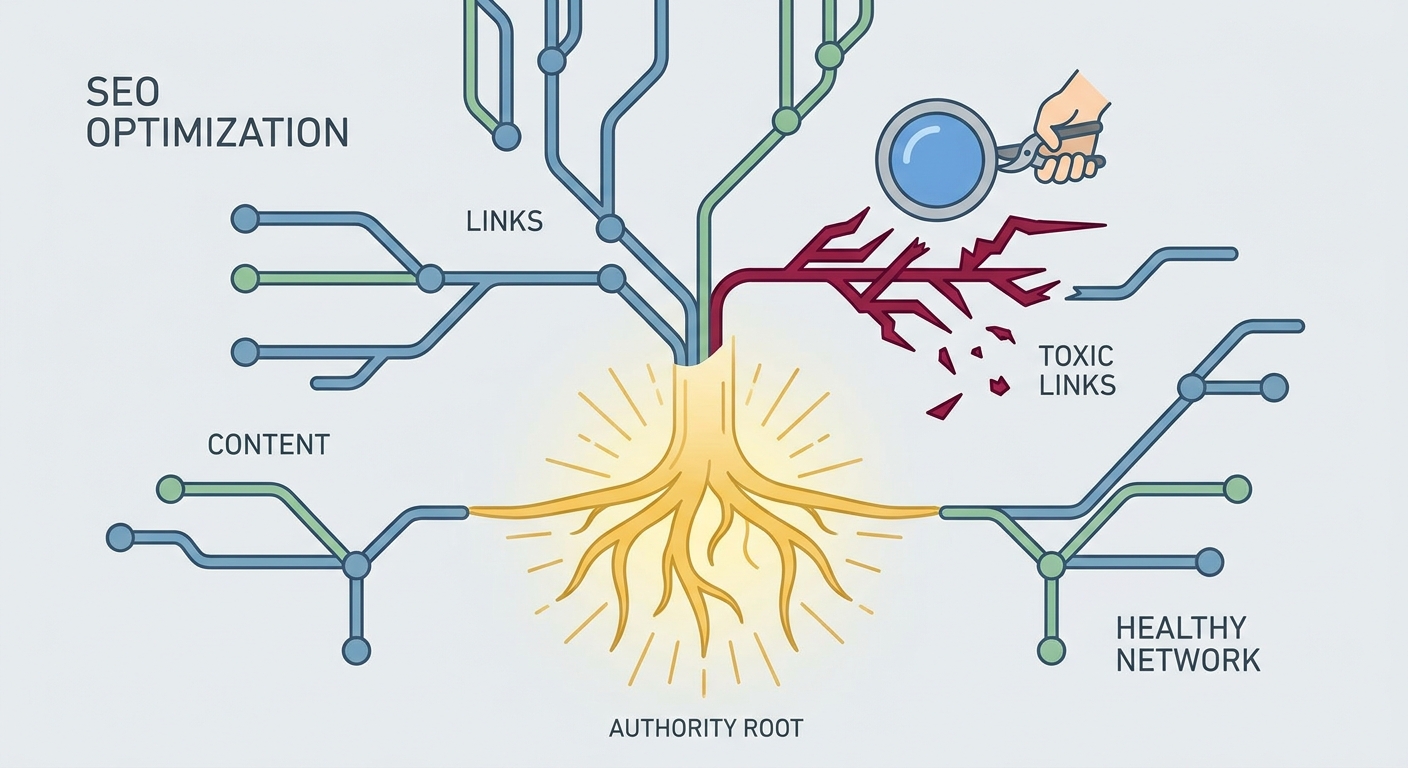
Honestly, managing a link profile is a lot like gardening. You have to pull the weeds (spammy links) and make sure the "hubs" of your site are getting enough water (new, fresh backlinks). If you just let it grow wild, you’ll end up with a "lost in hyperspace" problem where nobody—not even google—knows what your site is really about.
I remember talking to a guy running a retail saas who was obsessed with directory submissions. He spent months getting listed on every "startup list" out there. His domain authority went up a tiny bit, but his sales stayed flat.
Then, he did one targeted digital pr campaign where he shared some original data about "shopping cart abandonment" in a big industry newsletter. That one link from a relevant hub did more for his rankings and his actual revenue than the previous 200 directory links combined. It’s all about being part of the right "cluster."
Anyway, building authority isn't a one-time thing. It’s a constant process of making sure your site is a useful, well-connected node in the messy web. Next, we’re going to look at the actual tools and "maps" we use to keep all these connections from turning into a total disaster.
The future of hypertext and seo
Ever wonder if we're actually building a web that only robots can read, or if there's still room for the rest of us to just wander around and find cool stuff? It’s a weird tension because while we want our startups to rank on page one, we also don't want to turn our sites into sterile data graveyards.
The future of how we connect things is shifting fast, moving away from just "getting a link" to actually managing the relationship between different nodes of information.
- ai is redefining the crawl: Bots aren't just looking for keywords anymore; they're trying to understand the "fuzzy coherence" of your entire site structure.
- Link Relationship Management: It’s no longer about the quantity of bridges but the quality of the conversation happening across those bridges.
- Sustainable Visibility: Organic growth is becoming a marathon where the winners are those who build "associative trails" that actually help people solve problems.
- The Human Element: As search marketing solutions get more automated, the value of a genuine, human-placed link in a niche community is actually going up.
We’ve spent years thinking of the web as a collection of "pages," but that’s a bit of an old-school print habit. As David Kolb noted in his work on hypertext rhetoric, there's always this pressure to make things linear like a book, even when the tech wants to be a messy, beautiful net.
Now, ai is stepping in and it doesn't read like we do. It looks at the "extension and generality" of your links—a phrase used by Wikipedia to describe the true nature of "hyper." The ai is looking for clusters of relevance. If you’re a retail startup, it’s looking at how your "Product Description" links to "User Reviews" and then out to "Industry Trends."
This is where the theory of "Fuzzy coherence" (the idea that a reader creates meaning by connecting dots even if the path isn't perfectly linear) meets the practical logic of our check_link_health code. If those links feel forced or purely for seo, the bot picks up on that lack of coherence. We're moving toward a world where "link relationship management" is just as important as customer relationship management. You have to ask: does this link actually make sense for a human who is "lost in hyperspace"?
I've seen founders obsess over their domain authority scores while their actual user journey is a total disaster. They have a high-da link from a news site, but it leads to a 404 or a page that has nothing to do with the original hook. That’s a broken trail, and in the future, search engines are going to penalize that kind of "bait and switch" much harder.

So, how do you actually stay ahead of this? Honestly, you have to stop thinking about "link building" as a separate department from your product or your pr. In b2b marketing, your online visibility is tied to how well you integrate into the existing "hubs" of your industry.
Your link portfolio management is never really "finished" because the web is dynamic. A link that was a goldmine three years ago might be a dead end today if that site lost its relevance. You need to be doing regular seo audit work to prune the "junk" nodes and double down on the ones that send actual, breathing humans to your site.
- Focus on Hubs: Find the sites that act as the "Memex" of your niche—the ones everyone else points to for authoritative info.
- Quality over Velocity: Getting 10 links from respected industry journals is better than 1,000 links from a cdn wire that no one reads.
- Be the Source: The best way to get links is to create the "associative trails" yourself by publishing original data or unique perspectives that others have to link to.
According to a study on hypertext coherence (often discussed in linguistics circles like Fuzzycoherence, Thesis Jukka), coherence isn't an objective thing—it’s something the reader negotiates. This is huge for us. It means your site doesn't have to be perfect, but it has to "hang together" in a way that makes sense to the person clicking through.
Here is a quick bit of logic for a startup founder trying to decide if a guest post opportunity is actually worth the time based on the "coherence" of the target site:
def should_i_guest_post(target_site_relevance, audience_overlap, can_i_write_something_useful):
    # if it's relevant and the audience matches, it's a go
    # but only if we actually have something to say!
    if target_site_relevance > 0.8 and audience_overlap == True:
        if can_i_write_something_useful:
            return "Start Outreach"
        else:
            return "Wait until we have better data"
    return "Skip - Not our tribe"
I remember a healthcare tech startup that was struggling with their organic growth. They were buying "seo packages" that just blasted their url to random directories. Their da was okay, but their traffic was garbage. They were just adding noise to the system.
They shifted gears and started reaching out to patient advocacy groups to offer free, high-quality guides on navigating insurance. Suddenly, they weren't just "getting links"—they were building bridges. Those advocacy sites are massive "hubs" in the healthcare world. Their rankings didn't just go up; their brand authority did too.
In the finance space, I saw a similar thing with a fintech app. They built a simple api tool that other developers could use for free, and they documented it beautifully. Every time a dev used it, they got a link from a "technical deep dive" article or a github repo. Those are the kind of "associative trails" that ai loves because they show real-world utility.
As we look toward the next decade of search marketing solutions, the "page" might disappear entirely. We’re already seeing this with ai search results that pull bits of info from five different sites to answer one question. In that world, being a "node" that is highly trusted and well-connected is the only way to survive.
You have to be okay with a bit of "messiness" in your structure, as long as the core argument is sound. As mentioned earlier, the goal isn't to force people down a single path, but to give them enough "instruments of seduction" (like breadcrumbs and typed links) to keep them exploring.
Honestly, the future of seo is just going back to the basics of what hypertext was supposed to be: a way to connect ideas. If you focus on building a site that actually helps people follow their own "associative trails," the bots will eventually follow the humans.
Anyway, it’s been a long journey from Vannevar Bush’s microfilm desk to the ai-driven web we have now. The tech changes, but the human desire to click a link and find something that actually matters? That isn't going anywhere. Keep building those bridges, and don't worry too much if the path gets a little winding sometimes. That’s just how the web works.