Link Building Strategies: The Complete List (2026)

TL;DR
- This guide covers over 150+ link building tactics for 2026, ranging from classic skyscraper techniques to advanced ai-driven digital PR. You'll learn how to navigate the shift towards brand authority, secure high-quality backlinks from niche-relevant sites, and implement automated outreach that actually works for b2b saas growth without getting hit by search engine penalties.
The State of Link Building in 2026: What Actually Matters
I remember my first link building campaign back in 2020 where I spent weeks begging for links like I was asking for spare change, only to end up with a dismal 2% success rate. Honestly, I almost quit because I thought the whole thing was some kind of black magic reserved for people with massive budgets. Having done this for six years now, I've seen the "skyscraper" stuff go from a fresh hack to a legacy tactic that everyone knows about.
It's 2026, and people keep asking if links even matter anymore with all these new ai search tools and LLMs taking over. The short answer? Yeah, they do—maybe more than ever, but the "how" has shifted from just counting numbers to chasing actual trust.
- Votes of confidence for bots: Search engines and LLMs use links as "votes" for your content's quality. According to Varn, there's a positive correlation between do-follow links and how high a page "ranks" within an ai's generated answer.
- Topical Relevance: A link from a random site doesn't do much anymore; you need links from sites that actually talk about what you do. If you're selling hiking gear, a link from a small outdoor blog is worth way more than a mention on a generic tech news site.
- The rise of brand mentions: We're seeing "implied links" where just mentioning your brand name without a clickable link still helps your authority, as mentioned by GW Content.

I've seen this play out in different ways. For a healthcare startup, getting a citation in a medical journal's online resource page acts as a massive trust signal for both patients and algorithms. Meanwhile, a retail brand might find more value in "digital PR" where a journalist at a major news outlet links to their original research on consumer habits.
A 2026 guide by Backlinko points out that "original data"—stuff like surveys or experiments—can actually result in more social shares and way more links than boring industry-specific posts.
It's not just about "building" links anymore, it's about earning them by being a legit part of the conversation in your niche. Next, we're gonna dive into the specific tactics that actually move the needle right now. Here are 9 of the most effective strategies for this year.
Foundational Strategies for Beginners and Startups
Ever feel like link building is just a fancy way of saying "please like me" to strangers on the internet? When you're just starting out or running a lean startup, you don't have a massive pr team or a six-figure budget to throw at fancy campaigns.
The good news is that foundational link building is more about being organized and a bit cheeky than it is about having deep pockets. It's about grabbing the low-hanging fruit that most people ignore because it doesn't feel "glamorous" enough.
I used to think directories were dead, like phone books or MySpace. But honestly, for a brand new site, they are like the base layer of a house—you need them for stability. Not the spammy "submit to 5000 sites for $10" kind, but the ones that actually mean something.
- Niche-Specific Directories: If you’re a startup in New York, getting listed in a directory like Built In NYC is a massive win. It’s highly relevant and tells search engines exactly where you belong.
- Chamber of Commerce and BBB: These aren't just for your grandma's knitting shop. getting a link from your local Chamber of Commerce is a "guaranteed link" that's just waiting for you, as mentioned by Backlinko. Even if a bbb link is nofollowed, it's a huge trust signal for actual humans.
- Alumni Lists: This is one of my favorite "secret" moves. Most colleges have a section for alumni-owned businesses. (Alumni Owned Business Directory - Laurel Ridge Community College) If you or your co-founder graduated from a university, check their site; a .edu link is basically digital gold.

People get weird about asking for links. They think they’re bothering people, but if you have a real business relationship, it’s just a normal part of doing business in 2026.
I once worked with a small retail brand that got their first 10 high-quality links just by emailing their suppliers. They didn't beg; they just said, "Hey, we love selling your products, mind adding us to your 'where to buy' page?" It worked because it made sense for both sides.
- Partner and Vendor Requests: If you use a specific software, or buy raw materials from a vendor, check if they have a "customers" or "partners" page. Most do, and they're usually happy to feature you because it makes them look good too.
- Existing Relationships: Think about your accountant, your lawyer, or even the person who designed your logo. If they have a blog or a "clients we’ve worked with" section, ask for a shoutout.
- Relevance over Authority: It’s tempting to chase big names, but a link from a small, hyper-relevant blog in your niche is better than a random mention on a generic news site. If you sell hiking boots, a link from a local trail guide site is a "winner," as previously discussed by Varn.
I’ve seen this work in the wild without any fancy tools. A small healthcare startup got a massive boost by simply finding "resource pages" for local patient support groups and suggesting their free guide as a helpful addition.
Another ecommerce founder I know used the "Image Link Building" trick. They took high-quality, original photos of their products and used tools like Google Lens or TinEye to find where people were using them without credit. They didn't get mad; they just asked for a link attribution. It was a fair trade—the blogger got a free pro photo, and the founder got a legit backlink.
According to a guide by Backlinko, "resource pages remain a link builder’s dream" because their whole purpose is to link out to useful stuff.
The goal here isn't to get 1,000 links overnight. It's to build a base of trust so that when you start doing the "big" stuff later, you aren't starting from zero. Next, we're going to look at how to actually create the kind of content that makes people want to link to you without you even asking.
Intermediate Tactics: Content-Led Link Acquisition
So, you’ve got your basic links sorted—the directories and the alumni stuff. But honestly, if you want to see the needle move on your traffic in 2026, you gotta stop asking for links and start earning them through content that actually does some heavy lifting.
I used to think that "content is king" was just something marketing gurus said to sell courses, but it turns out that if you build something truly useful, people link to it because they'd feel weird not to. It’s about being a resource, not a beggar.
I first heard about the skyscraper technique years ago, and people keep saying it's dead because the internet is "saturated." But let's be real—most content on the web is still pretty mediocre. To make this work now, you can't just write a "longer" post; you have to write a better one.
- Finding the "Tallest" Building: You start by looking for content in your niche that already has a ton of links. I usually use a tool like semrush to see which of my competitors' pages are "link magnets."
- The 10x Upgrade: Don't just add more words. Add the most recent data from this year, better visuals, or a free tool. If everyone has a "how-to" guide on coffee roasting, you build a "roast profile calculator" or add high-res infographics that explain the chemical changes in the bean.
- The "Helpful" Outreach: This is where most people mess up. They send a generic email. Instead, tell the webmaster: "Hey, I saw you linked to [Old Resource]. It’s a bit outdated now, so I made a version with 2026 data and a calculator that might help your readers."
I saw this work recently for a finance startup. They found an old, text-heavy guide on "mortgage rates" that had 500+ links but hadn't been updated since 2022. They built an interactive mortgage stress-test tool, reached out to the people linking to the old guide, and snagged 40 high-authority links in a month.
This is probably my favorite tactic because you’re basically doing a favor for a site owner. Nobody likes having 404 errors on their site—it makes them look unprofessional and hurts their seo. You’re coming in as the hero who points out the leak and hands them the plug.
- The Hunt for 404s: You can use a chrome extension like "Check My Links" to scan resource pages for dead links. It’s like digital beachcombing. You’re looking for those red boxes that indicate a page is gone forever.
- The "Hero" Email: Your pitch shouldn't be about you. It should be: "Hey, I was reading your awesome list of [Topic] resources and noticed the link to [Dead Site] is broken. Just thought you’d want to know! Also, I happen to have a guide on that same topic if you need a replacement."
- Scaling without being a bot: You can use tools like Pitchbox to scale this, but please, keep the emails human. If it looks like a template, it’s going straight to the trash. Mention something specific about their site so they know you actually looked at it.

I remember a retail brand that used this to get links from massive hobbyist forums. They found dead links to old product manuals and recreated them as clean, mobile-friendly PDFs. The forum mods were so happy to have the resources back that they didn't just link to them—they pinned the post to the top of the board.
Okay, let's talk about the elephant in the room: guest posting. Google has been "devaluing" guest post links for years, but that’s mostly because people started using them as a way to dump low-quality ai-spun garbage on random sites. If you do it right, it’s still one of the best ways to build brand authority.
- Relevance over everything: Don't just go for the highest "Domain Authority." Go for the site that your actual customers read. If you're in healthcare, a link from a small, respected nursing blog is worth way more than a generic "business news" site that accepts anything for $50.
- Pitching the "Gap": Don't say "I want to write for you." Say "I noticed you haven't covered [Specific Niche Topic] yet, and since I've spent three years working on [Topic], I'd love to share some unique insights with your audience."
- Avoiding the Footprint: Avoid using exact-match anchor text like "best hiking boots 2026" in every single post. It looks fake. Just link naturally to a resource that actually adds value to the article.
As noted earlier by Varn, the content your link is placed in matters more than ever. If the article is helpful and people actually read it, search engines and ai models see that as a massive trust signal.
A 2026 report by GW Content mentions that "editorial context is critical." If your link is just sitting in a bio at the bottom, it's not doing much. You want it in the body of the text where it makes sense for a human to click it.
I’ve seen a few companies really crush this lately without needing a massive pr budget. For instance, a small saas company created a "Glossary of Industry Terms" for the fintech space. It was just a simple page with clear definitions for confusing acronyms.
Because journalists are often lazy (I say that with love), they started linking to that glossary every time they wrote about a complex financial topic. They didn't even have to do outreach after the first few months—the links just started rolling in naturally.
Another one was a b2b company that did a "State of the Industry" survey. They only got about 150 responses, but they turned that data into a few really nice charts.

As we've seen from the guides at Backlinko, "attractive charts and graphs lead to 2-3x more links" because bloggers love to embed them as "proof" for their own points.
One thing to keep in mind is that link building in 2026 is moving toward "relationship management." If you're using automation to blast 1,000 emails a day, you're probably doing more harm than good to your brand.
I always tell people to treat outreach like a networking event. You wouldn't walk up to someone and scream "LINK TO ME" at a cocktail party, right? You'd start a conversation. Same thing applies here. If a webmaster says no, thank them for their time anyway. You might want to pitch them again in six months with something better.
Honestly, the goal with content-led acquisition is to make your site so good that link building becomes a byproduct of your marketing, not a separate, painful chore. Next, we’re going to look at some of the "Advanced Tactics" like Digital PR and how to get your brand mentioned in the big news outlets without losing your mind.
Advanced Link Building: Digital PR and Data Studies
Ever feel like you’re just shouting into the void with your content? I’ve spent nights staring at a "perfect" blog post that got zero links, and it’s honestly soul-crushing.
But then I realized that the big players aren't just writing—they’re doing Digital PR and data studies that make it impossible for journalists to look away. It’s about moving from "please link to me" to "here is something so cool you have to talk about it."
- Digital PR is the new guest posting: Instead of hitting up random blogs, you're aiming for news outlets and industry giants.
- Original data is link bait: Journalists are always looking for stats to back up their stories, and if you provide those stats, you get the credit.
- Visuals matter more than text: A single chart can earn more links than a 3,000-word essay because it's easy to embed.
- Expertise wins trust: In the age of ai, being a real human with real insights is a massive competitive advantage.
I used to think I could do everything myself, but managing a backlink profile for a growing startup is a full-time job. Honestly, I’ve seen founders burn out trying to track 50 different outreach threads while also trying to, you know, run a company.
This is where professional management comes in, especially for things like "Product Launch Lists." This strategy involves getting your startup featured on curated lists of new tools (like Product Hunt or BetaList). It generates backlinks not just from the main directory, but from the "echo effect" where bloggers and tech news sites scrape these lists to find the next big thing. Expert managers know which journalists cover startups and how to pitch them without sounding like a total bot.
They also act as a shield against spam. I once had a client who tried to "automate" their way into the news and ended up on a blacklist because their emails were too generic. A pro knows how to keep the "human" in the outreach, ensuring you get placements on top-tier news sites rather than just junk blogs.
If you want to be the "source of truth" in your niche, you need to stop repeating what everyone else says. I’ve seen a finance startup get 50+ high-quality links just by running a survey of 200 people about their "hidden" spending habits.
Journalists love original stats because it makes their job easier. When you provide a fresh data point, you aren't just another person with an opinion—you're a primary source. And as noted earlier by Backlinko, "attractive charts and graphs led to 2-3x more links" because they are so easy for others to use.

I remember working with a retail brand that did a "State of Sustainable Fashion" report. They didn't even have a huge budget—they just used Google Forms to poll their customers and turned the results into a few clean infographics.
Because the data was fresh for 2026, it got picked up by industry news sites that usually ignore standard pitches. People didn't just link to the home page; they linked directly to the data study because it was a "resource-worthy" asset, as previously discussed.
I've seen this play out in a few different ways that actually move the needle:
- The "Surprise" Factor: A healthcare company analyzed anonymized data to show that people were searching for "sleep aids" 40% more on Sunday nights. News outlets loved this "Sunday Scaries" angle.
- The "Interactive" Edge: A real estate startup built a "Cost of Living" calculator based on local tax data. It wasn't just a post; it was a tool that local news sites linked to as a service for their readers.
- The "Niche" Deep Dive: A b2b saas company surveyed 100 ceos about their biggest fears regarding ai search. Because the data was so specific, it became the go-to citation for tech journalists that month.
According to a 2026 guide by Varn, there is a "positive correlation between do-follow links and how high a page 'ranks' within an ai's generated answer."
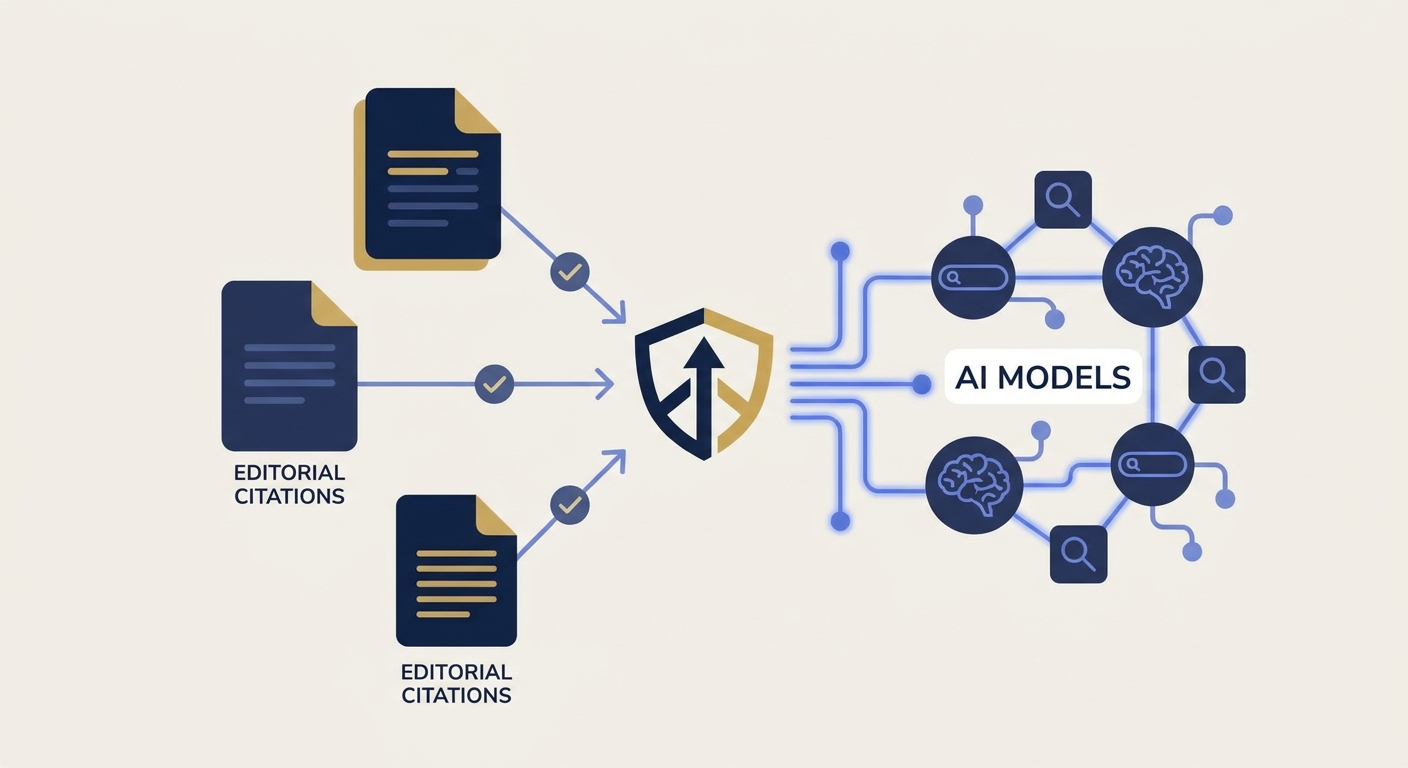
This means your data studies aren't just helping your traditional seo—they are literally training the ai models to see you as an authority. If an llm sees your data cited across five different news sites, it’s going to trust your brand more.
You don't need a team of 50 to do this. You just need to be smart about what you track. I usually tell people to start small: pick one question your customers always ask, find the data to answer it, and make a chart.
And don't forget to monitor your mentions. If someone uses your chart but forgets the link, a polite nudge usually works. As mentioned earlier, people are generally happy to give credit where it's due if you've provided something of real value.
Next, we’re going to look at the more "technical" side of things—how to handle the messier parts of link management like audits and dealing with those pesky toxic links.
The Technical Side: Link Profile Optimization
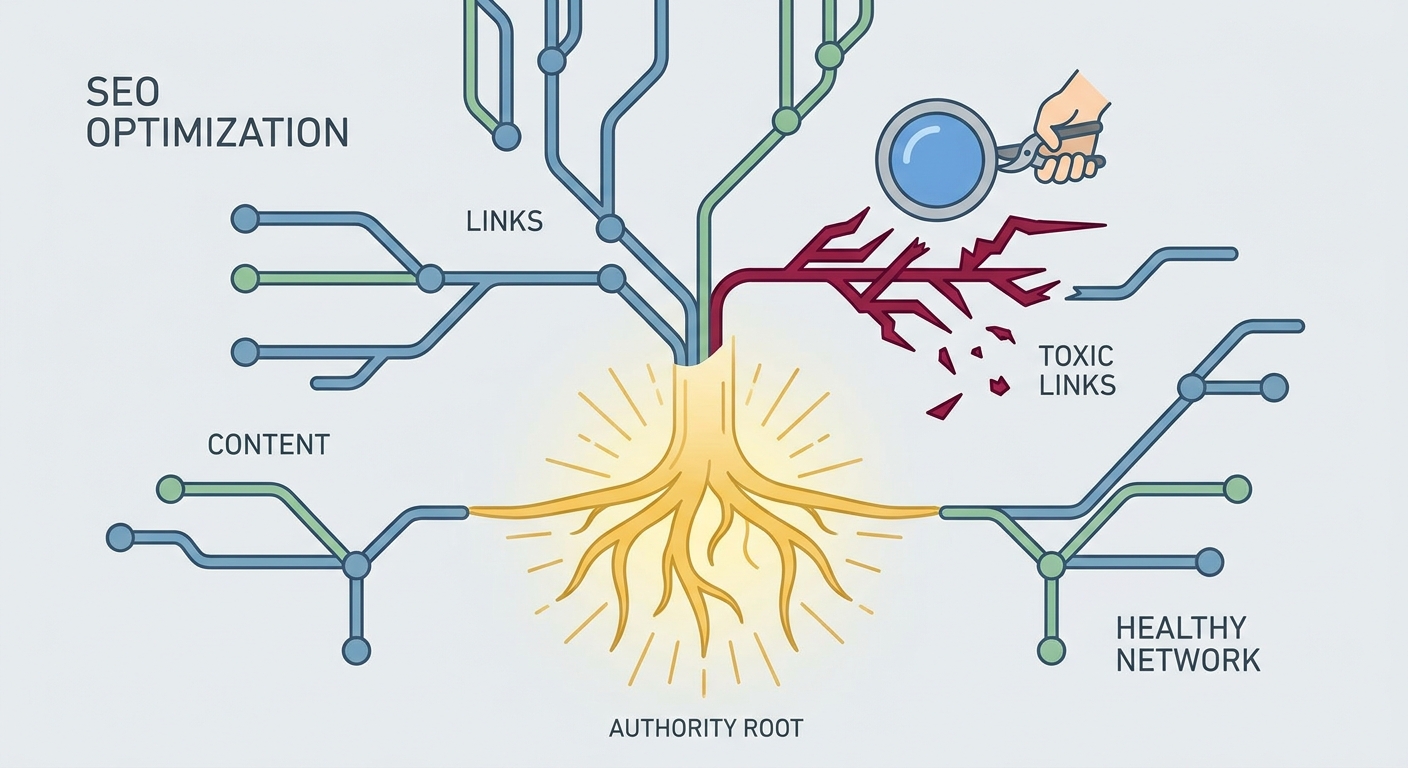
I used to think that once a link was live, my job was done and I could go grab a coffee. Turns out, a link profile is a lot like a garden—if you don't pull the weeds and water the good stuff, everything just kind of falls apart.
Most of us spend so much time begging strangers for links that we forget we actually control our own site. Internal links are basically the "high-yield savings account" of seo. You aren’t just helping people find their way around; you’re telling search engines which pages actually matter.
- The Hub and Spoke Model: Think of your main guide as the "hub" and your smaller blog posts as "spokes." As noted earlier by Backlinko, linking from your high-authority pages to the ones you want to boost is a massive quick win.
- Fixing the "Orphan" Problem: An orphan page is just a page with zero internal links pointing to it. It’s basically invisible to crawlers. I usually use a tool like Screaming Frog to find these and hook them up to the rest of the family.
- Anchor Text Variety: Don't just use "click here" or the exact same keyword every time. Keep it natural. If I'm linking to a post about hiking boots, I might use "best trail footwear" once and "rugged outdoor shoes" another time.
I've seen this work wonders for a retail brand that had a great guide on "winter fashion" but forgot to link it from their homepage. We added three internal links from their top-performing blog posts, and the guide's traffic jumped by 25% in a month. It’s simple, but honestly, people skip it because it feels like house chores.
Sometimes people talk about your brand but forget to actually link to you. It's like someone mentioning your name at a party but not introducing you to the host. According to GW Content, these are the easiest wins because the site owner already likes you.
- Monitor with Alerts: I use google alerts or mention.com to see whenever my brand gets a shoutout. If there's no link, I send a quick, friendly email.
- Turning "Thank You" into a Link: When someone mentions your product, don't just say thanks. Say, "Hey, glad you liked the product! Would you mind making that mention clickable so your readers can find us easily?"
- Fixing 404 Pointing Links: People make typos. Sometimes they link to
mysite.com/blog-post-typo. Use your search console to find these broken backlinks and set up a 301 redirect. You just "built" a link without even asking.

I once helped a finance startup that found 50 unlinked mentions of their ceo in industry news. We sent out a few human-sounding emails—not bot stuff—and reclaimed 30 links. That’s 30 high-authority backlinks for the price of a few hours of typing. Also, keep an eye on your image attribution. If someone uses your chart, as previously discussed, just ask for a link back.
A 2026 report by Varn suggests that keeping your link profile "clean" by fixing broken internal paths is just as important for ai search as it is for traditional bots.
Basically, stop looking for the next "secret hack" and start cleaning up the mess you already have. It’s not glamorous, but it works. Next, we’re going to wrap all this up and look at how to measure the actual roi of your link building efforts so you know if all this work is actually paying the bills.
Measuring ROI and Maintaining Your Link Profile
I used to think that once a link was live, I could just walk away and watch the traffic roll in. But honestly, a backlink profile is more like a garden—if you don't pull the weeds and check the soil, everything eventually dies off.
It’s 2026, and we’ve gotta look past those shiny "Domain Authority" scores that everyone obsesses over. If a link isn't actually sending humans to your site, does it even matter? Probably not as much as you'd hope.
You need to know if your hard work is actually moving the needle for your startup. I've seen founders celebrate a high-authority link that resulted in exactly zero sales, which is just depressing.
- Conversion Goals: To see if this work pays the bills, you need to set up "Conversion Goals" in your analytics tools. Track how many users coming from referral links actually sign up or buy something. If a link from a niche blog has a 5% conversion rate, it's worth more than a million views from a site that doesn't care about your product.
- Referral Traffic and Conversions: Use your analytics to see how many people are actually clicking through. A link from a smaller, niche blog that sends 50 "ready-to-buy" visitors is worth way more than a massive news site that sends 5,000 people who bounce immediately.
- Link Velocity: This is just a fancy way of saying "how fast are you getting links?" If you go from zero to 500 links in a week, the search engine bots are gonna get suspicious. Steady growth is the goal here.
- Brand Sentiment: With ai search becoming the norm, how people talk about you matters. As previously discussed by Varn, there is a positive correlation between quality links and how high an ai "ranks" you in its answers.
Maintaining your profile isn't just about getting new stuff; it's about protecting what you already have. Links break, pages move, and sometimes people just change their minds.
- Reclaiming Lost Gold: People update their sites and accidentally delete your links all the time. I usually do a quick check every month to see who dropped us. A polite "hey, noticed the link is gone, did I do something wrong?" works wonders.
- Avoiding the "Bad Neighborhoods": Stay far away from link farms or anything that smells like a pbn (private blog network). If a deal looks too good to be true—like 1,000 links for fifty bucks—it’s gonna get you penalized eventually.
- Anchor Text Variety: Don't use the same "buy now" keyword for every link. It looks fake. Keep it natural with a mix of your brand name, raw urls, and generic phrases.

Link building in 2026 is a marathon, not a sprint. It’s about being a real part of your industry’s conversation. If you focus on providing value—whether through original data as mentioned by Backlinko or just being helpful—the links will follow.
A 2026 report by GW Content reminds us that "editorial context is critical." If your link doesn't make sense to a human reader, it won't help your brand in the long run.
So, go build something worth linking to. Keep an eye on your stats, stay away from the shady stuff, and don't forget to check those internal links. It’s messy, it takes time, but man, when it works, it really works. Good luck out there.